 Back
BackIntroduction to Medical Terminology: Foundations and Applications
Study Guide - Smart Notes
 Tailored notes based on your materials, expanded with key definitions, examples, and context.
Medical Language and Health Care Today
Introduction to Medical Language
Medical language is the specialized vocabulary used by healthcare professionals to describe the human body, its functions, diseases, procedures, and treatments. Understanding medical terminology is essential for effective communication in healthcare settings.
Medical words are constructed from word parts, much like assembling pieces of a puzzle.
Mastery of medical language enables accurate reading, writing, speaking, and comprehension of medical information.
Communication Skills in Medical Language
Effective communication in medical language involves five core skills:
Reading medical words
Hearing and understanding spoken medical terms
Thinking, analyzing, and understanding medical words
Writing (or typing) and spelling medical words
Speaking and pronouncing medical words
Origins and Structure of Medical Terms
Etymology of Medical Language
Etymology is the study of word origins. Most medical terms are derived from Greek and Latin, reflecting the historical development of medicine in these cultures. Some terms are identical to their original forms, while others have been adapted or come from other languages.
Singular and Plural Forms in Medical Terms
Medical nouns follow specific rules for forming plurals, depending on their language of origin:
English: Add -s or change -y to -ies (e.g., gland → glands, artery → arteries).
Greek and Latin: Follow unique pluralization rules (e.g., diagnosis → diagnoses, bacterium → bacteria).
Medical Word Parts
Medical terms are built from three main types of word parts:
Prefix: Optional word beginning that modifies meaning.
Combining form: The foundation of the word, usually indicating a body part or system.
Suffix: Word ending that modifies or clarifies the meaning.
Combining Forms
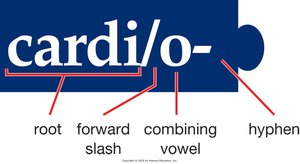
The combining form provides the core meaning of a medical word. It consists of a root, a forward slash, a combining vowel (usually 'o'), and a hyphen. Combining forms can be:
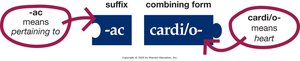
Nearly identical to their medical meanings (e.g., cardi/o- means heart).
Similar to common medical words.
Different from their medical meanings (requiring memorization).
Multiple combining forms may exist for the same structure due to Greek and Latin origins.
Suffixes
A suffix is added to the end of a medical word to modify its meaning. Suffixes can indicate adjectives, processes, diseases, procedures, or medical specialties.

Prefixes
A prefix is an optional word part at the beginning of a medical term. It modifies the meaning of the combining form and can indicate location, direction, amount, number, speed, degree, or quality.

Defining and Building Medical Words
Defining Medical Words
To define a medical word, follow these steps:
Divide the word into its combining form, suffix, and prefix (if present).
Determine the meaning of each part.
Put the meanings in order: suffix, prefix (if present), then combining form.
Add connecting words to create a clear definition.




Building Medical Words
Building medical words is the reverse process of defining them. The steps depend on whether the suffix begins with a consonant or vowel and whether a prefix is present.
If the suffix begins with a consonant, use the combining vowel.
If the suffix begins with a vowel, do not use the combining vowel.
If a prefix is present, it is placed at the beginning.








Spelling and Pronunciation
Correct spelling and pronunciation are essential for clear communication in healthcare. Pay attention to the spelling of word parts and the rules for joining them. Practice using pronunciation guides, and be aware that some words have more than one correct pronunciation.
The Body in Health and Disease
Health and Disease
Health is defined as a state of complete physical, mental, and social well-being. A disease is any change in the normal structure or function of the body, while a disorder is a disturbance of action or function. The etiology is the cause or origin of a disease.
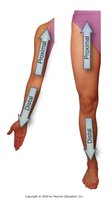
Anatomical Position
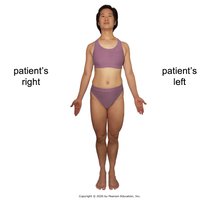
The anatomical position is the standard reference for describing the body:
Body standing erect, head up, eyes forward
Arms at sides, palms forward
Legs straight, toes forward
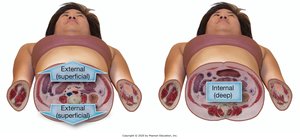
Body Planes and Directions
Body planes are imaginary surfaces dividing the body:
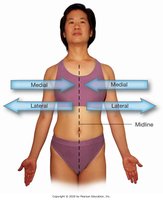
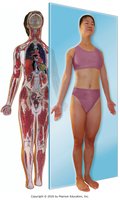
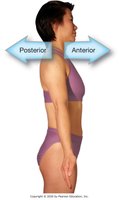
Coronal (frontal) plane: Divides body into anterior (front) and posterior (back) sections.
Sagittal plane: Divides body into right and left sections.
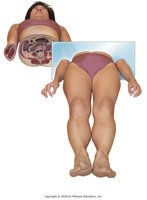
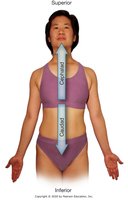
Transverse plane: Divides body into superior (upper) and inferior (lower) sections.

Body Cavities
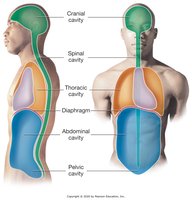
The body contains five main cavities that protect internal organs:
Cranial cavity: Inside the head
Spinal cavity: Runs down the back
Thoracic cavity: Within the chest
Abdominal cavity: Upper abdomen
Pelvic cavity: Lower abdomen
Body Quadrants and Regions
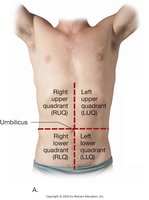
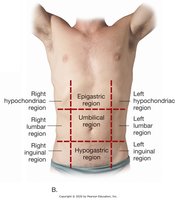
The anterior surface of the abdominopelvic cavity is divided for reference:
Quadrants: Four sections (RUQ, LUQ, RLQ, LLQ) used to localize pain or findings.
Regions: Nine regions for more precise localization (e.g., epigastric, umbilical, hypogastric).
Anatomy and Physiology
Anatomy is the study of body structures, while physiology is the study of their functions. The organization of the body progresses from cells to tissues, organs, and body systems.
Medical Specialties and Body Systems
Medical specialties focus on specific body systems or types of diseases. Understanding the relationship between body systems and specialties is essential for navigating healthcare professions.
Diseases, Disorders, and Healthcare Professionals
Categories of Disease
Diseases are classified by their cause, onset, and course. Key terms include:
Symptom: Experienced by the patient
Sign: Observable by others
Acute: Sudden and severe
Chronic: Lasts three months or longer
Exacerbation: Worsening of symptoms
Remission: Temporary improvement
Relapse: Return of symptoms
Sequela: Complication remaining after disease
Symptomatology and Syndromes
Symptomatology is the collection of all symptoms and signs of a patient. A syndrome is a set of symptoms and signs characteristic of a particular disease. Asymptomatic patients have a disease but show no symptoms.
Course and Outcome of Disease
The course of a disease includes all events from onset to outcome. Outcomes include:
Recuperation: Full recovery
Residual chronic disease or disability: Incomplete recovery
Terminal illness: Disease leads to death
Healthcare Professionals
Healthcare teams include:
Physicians (MD or DO): Diagnose and treat diseases, may specialize further (e.g., surgeons, primary care physicians).
Physician extenders: Perform some physician duties under supervision (e.g., physician assistants, nurse practitioners).
Allied health professionals: Support services (e.g., nurses, technologists, therapists, dietitians).
Healthcare Settings and Medical Records
Healthcare Settings
Care is provided in various settings:
Hospitals: For acutely ill patients requiring extended care.
Physicians’ offices: Outpatient diagnosis and treatment.
Clinics: Specialized outpatient care (e.g., urgent care, walk-in clinics).
Ambulatory surgery centers, long-term care facilities, home health agencies, hospices: For specific patient needs.
History and Physical Examination
Diagnosis begins with a thorough medical history and physical examination, including:
Inspection: Visual examination
Palpation: Feeling with fingers
Auscultation: Listening with a stethoscope
Percussion: Tapping to assess underlying structures
Medical Records and Electronic Health Records (EHRs)
Medical records document all aspects of patient care. Most facilities now use electronic health records (EHRs), which include:
History and Physical Examination (H&P)
Operative Reports
Discharge Summaries
Legal documents (e.g., consent forms, HIPAA releases)
Additional info: This guide covers foundational concepts from Chapter 1 of "Medical Language: Immerse Yourself," including the structure and use of medical terminology, body organization, and the basics of healthcare professions and settings. It is suitable for exam preparation and as an introduction to further study in medical terminology.
