 Back
BackMedical Terminology: Components, Word Roots, Prefixes, Suffixes, and Plural Endings
Study Guide - Smart Notes
 Tailored notes based on your materials, expanded with key definitions, examples, and context.
Ch.1 Introduction to Medical Terminology
Medical Term Components
Medical terminology is constructed from specific word parts, each contributing to the overall meaning of the term. Understanding these components is essential for interpreting and forming medical terms.
Word Root: The core part of the term, providing the fundamental meaning. Example: cardi means heart.
Combining Vowel: Usually 'o' or 'i', used to connect word roots or a word root and suffix, especially when the suffix begins with a consonant.
Prefix: Added to the beginning of a term, modifies meaning by indicating direction, position, quantity, time, size, or opposite.
Suffix: Added to the end of a term, modifies meaning and provides information about condition, disease, procedure, action, or location.
Eponyms: Terms derived from people's names, not built from word parts.
Example: Electrocardiogram breaks down as follows: Electro- (electricity), cardi/o (heart), -gram (record or image).
Defining Medical Terms
To define a medical term, follow these steps:
First, define the suffix (condition/disease, procedure, etc.).
Then, define the prefix (direction, position, quantity, etc.).
Finally, define the word root (core meaning).
Example: Hypoglycemia = hypo- (under, below), glyc (sugar), -emia (condition of the blood).
Forming Terms from Word Parts
Medical terms are formed by combining word roots, prefixes, suffixes, and combining vowels.
Use a combining vowel when the suffix starts with a consonant or when joining two word roots.
Add the suffix to the end of the word root.
Add the prefix to the beginning of the word root.
Interpret the meaning by combining all components.
Example: Antipathogenic = anti- (against), path/o (disease), -genic (producing).
Word Roots
Common Combining Forms and Their Meanings
Word roots are the foundation of medical terms. Memorizing common roots helps in understanding and constructing terms.
append/o: appendix

carcin/o: cancerous

cis/o: to cut

dermat/o: skin

encephal/o: brain

enter/o: small intestine

eti/o: cause (of disease)
gastr/o: stomach

gynec/o: woman, female
hemat/o: blood

laryng/o: larynx

macr/o: large

mamm/o: breast

nephr/o: kidney

ophthalm/o: eye
ot/o: ear
path/o: disease

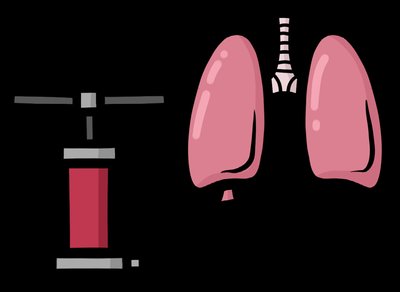
pulm/o: lung
rhin/o: nose

Example: Etiology is the study of the causes of disease or condition.
Prefixes
Prefixes on Numbers and Amount
Prefixes provide details about numbers, sizes, or amounts in medical terms.
nulli-: none

semi-, hemi-: half

poly-: many
uni-: one

Example: Polyotia means having more than two ears.
Prefixes That Indicate a Quality
These prefixes modify the meaning of a word to describe a particular attribute or characteristic.
brady-: slow
dys-: difficult, bad, painful

eu-: good, normal

heter-: different
mal-: bad, abnormal

mega-, megal-: very large
neo-: new
tachy-: fast
ultra-: beyond normal
Example: Dyspnea means difficulty breathing.
Prefixes on Position and Placement
These prefixes specify location, direction, or spatial relationship.
ante-, pre-: in front of
dorsi-, dorso-: behind
ep-, epi-: over, above, on top of
infer-, infra-, hypo-: below, under
circum-: around
peri-: surrounding
ab-: away from
ad-: toward
ec-: outside, out
intra-: within
inter-: between
para-: beside, near
dia-: through
Example: Hypothermia means below normal body temperature.
Suffixes
General Use Suffixes
Suffixes are added to the end of medical terms to indicate condition, action, body component, specialty, or treatment.
-blast: immature cell
-cyte: cell
-logy: study of
-therapy: treatment
-thermy: heat
Example: Hepatoblast refers to an immature liver cell.
Grammatical Suffixes: Nouns and Diminutives
Grammatical suffixes convert word roots into nouns, adjectives, or diminutives (indicating something small).
-icle, -ole, -ula, -ule: diminutive suffixes (e.g., ventricle, pustule)
Pathological Conditions – Standalone Terms
Some suffixes can be medical terms on their own, indicating specific pathological conditions.
-mania: obsession
-phobia: fear
-edema: swelling
-emesis: vomiting
-asthenia: weakness
Example: Hematemesis means vomiting blood.
Pathological Conditions – Other Suffixes
-algia: pain
-itis: inflammation
-lepsy: seizure
-malacia: softening
-megaly: enlargement
-oma: tumor
-pathy: disease
-penia: deficiency
-phasia: speech
-plegia: paralysis
-rrhage: bursting forth
-rrhea: flow, discharge
-rrhexis: rupture
Example: Fibromyalgia is a condition characterized by chronic muscle pain.
Diagnostic & Surgical Procedures
-tomy: surgical incision
-ectomy: surgical removal
-stomy: new opening
-centesis: surgical puncture to drain fluid
-desis: binding or joining
-rrhaphy: suturing
-graph: recording instrument
-graphy: recording technique
-meter: measuring instrument
-metry: measuring technique
-scope: examination instrument
-scopy: examination technique
Example: Otoscope is a device used for visual examination of the inside of the ear.
Plural Endings
Formation of Plural Endings
Many medical terms have singular and plural forms based on Latin or Greek origins. Understanding these endings is important for accurate communication.
-is becomes -es (e.g., metastasis → metastases)
-um becomes -a (e.g., flagellum → flagella)
-ex becomes -ices (e.g., cortex → cortices)
-us becomes -i (e.g., bronchus → bronchi)
-nx becomes -nges (e.g., larynx → larynges)
Singular | Plural |
|---|---|
metastasis | metastases |
flagellum | flagella |
cortex | cortices |
bronchus | bronchi |
larynx | larynges |
Example: The plural form of metastasis is metastases.
Summary Table: Medical Term Components
Component | Definition | Example |
|---|---|---|
Word Root | Core meaning | cardi (heart) |
Combining Vowel | Connects word parts | o in cardi/o |
Prefix | Beginning, modifies meaning | hypo- (below) |
Suffix | End, modifies meaning | -emia (blood condition) |
Additional info: Academic context and examples were expanded for clarity and completeness. Only images directly relevant to the explanation of word roots were included.
