 Back
Medical Terminology Study Guide: Blood, Lymphatic, and Immune Systems
Study Guide - Smart Notes
 Tailored notes based on your materials, expanded with key definitions, examples, and context.
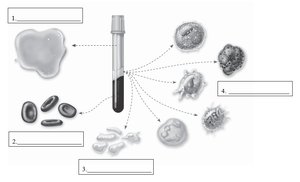
Q1. Label the components of whole blood in the diagram.
Background
Topic: Blood Anatomy and Physiology
This question tests your knowledge of the major components of blood, including plasma, red blood cells, white blood cells, and platelets. Understanding these elements is fundamental to medical terminology related to hematology.
Key Terms:
Plasma: The liquid portion of blood, mostly water, containing proteins, nutrients, and waste products.
Erythrocytes (Red Blood Cells): Cells responsible for carrying oxygen.
Leukocytes (White Blood Cells): Cells involved in immune defense.
Platelets (Thrombocytes): Cell fragments involved in blood clotting.
Step-by-Step Guidance
Examine the diagram and identify the three main sections in the test tube: the top (clear), middle (thin white), and bottom (dark).
Recall that plasma is the clear, watery fluid and makes up the top portion of the tube.
The bottom section contains the red blood cells, which are denser and settle at the bottom.
The middle, thin white section is called the "buffy coat" and contains platelets and white blood cells.
Match the labeled pointers to the correct blood components based on their appearance and location in the tube.
Try solving on your own before revealing the answer!
Final Answer:
1: Plasma
2: Red blood cells (erythrocytes)
3: Platelets (thrombocytes)
4: White blood cells (leukocytes)
The diagram visually separates the components of whole blood after centrifugation. Plasma is the top layer, red blood cells are at the bottom, and the buffy coat in the middle contains platelets and white blood cells.
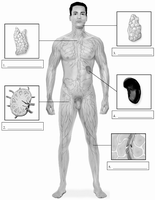
Q2. Label the organs of the lymphatic system in the diagram.
Background
Topic: Lymphatic System Anatomy
This question assesses your ability to identify the major organs and structures of the lymphatic system, which are essential for immune function and fluid balance.
Key Terms:
Thymus: Organ located in the chest, important for T-cell maturation.
Lymph nodes: Small, oval structures that filter lymph and house immune cells.
Tonsils: Lymphatic tissue in the throat that protects against pathogens.
Spleen: Organ that filters blood and removes old red blood cells.
Lymphatic vessels: Network that transports lymph throughout the body.
Step-by-Step Guidance
Study the diagram and note the locations of the labeled organs and structures.
Recall the anatomical positions: thymus (upper chest), lymph nodes (clusters throughout the body, especially in the groin and armpit), tonsils (throat), spleen (left upper abdomen), and lymphatic vessels (web-like network).
Match each pointer to the correct organ based on its shape and location in the diagram.
Review the functions of each organ to reinforce your understanding.
Try solving on your own before revealing the answer!
Final Answer:
1: Thymus gland
2: Lymph node
3: Tonsil
4: Spleen
5: Lymphatic vessels
Each pointer corresponds to a major organ or structure of the lymphatic system, which plays a critical role in immunity and fluid regulation.
