 Back
Medical Terminology: The Digestive System – Comprehensive Study Notes
Study Guide - Smart Notes
 Tailored notes based on your materials, expanded with key definitions, examples, and context.
Chapter 10: The Digestive System
Learning Objectives
This chapter introduces the terminology, anatomy, pathophysiology, signs and symptoms, diseases, disorders, treatments, procedures, devices, and abbreviations associated with the digestive system. Students will learn to define, spell, and construct medical terms, as well as understand their clinical applications.
Define and spell word parts used in digestive system terminology.
Break down and define common medical terms for symptoms, diseases, disorders, procedures, treatments, and devices.
Build medical terms from word parts.
Pronounce and spell common medical terms associated with the digestive system.
Word Parts Associated with the Digestive System
Combining Forms and Roots
Medical terms for the digestive system are constructed from specific word parts, including roots, prefixes, and suffixes. Understanding these components is essential for accurate communication and comprehension in medical settings.
abdomin/o – abdomen
an/o – anus
append/o, appendic/o – appendix
bil/i – bile
cec/o – cecum
chol/e – bile, gall
choledoch/o – common bile duct
col/o, colon/o – colon
cyst/o – bladder, sac
dent/o – tooth
duoden/o – duodenum
enter/o – intestine
esophag/e, esophag/o – esophagus
gastr/o – stomach
gingiv/o – gums
gloss/o – tongue
hepat/o – liver
ile/o – ileum
jejun/o – jejunum
lingu/o – tongue
or/o – mouth
pancreat/o – pancreas
peps/o, pept/o – digestion
peritone/o – peritoneum
proct/o – rectum, anus
pylor/o – pylorus
rect/o – rectum
sial/o – saliva, salivary gland
sigm/o – sigmoid colon
stomat/o – mouth
Prefixes and Suffixes
Prefixes: a-, dia-, dys-, re-, an-, mal-, anti-, endo-
Suffixes: -algia, -dynia, -emesis, -emia, -ia, -megaly, -osis, -rrhea, -al, -ectasis, -iasis, -ic, -itis, -malacia, -oid, -oma, -pathy, -ptosis, -sis, -y, -centesis, -ectomy, -emetic, -gram, -graphy, -plasty, -rrhaphy, -scopy, -spasmodic, -stomy, -tomy
Anatomy of the Digestive System
Overview and Main Organs
The digestive system converts food into usable energy and nutrients for growth and repair. It consists of the gastrointestinal (GI) tract and accessory organs that secrete enzymes and chemicals to aid digestion.
GI Tract: Mouth, pharynx, esophagus, stomach, small intestine, large intestine
Accessory Organs: Salivary glands, pancreas, liver, gallbladder
Organs of the Digestive System
The digestive system includes various organs, each with specific functions in the breakdown and absorption of nutrients.

The Oral Cavity
The oral cavity is the entry point for food and is involved in mechanical and chemical digestion.

Pathophysiology of the Digestive System
Microbiota and Infection Risk
The digestive system is constantly exposed to potential pathogens. The GI tract contains a large population of bacteria known as microbiota, which are normally harmless but can cause severe infections if their balance is disrupted or if they spread to other areas.
Inherited defects and tumors can affect GI organs.
Specialists: Head and neck specialists (mouth/throat), gastroenterologists (stomach/intestines), proctologists (rectal/anal), hepatobiliary specialists (liver), oncologists (cancer), internal medicine doctors (routine GI problems).
Signs and Symptoms of Digestive System Disorders
Common Terms and Their Word Parts
Aphagia: Inability to swallow
Ascites: Accumulation of fluid in the abdominal cavity
Constipation: Difficulty in passing stools
Diarrhea: Frequent, watery bowel movements
Dyspepsia: Difficult digestion (dys- = difficult, peps/o = digestion, -ia = condition of)
Dysphagia: Difficulty swallowing
Flatus/Flatulence: Gas in the digestive tract
Gastrodynia: Stomach pain
Halitosis: Bad breath
Hematemesis: Vomiting blood (hemat/o = blood, -emesis = vomiting)
Hepatomegaly: Enlarged liver
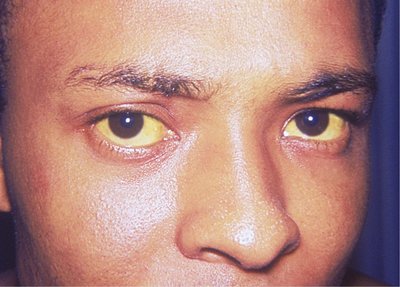
Jaundice: Yellowing of skin and eyes due to liver dysfunction
Nausea: Sensation of needing to vomit
Reflux: Backflow of stomach contents into the esophagus
Steatorrhea: Fatty discharge (steat/o = fat, -rrhea = discharge)
Ascites
Ascites is often seen in malnutrition or liver/heart disease, where fluid accumulates in the abdominal cavity.

Jaundice
Jaundice is a clinical sign of liver disease, characterized by yellowing of the sclera and skin.
Diseases and Disorders of the Digestive System
Common Diseases and Disorders
Anorexia nervosa: Eating disorder characterized by self-starvation
Appendicitis: Inflammation of the appendix
Bulimia: Eating disorder involving binge eating and purging
Cheilitis/Cheilosis: Inflammation/cracking of the lips
Cholecystitis: Inflammation of the gallbladder (cholecyst/o = gallbladder, -itis = inflammation)
Choledochitis: Inflammation of the common bile duct
Cholelithiasis: Gallstones
Choledocholithiasis: Stones in the common bile duct
Cirrhosis: Chronic liver deterioration
Cleft palate: Congenital defect of the palate
Colitis: Inflammation of the colon (ulcerative colitis)
Colon cancer: Tumors in the colon/rectum (colorectal cancer)
Crohn’s disease: Chronic inflammatory bowel disease
Diverticulosis/Diverticulitis: Presence/inflammation of abnormal pouches in the colon
Duodenal ulcer: Ulcer in the duodenum
Dysentery: Severe diarrhea with blood
Enteritis: Inflammation of the intestine
Esophagitis: Inflammation of the esophagus
Esophagomalacia: Softening of the esophagus
Esophageal cancer: Malignant tumor of the esophagus
Food-borne illness: Disease caused by contaminated food
Gastrectasis: Expansion/dilation of the stomach (gastromegaly)
Gastric cancer: Malignant tumor of the stomach
Gastric ulcer: Ulcer in the stomach
Gastritis: Inflammation of the stomach
Gastroenteritis: Inflammation of stomach and intestines
Gastroduodenitis: Inflammation of stomach and duodenum
Gastroenterocolitis: Inflammation of stomach, intestines, and colon
Gastroesophageal reflux disease (GERD): Chronic reflux of stomach contents
Gastromalacia: Softening of the stomach
Giardiasis: Infection by Giardia protozoan
Gingivitis: Inflammation of the gums
Glossitis: Inflammation of the tongue (glossopathy)
Hemorrhoids: Swollen veins in the rectal area
Hepatitis: Inflammation of the liver
Malignant hepatoma: Liver cancer (hepatocellular carcinoma, HCC)
Hiatal hernia: Stomach protrudes through the diaphragm
Inguinal hernia: Protrusion in the groin area
Umbilical hernia: Protrusion near the navel
Strangulated hernia: Hernia with compromised blood supply
Inflammatory bowel disease (IBD): Chronic inflammation of the GI tract
Intussusception: Infolding of the intestine
Irritable bowel syndrome (IBS): Functional disorder of the bowel
Lactose intolerance: Inability to digest lactose
Malabsorption syndrome: Poor absorption of nutrients (celiac disease, gluten sensitivity enteropathy)
Pancreatitis: Inflammation of the pancreas
Parotitis: Inflammation of the parotid gland (sialadenitis)
Peptic ulcer: Ulcer in the stomach or duodenum
Peritonitis: Inflammation of the peritoneum
Polyposis: Multiple polyps in the colon
Proctitis: Inflammation of the rectum
Proctoptosis: Drooping of the rectum
Volvulus: Twisting of the intestine causing obstruction
Appendicitis
Appendicitis is the inflammation of the appendix, which can lead to severe abdominal pain and requires surgical removal.
Cholecystitis, Cholelithiasis, Choledocholithiasis
These conditions involve inflammation and stones in the gallbladder and bile ducts, leading to pain and digestive disturbances.
Cirrhosis
Cirrhosis is a chronic liver disease where healthy cells are replaced by connective tissue and fat, impairing liver function.
Cleft Palate
Cleft palate is a congenital defect where the bones of the palate fail to fuse, creating a gap between the mouth and nasal cavity.
Colon Cancer
Colon cancer involves the growth of malignant tumors in the colon and rectum, often detected during colonoscopy.
Diverticulosis and Diverticulitis
Diverticulosis is the presence of abnormal pouches (diverticula) in the colon; diverticulitis is their inflammation, increasing cancer risk.
Gastric Cancer
Gastric cancer is a malignant tumor originating in the stomach wall, which can spread to other organs.
Giardiasis
Giardiasis is an infection caused by Giardia protozoan, affecting the small intestine and leading to malabsorption.
Hiatal Hernia
Hiatal hernia occurs when the stomach protrudes through the diaphragm, often causing reflux and esophagitis.
Intussusception
Intussusception is the infolding of the small intestine, reducing motility and causing obstruction.
Celiac Disease
Celiac disease is a form of malabsorption syndrome caused by an immune reaction to gluten, resulting in destruction of intestinal villi.
Peptic Ulcer
Peptic ulcers are open sores in the stomach or duodenum, commonly caused by H. pylori infection.
Polyposis
Polyposis is the development of multiple polyps along the inner wall of the large intestine.
Volvulus
Volvulus is a twisting of the intestine, leading to obstruction and severe complications.
Treatments, Procedures, and Devices
Common Procedures and Devices
Abdominocentesis: Surgical puncture of the abdomen to remove fluid
Antacid: Medication to neutralize stomach acid
Antiemetic: Medication to prevent vomiting
Antispasmodic: Medication to reduce muscle spasms
Appendectomy: Surgical removal of the appendix
Bariatric surgery: Surgical treatment for obesity (gastric band, Roux-en-Y gastric bypass)
Cathartic: Medication to promote bowel movements
Cheilorrhaphy: Surgical repair of the lip
Cholecystectomy: Removal of the gallbladder
Cholecystogram/Cholecystography: Imaging of the gallbladder
Choledocholithotomy: Incision to remove stones from the common bile duct
Colonoscopy: Visual examination of the colon using a colonoscope
Total/Partial/Hemicolectomy: Removal of all/part of the colon
Colostomy: Creation of an artificial opening (stoma) for waste elimination
Fecal occult blood test (FOBT): Test for hidden blood in stool
Gastrectomy: Removal of the stomach
Gastric lavage: Washing out the stomach
Gavage: Feeding through a nasogastric tube
GI endoscopy: Visual examination of the GI tract (esophagoscopy, gastroscopy, esophagogastroduodenoscopy)
GI series: Imaging of the GI tract using barium (upper GI series, lower GI series, barium swallow, barium enema)
Gingivectomy: Removal of gum tissue
Glossorrhaphy: Repair of the tongue
Hemorrhoidectomy: Removal of hemorrhoids
Herniorrhaphy: Repair of a hernia
Ileostomy: Creation of an opening in the ileum
Laparotomy: Surgical incision into the abdomen
Laparoscopy: Minimally invasive abdominal surgery using a laparoscope
Polypectomy: Removal of polyps
Pyloroplasty: Surgical repair of the pylorus
Stool culture and sensitivity (C&S): Test for pathogens in stool
Vagotomy: Cutting the vagus nerve to reduce acid secretion
Bariatric Surgery
Bariatric surgery includes procedures such as adjustable gastric band and Roux-en-Y gastric bypass for obesity treatment.

Colonoscopy
Colonoscopy is a procedure using a flexible colonoscope to visually examine the colon for tumors and other abnormalities.

Colostomy
Colostomy involves creating an artificial opening (stoma) in the colon for waste elimination, often accompanied by a storage bag.

GI Endoscopy
GI endoscopy is the visual examination of the interior of the GI tract using specialized instruments.

GI Series
GI series includes upper and lower GI imaging using barium to visualize the digestive tract.

Laparoscopy
Laparoscopy is a minimally invasive abdominal surgery using a laparoscope inserted through small incisions.

Abbreviations of the Digestive System
Common Abbreviations
B E: Barium enema
C&S: Culture and sensitivity
E G D: Esophagogastroduodenoscopy
F O B T: Fecal occult blood test
G E R D: Gastroesophageal reflux disease
G I: Gastrointestinal
H A V: Hepatitis A virus
H B V: Hepatitis B virus
H C V: Hepatitis C virus
H C C: Hepatocellular carcinoma
I B D: Inflammatory bowel disease
I B S: Irritable bowel syndrome
L G I: Lower gastrointestinal
L I: Large intestine
N&V: Nausea and vomiting
U G I: Upper gastrointestinal
Summary Table: Key Word Parts and Their Meanings
Word Part | Meaning |
|---|---|
abdomin/o | abdomen |
an/o | anus |
append/o, appendic/o | appendix |
chol/e | bile, gall |
col/o, colon/o | colon |
duoden/o | duodenum |
enter/o | intestine |
gastr/o | stomach |
hepat/o | liver |
ile/o | ileum |
jejun/o | jejunum |
pancreat/o | pancreas |
proct/o | rectum, anus |
rect/o | rectum |
sigm/o | sigmoid colon |
stomat/o | mouth |
Conclusion
This chapter provides a comprehensive overview of medical terminology related to the digestive system, including word parts, anatomy, pathophysiology, signs and symptoms, diseases, disorders, treatments, procedures, devices, and abbreviations. Mastery of these terms is essential for effective communication and understanding in medical practice.
