 Back
Study Guide: Medical Terminology – Chapter 12 Respiratory System
Study Guide - Smart Notes
 Tailored notes based on your materials, expanded with key definitions, examples, and context.
Respiratory System Overview
Introduction to Respiration
The respiratory system is responsible for the exchange of gases, primarily oxygen (O2) and carbon dioxide (CO2), between the body and the environment. Respiration is essential for cellular metabolism and can be divided into three distinct parts:
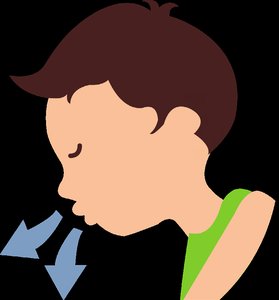
Ventilation (Breathing): The movement of air in and out of the lungs. - Inhalation: Brings oxygen-rich air into the lungs. - Exhalation: Expels carbon dioxide-rich air out of the lungs.

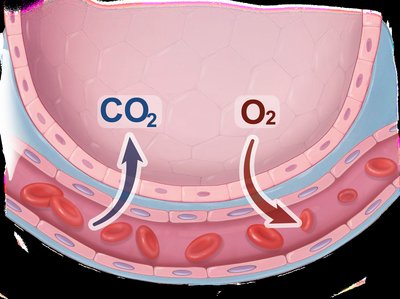
External Respiration: The exchange of O2 and CO2 between the alveoli in the lungs and the bloodstream.
Internal Respiration: The exchange of O2 and CO2 between the blood and body tissues.
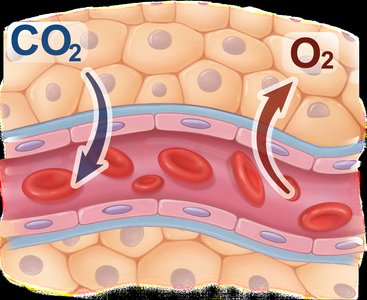
Example: Gaseous exchange between blood and body tissues is called internal respiration; movement of air out of the lungs is exhalation; exchange of gases with blood is external respiration; movement of air into and out of the lungs is ventilation.
Anatomy of the Respiratory System
Division of the Respiratory Tract
The respiratory system is divided into two main parts:
Upper Respiratory Tract: Includes the nasal cavity, pharynx, and larynx.
Lower Respiratory Tract: Includes the trachea, bronchi, bronchioles, and lungs.
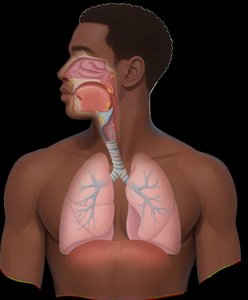
Upper Respiratory Tract
Nasal Cavity
The nasal cavity humidifies and warms the air entering the respiratory system. The nares (nostrils) are external openings separated by the nasal septum. The palate forms the roof of the mouth and divides the nasal and oral cavities:
Hard Palate: Bony anterior section.
Soft Palate: Muscular posterior section.
Paranasal Sinuses: Air-filled cavities that act as echo chambers during sound production.
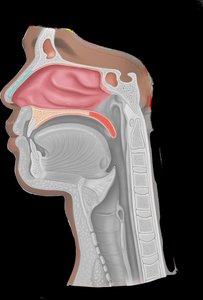
Example: The hard palate is the anterior part of the palate constructed of bone; the nasal cavity humidifies and warms air; paranasal sinuses are air-filled, not fluid-filled.
Pharynx (Throat)
The pharynx is used by both the respiratory and digestive systems and is divided into three parts:
Nasopharynx: Superior section behind the nasal cavity.
Oropharynx: Middle section behind the oral cavity.
Laryngopharynx: Inferior section behind the larynx.
Tonsils: Collections of lymphatic tissue (pharyngeal, palatine, lingual) that help prevent pathogens from entering through food or air.
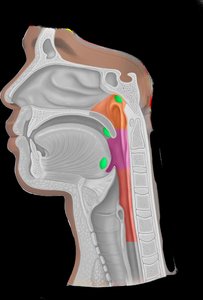
Example: Pharyngeal tonsils are located in the superior posterior part of the pharynx; lingual tonsils are at the base of the tongue; the pharynx is divided into nasopharynx, oropharynx, and laryngopharynx.
Larynx (Voice Box)
The larynx is located below the pharynx and above the trachea. It contains the vocal cords and is composed of several cartilages, with the thyroid cartilage (Adam’s apple) being the largest. The epiglottis is a flap of cartilage at the root of the tongue that covers the larynx during swallowing to prevent food from entering the trachea.
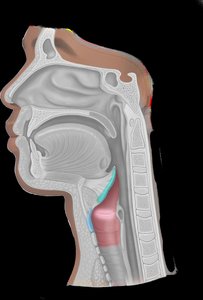
Example: The larynx is made up of several cartilages, with thyroid cartilage being the largest; the glottis is a slit-like opening containing vocal cords that vibrate to produce sound; the epiglottis is a cartilaginous flap that prevents food from entering the larynx.
Lower Respiratory Tract
Trachea (Windpipe)
The trachea is a passageway for air, extending from the larynx to the bronchi. It cleanses, warms, and moisturizes air as it travels to the lungs. The trachea is composed of smooth muscle and cartilage rings lined by a mucous membrane.
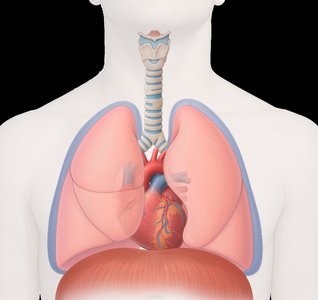
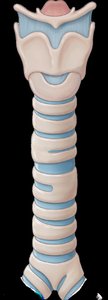
Example: The trachea is anterior to the esophagus, formed from cartilage, and bifurcates into bronchi. The inside of the trachea is lined by a mucous membrane that traps dust and particles.
Bronchi and Bronchioles
The bronchi are the two main branches of the trachea at its distal end. They subdivide into secondary bronchi, tertiary bronchi, and bronchioles. The bronchioles lead to alveoli, which are tiny air sacs tightly encased in capillaries for gas exchange.
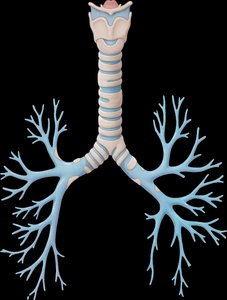
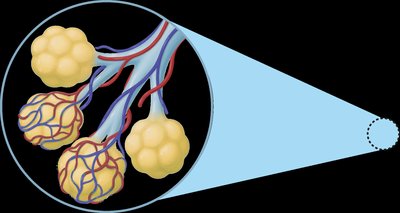
Example: Bronchioles are the smallest air passageways and lead to alveoli; alveoli are tightly wound in capillaries to allow gas exchange with blood.
Lungs
The lungs are conical-shaped spongy organs in the thoracic cavity, enclosed in the pleural membrane. The pleural membrane is a fluid-filled double-walled membrane that reduces friction as the lungs expand and contract. The pointed upper part is the apex, and the broad lower part is the base. The right lung has three lobes, while the left lung has two lobes.
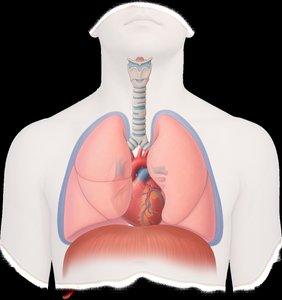
Example: The lungs are encased in the pleural membrane; the left lung is smaller due to the heart; the apex is the upper pointed part, and the base is the lower broad part; the right lung has three lobes, the left lung has two.
Medical Terminology: Word Building
Combining Forms
Combining forms are used to build medical terms related to the respiratory system:
Combining Form | Definition | Memory Tool |
|---|---|---|
aer/o | air | aer/o/bics |
pneum/o, pneumon/o | air, lung | pneumon/ia |
phren/o | diaphragm | Friend of lungs |
lingu/o | tongue | lingu/istics |
hal/o, halat/o, spir/o | to breathe | Inhaling, in-spiration |
phon/o | voice, sound | phon/o/graph |
Example: Downward displacement of the diaphragm is phrenoptosis; swallowing too much air is aerophagia.
Pathology Combining Forms
Combining Form | Definition | Memory Tool |
|---|---|---|
atel/o | imperfect, incomplete | A telly |
coni/o | dust | Cone of dust |
anthrac/o | coal, coal dust | A track |
tuss/o | cough | Tossing and turning |
rhonch/o | wheeze | Rhonk! Rhonk! |
sphyx/o | pulse | Squeeze makes a pulse |
Example: Medication used to suppress cough is antitussive; a collapsed lung is atelectasis; lung damage from inhaling dust is pneumoconiosis.
Suffixes and Prefixes
Suffix/Prefix | Definition | Memory Tool |
|---|---|---|
-pnea | breathing | sleep a/pnea |
-capnia | carbon dioxide | |
-ptysis | spitting | Not appetizing |
-osmia | smell | Oh smell! |
syn- | together | syn/chronized |
Example: Bradypnea is slow breathing; hemoptysis is coughing up blood; breathing too fast can decrease CO2 levels, known as hypocapnia.
Respiratory Pathology
Clinical Disorders and Conditions
Medical Term | Definition | Memory Tool |
|---|---|---|
Cheyne-Stokes Respiration | Abnormal sleep with periods of breathing followed by apnea (10–60s) | Chain Smoking In Bed |
Kussmaul Breathing | Labored breathing; air hunger | Gasping Kiss |
Byssinosis | Lung disease caused by inhalation of dust from raw textiles | Dusty Business |
COPD | Group of lung diseases characterized by obstruction of airflow and breathing difficulty | |
Legionnaire Disease | Severe pneumonia caused by inhalation of bacteria-infested water droplets | Legion of water |
RDS | Condition in premature newborns where lungs lack ability to keep alveoli inflated | Really Deficient Sacs |
RSV | Viral infection of lungs and airways, common in toddlers | Real Serious Virus |
SARS | Severe form of pneumonia resulting in acute distress or death | Spreading Aches & Respiratory Stress |
Example: Legionnaire’s disease is acquired in warm, stagnant water systems; byssinosis symptoms include tightness in chest, wheezing, or shortness of breath.
Respiratory Diagnostic and Laboratory Terms
Medical Term | Definition | Memory Tool |
|---|---|---|
Percussion | Physical exam using fingertips to tap on body’s surface to assess underlying condition | Percussion Drum |
Arterial Blood Gases (ABG) | Test measuring acidity, O2, and CO2 levels in blood | Acids Bases Gases |
Pulmonary Function Test | Group of tests measuring lung capacity, volume, airflow, and gas exchange rates | People Forcefully Test lungs |
Ventilation Perfusion Scan | Nuclear medicine test evaluating airflow (ventilation) and blood flow (perfusion) to diagnose lung disorders | Visualize Pulmonary Status |
Tuberculin Skin Test (TST) | Intradermally injected solution to determine exposure to tuberculosis | TeST for TB |
Cystic Fibrosis | Genetic disorder where lungs form viscous mucus that blocks airways | Can’t Clear Phlegm |
Sweat Test | Measures chloride in sweat to diagnose cystic fibrosis | Salty Tears |
Example: The best method to administer the tuberculin skin test is injecting into the skin at a 15º angle; recurring pulmonary infections and abnormal sweat chloride indicate cystic fibrosis.
Respiratory Pharmacology
Medical Term | Description of Function | Memory Tool |
|---|---|---|
Mast Cell Stabilizers | Inhibit release of histamine during allergic reaction | MASTer Dam |
Expectorants | Loosen mucus, making it easier to expel from lungs | Expel the mucus |
Beta-Adrenergic Agonists | Relax smooth muscle in airways, causing bronchodilation | Being Anti-Asthma |
Example: Expectorants thin and loosen mucus to cough out; beta-adrenergic agonists relax smooth muscle for bronchodilation in COPD management.
Key Equations and Concepts
Gas Exchange: Oxygen and carbon dioxide are exchanged by diffusion across alveolar and capillary membranes.
Partial Pressure: The movement of gases is driven by differences in partial pressure ( and ) between alveoli and blood.
Equation for Gas Diffusion:
Additional info: Academic context was added to clarify anatomical divisions, terminology, and clinical relevance for exam preparation.
