Back

4) Avoiding Complement System definitions

Control buttons has been changed to "navigation" mode.
1/13
  • Complement System

    A group of blood proteins that, when activated, trigger inflammation, opsonization, or membrane attack complexes to destroy pathogens.
  • Innate Immunity

    The body's first line of defense, providing immediate, non-specific protection against invading pathogens.
  • Serum

    The liquid component of blood where complement proteins are found, excluding cells and clotting factors.
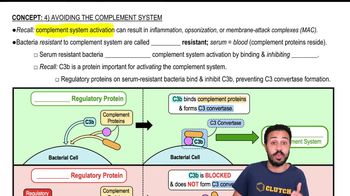
  • Serum Resistant Bacteria

    Microbes capable of evading destruction by blocking complement system activation, often through surface proteins.
  • C3b

    A complement protein essential for activating downstream immune responses by binding to pathogen surfaces.
  • Regulatory Protein

    A surface molecule on certain bacteria that binds and inhibits C3b, preventing complement activation.
  • C3 Convertase

    An enzyme complex formed during complement activation, crucial for amplifying the immune response.
  • Opsonization

    A process where pathogens are marked for enhanced phagocytosis by immune cells, often via complement proteins.
  • Membrane Attack Complex

    A structure formed by complement proteins that creates pores in pathogen membranes, leading to cell lysis.
  • Inflammation

    A localized immune response characterized by redness, heat, and swelling, often triggered by complement activation.
  • Pathogen

    A microorganism, such as a bacterium, capable of causing disease in a host organism.
  • Destruction

    The elimination of pathogens, often achieved through immune mechanisms like the complement system.
  • Elimination

    The removal of harmful microbes from the body, frequently facilitated by immune responses.