Back

Affinity Maturation definitions

Control buttons has been changed to "navigation" mode.
1/13
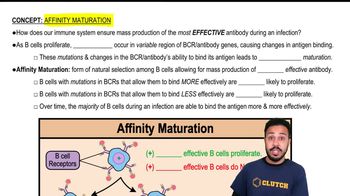
  • Affinity Maturation

    A natural selection process among B cells that enhances antibody effectiveness by favoring cells with improved antigen binding.
  • B Cell

    A lymphocyte responsible for producing antibodies, undergoing selection for improved antigen recognition during immune responses.
  • Antibody

    A protein produced by plasma cells that binds specific antigens, with effectiveness enhanced through affinity maturation.
  • B Cell Receptor

    A membrane-bound immunoglobulin on B cells that recognizes antigens and undergoes mutation to improve binding.
  • Variable Region

    A segment of antibody or BCR genes where mutations alter antigen binding specificity and effectiveness.
  • Antigen Binding Site

    A region on antibodies or BCRs that physically interacts with antigens, its affinity shaped by genetic mutations.
  • Mutation

    A genetic alteration in BCR or antibody genes that can increase or decrease antigen binding efficiency.
  • Clone

    A group of identical B cells derived from a single ancestor, sharing improved antigen binding after selection.
  • Proliferation

    The rapid division of B cells, favoring those with higher antigen affinity, leading to more effective immune responses.
  • Antibody Class Switching

    A process enabling B cells to change the antibody type produced, complementing affinity maturation for better defense.
  • Plasma Cell

    A differentiated B cell specialized in secreting large amounts of antibodies with enhanced antigen affinity.
  • Natural Selection

    A mechanism where B cells with superior antigen binding are favored to survive and multiply during immune responses.
  • Antigen

    A foreign molecule recognized by BCRs or antibodies, driving the selection of B cells with improved binding.