Back

Emerging Infectious Diseases quiz

Control buttons has been changed to "navigation" mode.
1/15
  • What is an emerging infectious disease?

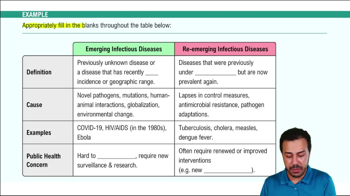
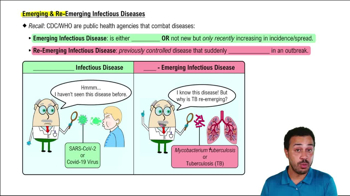
    An emerging infectious disease is one that is either completely new or has recently increased in incidence or geographic spread, requiring new control strategies.
  • What is a reemerging infectious disease?

    A reemerging infectious disease is one that was previously controlled but has made a comeback, often due to changes in conditions or lapses in prevention.
  • Which virus is an example of an emerging infectious disease?

    SARS-CoV-2, the virus responsible for COVID-19, is an example of an emerging infectious disease.
  • Which disease is an example of a reemerging infectious disease?

    Tuberculosis (TB), caused by Mycobacterium tuberculosis, is an example of a reemerging infectious disease.
  • Why do emerging infectious diseases often require new control strategies?

    Because they behave in ways not seen before, creating uncertainties and risks that demand modified tools and approaches.
  • What is one major factor contributing to the emergence and reemergence of infectious diseases?

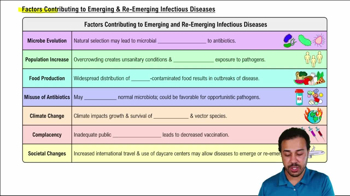
    Microbe evolution, which allows pathogens to change characteristics and potentially gain new pathogenic abilities.
  • How does population increase contribute to infectious disease emergence?

    Overcrowding creates unsanitary conditions and increases exposure to pathogens, facilitating disease spread.
  • What role does food production play in disease outbreaks?

    Widespread distribution of cross-contaminated food can result in outbreaks of infectious diseases.
  • How can misuse of antibiotics lead to emerging or reemerging diseases?

    Misuse disrupts normal microbiota, favoring opportunistic pathogens and allowing new or old diseases to emerge.
  • How does climate change affect infectious disease dynamics?

    Climate change alters temperature and humidity, impacting pathogen and vector survival and potentially expanding disease ranges.
  • What is complacency in the context of infectious diseases?

    Complacency is letting our guard down, assuming a problem is solved, and failing to maintain prevention strategies, which can lead to disease reemergence.
  • How can decreased vaccination rates contribute to reemerging diseases?

    Lower vaccination rates reduce community immunity, allowing previously controlled diseases like measles to reemerge.
  • What societal changes can influence the spread of infectious diseases?

    Increased international travel and greater use of daycare centers can facilitate the emergence and reemergence of diseases.
  • Why is vigilance important in managing infectious diseases?

    Vigilance helps prevent complacency and ensures continued application of effective public health measures to control disease spread.
  • What is the role of epidemiology in controlling infectious diseases?

    Epidemiology helps understand disease dynamics, guiding strategies for prevention, control, and management of infectious diseases.