Back

Fever definitions

Control buttons has been changed to "navigation" mode.
1/13
  • Fever

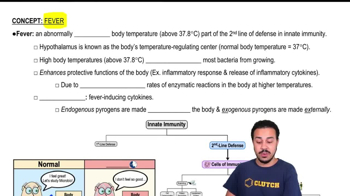
    An innate immune response marked by body temperature above 37.8°C, aiding in microbial elimination and enhancing protective body functions.
  • Innate Immunity

    A non-specific defense mechanism present from birth, providing immediate protection against pathogens as a second line of defense.
  • Hypothalamus

    A brain region responsible for regulating body temperature, maintaining homeostasis around 37°C under normal conditions.
  • Second Line of Defense

    A set of innate immune responses, including fever and inflammation, activated after pathogens bypass initial barriers.
  • Pyrogens

    Fever-inducing cytokines released by cells, which signal the hypothalamus to raise body temperature.
  • Endogenous Pyrogens

    Internally produced fever-inducing cytokines, originating from within the body during immune responses.
  • Exogenous Pyrogens

    Fever-inducing substances that originate outside the body, often from microbial sources.
  • Inflammatory Response

    A protective reaction enhanced by fever, involving increased cytokine release and immune cell activity to eliminate microbes.
  • Cytokines

    Signaling proteins released by cells, crucial for mediating immune responses and inducing fever.
  • Enzymatic Reactions

    Biochemical processes in the body that proceed faster at elevated temperatures, aiding in quicker microbial elimination.
  • Microbial Elimination

    The process of removing or destroying pathogens, accelerated by higher body temperatures during fever.
  • Protective Mechanism

    A physiological process, such as fever, that helps prevent and eliminate infections by inhibiting pathogen growth.
  • Body Temperature

    A physiological parameter regulated by the hypothalamus, normally around 37°C, rising during fever as part of immune defense.