Back

Germination definitions

Control buttons has been changed to "navigation" mode.
1/13
  • Germination

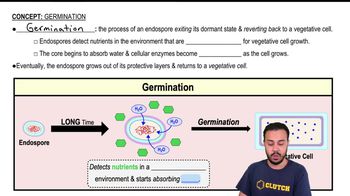
    Process where an endospore exits dormancy and transforms into a metabolically active vegetative cell in response to favorable conditions.
  • Endospore

    Highly resistant, dormant structure formed by certain bacteria to survive unfavorable environmental conditions.
  • Vegetative Cell

    Metabolically active bacterial form capable of growth and reproduction under favorable environmental conditions.
  • Sporulation

    Process by which a vegetative cell forms an endospore to withstand harsh environments.
  • Dormant State

    Condition in which metabolic activity is minimal, allowing survival during periods of environmental stress.
  • Nutrient Detection

    Ability of an endospore to sense environmental molecules, such as glucose, signaling favorable conditions for growth.
  • Core

    Central region of an endospore that absorbs water during germination, enabling enzyme activation.
  • Enzyme Activation

    Initiation of biochemical catalysts within the endospore core, triggered by water uptake, essential for returning to vegetative state.
  • Protective Layers

    Multiple barriers surrounding the endospore, providing resistance to environmental hazards until germination occurs.
  • Favorable Environment

    Set of external conditions, such as nutrient availability, that support vegetative cell growth and reproduction.
  • Unfavorable Environment

    Set of external conditions that threaten cell survival, often triggering sporulation in vegetative cells.
  • Water Absorption

    Uptake of H2O by the endospore core, a critical early step in initiating germination.
  • Glucose

    Simple sugar molecule often detected by endospores as a signal of suitable conditions for germination.