What type of genome does the influenza A virus have?
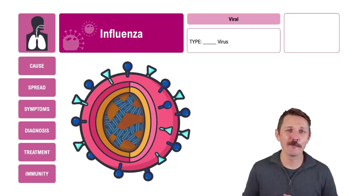
Influenza A has a single-stranded, antisense, segmented RNA genome.
What are the two main glycoprotein spikes on the influenza virus surface called?
They are hemagglutinin (HA) and neuraminidase (NA).
What is the primary function of the hemagglutinin (HA) spike protein?
Hemagglutinin helps the virus recognize and enter the host cell.
What role does neuraminidase (NA) play in the influenza virus life cycle?
Neuraminidase helps the virus exit the host cell after replication.
How is influenza A named (e.g., H1N1)?
It is named based on the specific types of HA and NA proteins present on its surface.
Which influenza types are responsible for most seasonal epidemics?
Influenza A and B are responsible for most seasonal epidemics.
How does influenza primarily spread from person to person?
It spreads via respiratory droplets and aerosols.
What is antigenic drift in influenza viruses?
Antigenic drift is the process of small, gradual mutations in the virus's surface antigens, leading to new seasonal variants.
Why do we need a new flu vaccine every year?
Because antigenic drift causes small changes in the virus, requiring updated vaccines to match circulating strains.
What is antigenic shift and why is it significant?
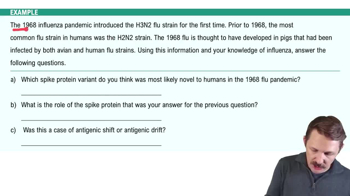
Antigenic shift is a sudden, major change in the virus's genome, often creating new HA and NA combinations that can cause pandemics.
How can antigenic shift occur in influenza viruses?
It can occur when two different influenza viruses infect the same animal (like a pig), allowing their segmented genomes to mix and create a novel virus.
What are common symptoms of influenza infection?
Symptoms include fever, chills, headache, muscle aches, and respiratory symptoms like cough.
What diagnostic methods are used to detect influenza infection?
Rapid antigen tests and PCR are commonly used to diagnose influenza.
What treatments are available for influenza, especially for at-risk groups?
Treatment includes rest and antivirals like oseltamivir, particularly for at-risk individuals.
What does a multivalent flu vaccine provide?
A multivalent vaccine protects against multiple strains of influenza A and B in a single shot.
 Back
Back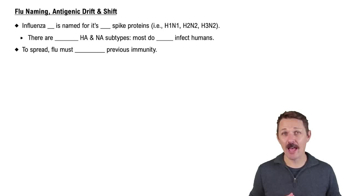
 05:21
05:21