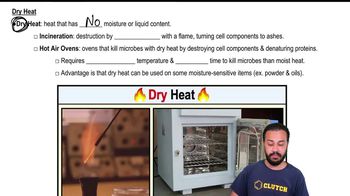
Heat without moisture, requiring higher temperatures and longer times to destroy microbes, suitable for moisture-sensitive items like powders and oils.
Incineration
Destruction of cell components by direct flame, turning them into ashes, commonly used for sterilizing laboratory tools.
Hot Air Oven
Device using dry heat to kill microbes on heat-stable instruments by denaturing proteins and destroying cell structures.
Moist Heat
Heat with liquid content, more effective than dry heat, kills microbes by irreversibly denaturing enzymes and proteins.
Autoclave
Instrument resembling a pressure cooker, using pressurized steam to sterilize heat- and moisture-tolerant items efficiently.
Pasteurization
Brief heat treatment, often applied to liquids like milk, reducing pathogens without significantly altering taste or quality.
High Temperature Short Time (HTST)
Pasteurization method exposing products to about 165°C for 15 seconds, reducing microbes but not achieving sterilization.
Ultra High Temperature (UHT)
Pasteurization method using around 280°C for 3 seconds, sterilizing products and allowing shelf storage without refrigeration.
Refrigeration
Low temperature storage, typically around 2°C, slowing microbial growth and delaying spoilage of perishable items.
Freezing
Preservation method using temperatures below 0°C, inhibiting microbial growth but not necessarily killing all microbes.
Desiccation
Drying process removing moisture to inhibit microbial growth, often enhanced by creating hypertonic environments with solutes like salt.
Lyophilization
Freeze-drying technique combining freezing and vacuum drying, removing water by sublimation and preserving food quality without refrigeration.
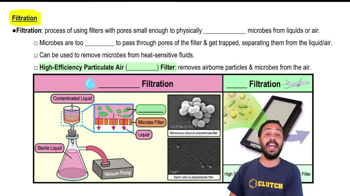
Filtration
Physical removal of microbes from liquids or air using filters with pores too small for microbes to pass through.
HEPA Filter
High efficiency particulate air filter, specifically designed to remove airborne particles and microbes, commonly used in air purification.
High Pressure Processing (HPP)
Method using extreme pressure to alter protein structures and kill microbes, preserving food qualities but not always sterilizing.
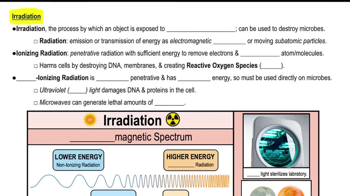
Irradiation
Exposure of objects to radiation to control microbial growth, including both ionizing and non-ionizing types.
Ionizing Radiation
Highly penetrative energy capable of removing electrons, damaging cellular molecules and generating reactive oxygen species.
Non-ionizing Radiation
Lower energy radiation, such as UV light, damaging DNA and proteins but lacking deep penetration, effective only on exposed surfaces.