Back

Tests to Guide Antimicrobial Use definitions

Control buttons has been changed to "navigation" mode.
1/15
  • Antimicrobial Susceptibility Testing

    Laboratory methods used to assess how effectively antibiotics inhibit or kill bacteria, guiding optimal drug selection.
  • Kirby-Bauer Test

    A disk diffusion method using antibiotic-impregnated paper discs on agar to evaluate bacterial sensitivity by measuring inhibition zones.
  • Disk Diffusion Method

    Technique involving antibiotic discs on agar plates to observe bacterial growth inhibition, indicating relative drug effectiveness.
  • Zone of Inhibition

    Clear region around an antibiotic disc on agar where bacterial growth is prevented, reflecting susceptibility to the drug.
  • E Test

    A gradient diffusion method using a plastic strip with varying antibiotic concentrations to estimate the lowest inhibitory dose.
  • Minimal Inhibitory Concentration

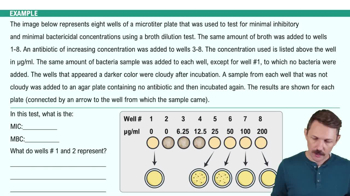
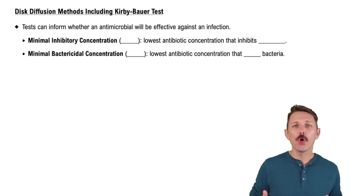
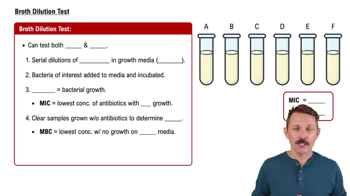
    Lowest antibiotic concentration that prevents visible bacterial growth, crucial for determining effective dosing.
  • Minimal Bactericidal Concentration

    Smallest antibiotic amount required to kill bacteria, distinguishing between inhibitory and lethal effects.
  • Broth Dilution Test

    Serial dilution of antibiotics in liquid media to identify concentrations that inhibit or kill bacteria, revealing MIC and MBC.
  • Bacteriostatic Effect

    Action of an antimicrobial that halts bacterial growth without necessarily killing the cells.
  • Bactericidal Effect

    Action of an antimicrobial that results in bacterial cell death, not just growth inhibition.
  • Serial Dilution

    Stepwise reduction of antibiotic concentration in broth to systematically test bacterial response at different levels.
  • Growth Media

    Nutrient-rich liquid or solid environment used to culture and observe bacterial growth in laboratory tests.
  • Antibiotic Resistance

    Bacterial ability to survive and grow despite exposure to antibiotics that would normally inhibit or kill them.
  • Petri Dish

    Shallow, round container used to culture microorganisms on solid or semi-solid media during laboratory testing.
  • Pathogen

    Microorganism capable of causing disease, often targeted in antimicrobial susceptibility testing.