Back

Deriving Aggregate Demand from the Aggregate Expenditure Model definitions

Control buttons has been changed to "navigation" mode.
1/15
  • Aggregate Expenditure Model

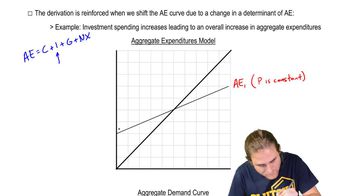
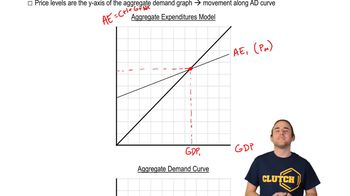
    Framework linking total spending components to GDP, used to analyze equilibrium between production and spending without explicit price levels.
  • Aggregate Demand Curve

    Graph showing the relationship between price levels and GDP demanded, typically downward-sloping due to effects on spending.
  • Price Level

    Measurement of average prices in the economy, influencing consumption, investment, and net exports through various effects.
  • Consumption

    Component of total spending representing household purchases, sensitive to changes in price level via the wealth effect.
  • Investment

    Spending by businesses on capital goods, affected by price level through the interest rate effect and capable of shifting demand curves.
  • Government Spending

    Public sector expenditures included in aggregate spending, contributing to overall GDP regardless of price level changes.
  • Net Exports

    Difference between exports and imports, influenced by price level through the exchange rate effect, impacting aggregate expenditures.
  • Equilibrium GDP

    Level of production where total spending equals output, determined by the intersection of aggregate expenditures and GDP.
  • Wealth Effect

    Phenomenon where higher prices reduce purchasing power, leading to decreased consumption and lower aggregate expenditures.
  • Interest Rate Effect

    Mechanism where increased prices raise interest rates, discouraging investment and reducing aggregate expenditures.
  • Exchange Rate Effect

    Process where higher domestic prices cause currency appreciation, lowering net exports and aggregate expenditures.
  • Multiplier Effect

    Amplification of initial spending changes, resulting in larger shifts in GDP and aggregate demand due to interconnected economic activity.
  • Demand Curve Shift

    Movement of the aggregate demand curve caused by changes in determinants like investment, independent of price level.
  • Macroeconomic Equilibrium

    State where aggregate expenditures match GDP, reflecting balance between total spending and production in the economy.
  • Production

    Total output of goods and services measured by GDP, compared to aggregate expenditures to determine equilibrium.