Skip to main content
Microeconomics
My Course
Learn
Exam Prep
AI Tutor
Study Guides
Flashcards
Explore
Try the app
My Course
Learn
Exam Prep
AI Tutor
Study Guides
Flashcards
Explore
Try the app
Back
Risk and Insurance definitions
You can tap to flip the card.
Risk
You can tap to flip the card.
👆
Risk
Uncertainty about future financial outcomes, where both gains and losses are possible and unpredictable.
Track progress
Control buttons has been changed to "navigation" mode.
1/15
Related flashcards
Recommended videos
Risk and Insurance quiz
Risk and Insurance
15 Terms
Guided course
07:25
Risk and Insurance
6
views
Terms in this set (15)
Hide definitions
Risk
Uncertainty about future financial outcomes, where both gains and losses are possible and unpredictable.
Risk Aversion
Preference for avoiding uncertainty, where losses cause more dissatisfaction than equivalent gains provide satisfaction.
Utility
Quantitative measure of satisfaction or happiness derived from consuming goods or experiencing outcomes.
Marginal Utility
Additional satisfaction gained from consuming one more unit of a good or service.
Diminishing Marginal Utility
Declining increase in satisfaction as more units of a good are consumed, making each extra unit less valuable.
Insurance
Financial arrangement exchanging a certain, small payment for protection against unlikely but severe losses.
Catastrophic Loss
Rare but severe financial setback, such as a fire, that insurance is designed to protect against.
Market Failure
Situation where markets do not efficiently allocate resources, often due to unaddressed risks or externalities.
External Cost
Negative impact from an economic activity that is not reflected in market prices, often addressed by insurance.
Deadweight Loss
Loss of economic efficiency resulting from unpredictable financial shocks or unmitigated risks.
Risk Management
Strategies and practices used to minimize exposure to uncertain financial outcomes.
Satisfaction
Level of happiness or contentment achieved from consuming goods or experiencing positive outcomes.
Insurance Market
Economic system where individuals and firms buy and sell protection against financial risks.
Financial Shock
Sudden, unexpected change in financial status, often causing significant losses.
Protection
Safeguard provided by insurance, reducing the impact of unpredictable and severe financial events.
 BackBack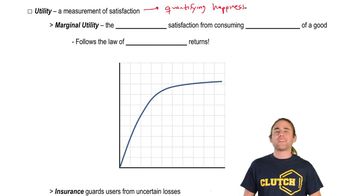
 07:25
07:25