Skip to main content
Microeconomics
My Course
Learn
Exam Prep
AI Tutor
Study Guides
Flashcards
Explore
Try the app
My Course
Learn
Exam Prep
AI Tutor
Study Guides
Flashcards
Explore
Try the app
Back
Shifts in the Supply Curve definitions
You can tap to flip the card.
Supply Curve
You can tap to flip the card.
👆
Supply Curve
A graphical representation showing the relationship between price and quantity supplied, holding other factors constant.
Track progress
Control buttons has been changed to "navigation" mode.
1/15
Related flashcards
Related practice
Recommended videos
Shifts in the Supply Curve quiz #1
Shifts in the Supply Curve
36 Terms
Shifts in the Supply Curve
3. The Market Forces of Supply and Demand
10 problems
Topic
Movement Along a Supply Curve
3. The Market Forces of Supply and Demand
10 problems
Topic
3. The Market Forces of Supply and Demand
11 topics
15 problems
Chapter
Guided course
01:
Nature
2859
views
19
rank
Guided course
01:27
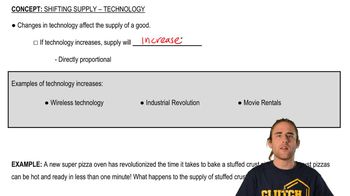
Technology
3151
views
14
rank
Guided course
03:02
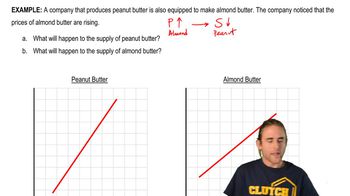
Substitutes in Production
2952
views
26
rank
1
comments
Terms in this set (15)
Hide definitions
Supply Curve
A graphical representation showing the relationship between price and quantity supplied, holding other factors constant.
Input Costs
Expenses for resources like labor, raw materials, or fuel that directly affect the ability to produce goods.
Technological Advancement
Improvements in production methods or tools that boost efficiency and increase the amount of goods produced.
Tax
A government-imposed financial charge that raises production expenses and typically reduces the amount supplied.
Subsidy
Financial support from the government that lowers production costs, encouraging producers to supply more.
Substitute in Production
An alternative product that can be made with similar resources, influencing supply when its market price changes.
Producer Expectations
Anticipations about future market prices that can alter current supply decisions, often reducing supply if higher prices are expected.
Number of Suppliers
The count of producers in a market, where an increase leads to greater overall supply of a good.
Natural Event
Occurrences like weather changes that can positively or negatively impact the ability to produce goods.
Minimum Wage
The lowest legal pay for workers, which, when increased, raises labor costs and can decrease supply.
Quantity Supplied
The amount of a good producers are willing to offer at a specific price, which changes when the supply curve shifts.
Directly Proportional Relationship
A connection where an increase in one factor leads to an increase in supply, such as subsidies or favorable events.
Inversely Proportional Relationship
A connection where an increase in one factor causes a decrease in supply, such as taxes or rising input costs.
Agricultural Subsidy
Government financial aid to farmers, intended to boost food production and increase supply in the agricultural sector.
Wireless Technology
A production innovation that enables more efficient processes, exemplified by streaming services expanding movie rental supply.
 BackBack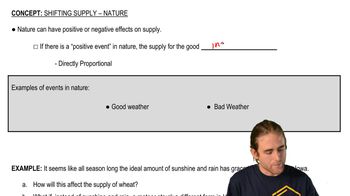
 01:
01: