 Back
BackEconomic Efficiency, Consumer Surplus, and Producer Surplus
Study Guide - Smart Notes
 Tailored notes based on your materials, expanded with key definitions, examples, and context.
Economic Efficiency and Market Outcomes
Property Rights and Economic Signals
For markets to function efficiently, property rights must be well-defined and protected. Property rights refer to the legal ownership and control over resources and goods. Economic signals are pieces of information that help buyers and sellers make decisions; prices are among the most important signals, as they convey information about scarcity and value.

Markets and Efficiency
Markets typically lead to efficient outcomes by allowing individuals to specialize and trade, rather than attempting to produce everything themselves. This specialization increases overall productivity and welfare. The origin of goods, such as a chicken sandwich, often involves complex supply chains and many contributors, illustrating the benefits of market exchange.
Consumer Surplus
Definition and Measurement
Consumer surplus is the difference between what consumers are willing to pay for a good and what they actually pay. It represents the net benefit to consumers from participating in the market.
Formula: For a single unit, consumer surplus = Willingness to pay – Price paid.
For the market, consumer surplus is the area below the demand curve and above the market price.
Example: If Ashley is willing to pay $59 for a book but buys it for $30, her consumer surplus is $29.
Potential Buyers | Willingness to Pay | Consumer Surplus |
|---|---|---|
Ashley | $59 | $29 |
Brandon | $45 | $15 |
Courtney | $35 | $5 |
Daniel | $25 | -- |
Emily | $10 | -- |
Total Consumer Surplus | $49 |

Graphical Representation
Consumer surplus can be calculated as the area of a triangle under the demand curve and above the price line:
Where the base is the quantity and the height is the difference between the highest willingness to pay and the market price.
Changes in Consumer Surplus
When the price of a good falls, consumer surplus increases. The gain is split between new buyers entering the market and existing buyers who now pay less.

Producer Surplus
Definition and Measurement
Producer surplus is the difference between the price sellers receive for a good and the minimum price at which they are willing to sell. It measures the net benefit to producers from market participation.
Formula: For a single unit, producer surplus = Price received – Willingness to sell.
For the market, producer surplus is the area above the supply curve and below the market price.
Example: If Andrew is willing to sell a book for $5 but sells it for $30, his producer surplus is $25.
Potential Sellers | Willingness to Sell | Producer Surplus |
|---|---|---|
Andrew | $5 | $25 |
Betty | $15 | $15 |
Carlos | $25 | $5 |
Donna | $35 | -- |
Edward | $45 | -- |
Total Producer Surplus | $45 |
Graphical Representation
Producer surplus is the area above the supply curve and below the price line:
Where the base is the quantity and the height is the difference between the market price and the lowest willingness to sell.
Changes in Producer Surplus
When the price of a good rises, producer surplus increases. The gain is split between new sellers entering the market and existing sellers who now receive a higher price.
Economic Surplus and Market Equilibrium
Definition and Maximization
Economic surplus is the sum of consumer surplus and producer surplus. It is maximized at the market equilibrium, where the quantity supplied equals the quantity demanded. At this point, the allocation of resources is most efficient, and total welfare is highest.
Example: In the market for books, if the equilibrium price is $30 and the equilibrium quantity is 1,000, both consumer and producer surplus are maximized.
Calculating Surplus with Equations
Given demand and supply equations:
Set to find equilibrium:
Consumer surplus:
Producer surplus:
Market Failures and Inefficiency
When Markets Fail
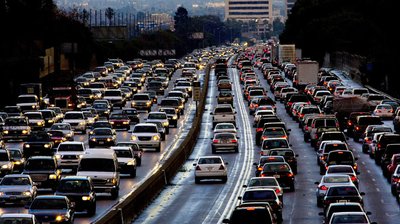
Markets are not always efficient. Market failure occurs when mutually beneficial trades do not take place, often due to missing markets, externalities, or information problems. Examples include traffic congestion, noise pollution, and environmental damage.
Externalities: Costs or benefits that affect third parties, such as pollution.
Public goods: Goods that are non-excludable and non-rivalrous, leading to under-provision in markets.





Summary Table: Types of Surplus
Type of Surplus | Definition | Graphical Area |
|---|---|---|
Consumer Surplus | Willingness to pay minus price paid | Below demand curve, above price |
Producer Surplus | Price received minus willingness to sell | Above supply curve, below price |
Economic Surplus | Sum of consumer and producer surplus | Area between supply and demand curves up to equilibrium |
Additional info: Market failures and externalities will be covered in more detail in later chapters.
