 Back
Elasticity in Microeconomics: Types, Measurement, and Applications
Study Guide - Smart Notes
 Tailored notes based on your materials, expanded with key definitions, examples, and context.
Elasticity: An Overview
Definition and Importance
Elasticity is a fundamental concept in microeconomics that measures the responsiveness of one variable to changes in another. It is crucial for understanding how consumers and producers react to changes in price, income, and the prices of related goods. Elasticity informs pricing, production, and government policy decisions. 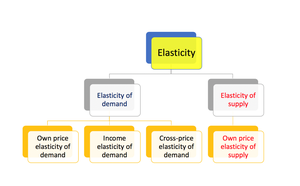
Types of Elasticity
Classification of Elasticities
Elasticity can be categorized into several types, each focusing on different economic relationships:
Own Price Elasticity of Demand (Ped): Measures the responsiveness of quantity demanded to changes in the product's own price.
Income Elasticity of Demand (Yed): Measures the responsiveness of quantity demanded to changes in consumer income.
Cross Price Elasticity of Demand (Ced): Measures the responsiveness of quantity demanded for one good to changes in the price of another good.
Price Elasticity of Supply (Pes): Measures the responsiveness of quantity supplied to changes in the product's own price.
Price Elasticity of Demand (Ped)
Definition and Formula
Price elasticity of demand quantifies how much the quantity demanded of a good changes in response to a change in its price. The formula is:
Ped Formula:
Where is the change in quantity demanded, is the change in price, is the average price, and is the average quantity. 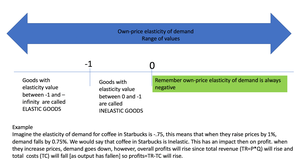
Interpretation of Ped Values
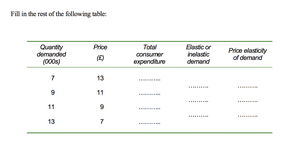
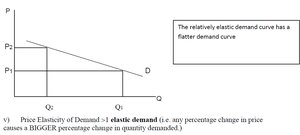
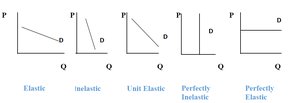
Elastic Demand (|Ped| > 1): Quantity demanded changes by a greater proportion than price.
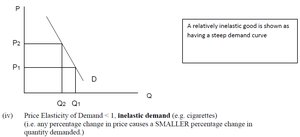
Inelastic Demand (|Ped| < 1): Quantity demanded changes by a smaller proportion than price.
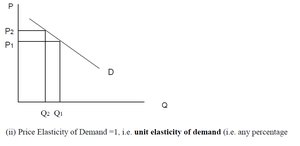
Unitary Elasticity (|Ped| = 1): Quantity demanded changes by the same proportion as price.
Perfectly Inelastic (Ped = 0): Quantity demanded does not change as price changes.
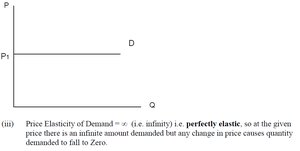
Perfectly Elastic (Ped = ∞): Any change in price causes quantity demanded to fall to zero.
Graphical Representation
Unit Elasticity: Demand curve where proportional changes in price and quantity are equal.
Perfectly Elastic: Horizontal demand curve; any price change eliminates demand.
Inelastic: Steep demand curve; quantity changes little with price.
Elastic: Flat demand curve; quantity changes significantly with price.
Elasticity and Total Revenue
The relationship between price elasticity of demand and total revenue is vital for firms:
Total Revenue (TR):
Total Profit (TP):
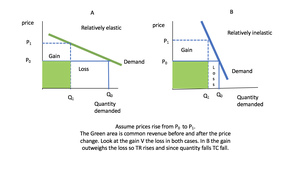
If demand is inelastic, increasing price raises total revenue and profit.
If demand is elastic, decreasing price raises total revenue, but profit change is uncertain.
If demand is unit elastic, changes in price do not affect total revenue, but profit may rise if costs fall.
Factors Influencing Price Elasticity of Demand
Key Determinants
Availability of Substitutes: More substitutes make demand more elastic.
Complementary Goods: Demand for less important complementary goods is inelastic.
Proportion of Income: Goods taking a larger share of income are more elastic.
Time: Demand becomes more elastic over time as substitutes emerge.
Income Elasticity of Demand (Yed)
Definition and Formula
Income elasticity of demand measures how quantity demanded changes in response to changes in income:
Yed Formula:
Where is the change in quantity demanded, is the change in income, is the average income, and is the average quantity. 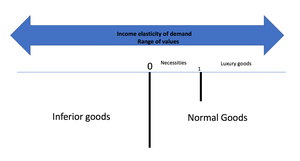
Interpretation of Yed Values
Yed > 0: Normal goods (demand rises with income).
Yed = 0 - 1: Necessities (demand rises slowly with income).
Yed > 1: Luxury goods (demand rises rapidly with income).
Yed < 0: Inferior goods (demand falls as income rises).
Yed = 0: Income neutral goods (demand unaffected by income).
Factors Influencing Income Elasticity
Degree of Necessity: Basic goods have low income elasticity; luxury goods have high elasticity.
Association with Living Standards: Goods linked to higher living standards are more income elastic.
Durability and Price: Durable, expensive goods are more income elastic.
Cross Price Elasticity of Demand (Ced)
Definition and Formula
Cross price elasticity of demand measures how the quantity demanded of one good responds to changes in the price of another good:
Ced Formula:
Where is the change in quantity demanded of good X, is the change in price of good Y. 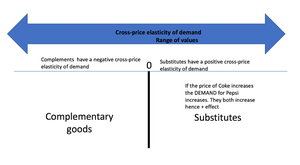
Interpretation of Ced Values
Positive Ced: Substitutes (increase in price of one good increases demand for the other).
Negative Ced: Complements (increase in price of one good decreases demand for the other).
Ced = 0: No relationship between goods.
Factors Influencing Cross Price Elasticity
Closeness of Substitutes: More substitutes lead to higher cross elasticity.
Brand Sensitivity: Brands are more cross elastic than generic goods.
Association Intensity: Strongly associated goods have higher negative cross elasticity.
Price Elasticity of Supply (Pes)
Definition and Formula
Price elasticity of supply measures how much the quantity supplied changes in response to a change in price:
Pes Formula:
Where is the change in quantity supplied, is the change in price. 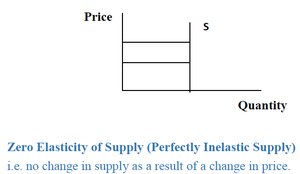
Interpretation of Pes Values
Pes > 1: Elastic supply (quantity supplied changes more than price).
Pes < 1: Inelastic supply (quantity supplied changes less than price).
Pes = 0: Perfectly inelastic supply (no change in supply as price changes).
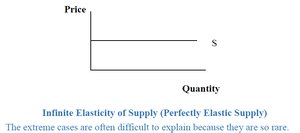
Pes = ∞: Perfectly elastic supply (any price change causes supply to fall to zero).
Factors Influencing Price Elasticity of Supply
Cost Conditions: Higher costs per unit reduce supply responsiveness.
Time Period: Shorter periods make supply less elastic.
Storage Costs: High storage costs reduce supply elasticity.
Perishability: Highly perishable goods have inelastic supply.
Alternative Goods: Easier switching increases supply elasticity.
Factor Mobility: Easier and cheaper factor adjustment increases supply elasticity.
Significance and Applications of Elasticity
Pricing Decisions
Understanding elasticity helps firms set prices to maximize revenue and profit, considering how demand reacts to price changes and the effect on substitutes and competitors.
Production Decisions
Elasticity informs production planning, allowing firms to adjust output in response to price changes.
Government Policy
Governments use elasticity to predict the effects of taxes on goods and services. Tax increases on inelastic goods raise revenue, but excessive taxation can eventually make demand elastic, reducing receipts.
Summary Table: Types of Elasticity
Type | Formula | Interpretation | Example |
|---|---|---|---|
Price Elasticity of Demand (Ped) | Elastic, Inelastic, Unitary, Perfectly Elastic/Inelastic | Demand for coffee, cigarettes | |
Income Elasticity of Demand (Yed) | Normal, Inferior, Necessity, Luxury | Demand for cars, bread | |
Cross Price Elasticity of Demand (Ced) | Substitutes, Complements | Tea and coffee, cars and petrol | |
Price Elasticity of Supply (Pes) | Elastic, Inelastic, Perfectly Elastic/Inelastic | Supply of vegetables, manufactured goods |
Additional info: Academic context and examples have been expanded for clarity and completeness.
