 Back
BackExtensions of Demand and Supply Analysis: Price System, Market Equilibrium, and Government Intervention
Study Guide - Smart Notes
 Tailored notes based on your materials, expanded with key definitions, examples, and context.
Chapter 4: Extensions of Demand and Supply Analysis
4.1 The Price System and Markets
The price system (or market system) is an economic framework in which prices fluctuate to reflect changes in supply and demand. Prices act as signals, conveying information about scarcity and abundance, and guiding the allocation of resources.
Voluntary Exchange: Trade occurs when both parties agree, making each subjectively better off.
Transaction Costs: These include the costs of gathering information, negotiating, and enforcing contracts. High transaction costs can lead to price stickiness, where prices change infrequently.
Role of Middlemen: Intermediaries and platform firms reduce transaction costs by connecting buyers and sellers and providing market information.
4.2 Changes in Demand and Supply
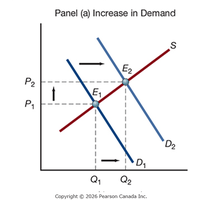
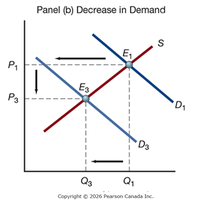
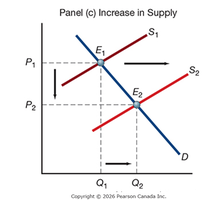
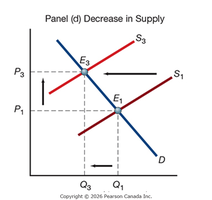
Market equilibrium is determined by the intersection of demand and supply. Shifts in either curve cause changes in equilibrium price and quantity.
Increase in Demand: Raises both equilibrium price and quantity.
Decrease in Demand: Lowers both equilibrium price and quantity.
Increase in Supply: Lowers equilibrium price, raises equilibrium quantity.
Decrease in Supply: Raises equilibrium price, lowers equilibrium quantity.
Simultaneous Shifts: When both demand and supply shift, the effect on price is indeterminate without more information, but the effect on quantity can sometimes be determined.
Example: A simultaneous decrease in supply and increase in demand for vinyl records led to higher prices and increased equilibrium quantity. 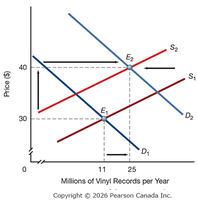
4.3 The Rationing Function of Prices
The rationing function of prices synchronizes buyers' and sellers' decisions, leading to market equilibrium. Prices allocate scarce resources efficiently.
Nonprice Rationing Methods: Queues, random assignment, coupons, power, and physical force.
Efficiency: Price rationing ensures resources are used where they are most valued, capturing all gains from trade.
4.4 Price Ceilings
Price controls are government-mandated limits on prices. A price ceiling sets a maximum legal price, while a price floor sets a minimum.
Binding Price Ceiling: If set below equilibrium, it creates a shortage. Nonprice rationing and hidden markets may emerge.
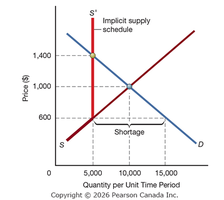
Effects on Housing: Rent controls discourage construction and maintenance, reduce tenant mobility, and may benefit higher-income individuals over low-income renters.
Hidden Markets: Goods may be sold illegally above the ceiling price.
Example: Price controls in pharmaceuticals can lead to shortages and higher prices for substitute drugs.
4.5 Price Floors and Quantity Restrictions
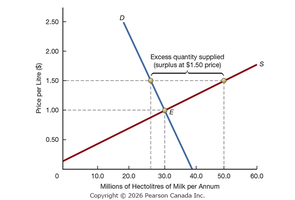
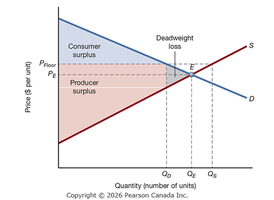
A price floor set above equilibrium creates a surplus. Governments may support prices for agricultural products or set minimum wages.
Agricultural Price Supports: Government buys surplus to maintain price floors.
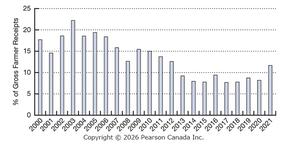
Historical Subsidies: Government support for agriculture has varied over time.
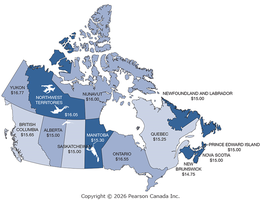
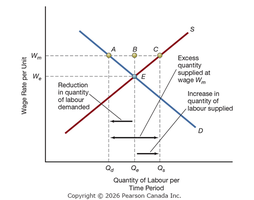
Minimum Wage: Sets a wage floor, potentially reducing employment and increasing labour supply.
Quantity Restrictions: Bans, licensing, and import quotas restrict supply and can affect market outcomes.
Appendix 4A: Consumer Surplus and Producer Surplus
Consumer surplus is the difference between what consumers are willing to pay and what they actually pay. 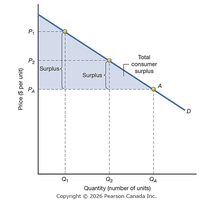
Producer surplus is the difference between what producers receive and the minimum they would accept. 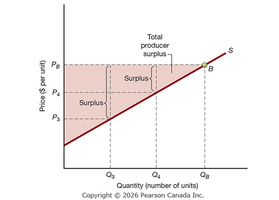
At equilibrium, the sum of consumer and producer surplus represents total gains from trade. 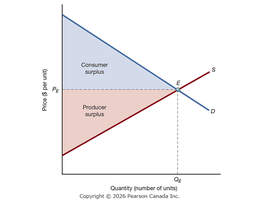
Price Controls and Deadweight Loss: Price ceilings and floors reduce total surplus, creating deadweight loss from underproduction or overproduction. 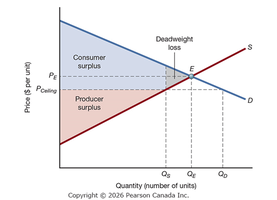
Key Formulas
Consumer Surplus:
Producer Surplus:
Summary Table: Effects of Price Controls
Policy | Set Above/Below Equilibrium | Market Effect |
|---|---|---|
Price Ceiling | Below | Shortage, hidden markets, nonprice rationing |
Price Floor | Above | Surplus, government purchases, reduced employment |
Test Your Understanding
When both supply and demand increase, equilibrium quantity increases; price effect is indeterminate.
A binding price ceiling causes a shortage that cannot be eliminated through market adjustment.
A binding price floor sets price above equilibrium and causes a surplus.
Agricultural price supports lead to surpluses because farmers increase production due to guaranteed high prices.
Raising minimum wage above equilibrium increases cost of hiring workers and may reduce employment.
Price controls in pharmaceuticals can lead to hidden markets and shortages.
Governments impose tariff rate quotas to control the volume of imported goods.
