 Back
BackExternalities and Market Failure: Microeconomics Study Notes
Study Guide - Smart Notes
 Tailored notes based on your materials, expanded with key definitions, examples, and context.
Externalities and Market Failure
Introduction to Externalities
Externalities are a central concept in microeconomics, describing situations where the actions of individuals or firms have effects on others that are not reflected in market prices. These effects can be either positive or negative, and when they are not internalized, markets fail to achieve efficient outcomes.
Externality: An effect of a decision maker's actions on others, not captured by market prices.
Negative Externality: An economic activity that imposes costs on others (e.g., pollution, smoking).
Positive Externality: An economic activity that provides benefits to others (e.g., education, vaccination).
Negative Externalities
Negative externalities occur when the costs imposed on others are not considered by the decision maker, leading to overproduction or overconsumption of the good.
Example: Smoking - Smokers consider their own benefits and costs but ignore health costs imposed on others and higher health insurance premiums for society.
Example: Pollution - Firms may dump waste into rivers, imposing costs on beachgoers and other businesses (e.g., breweries) that rely on clean water.




Market Failure from Negative Externalities
In perfect competition, prices should reflect all costs and benefits.
When external costs are not included, market prices send incorrect signals, resulting in inefficiency.
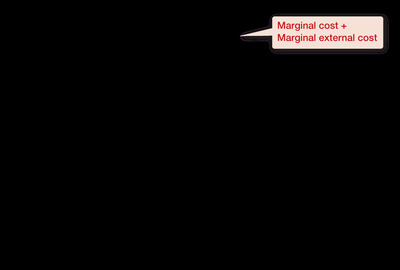
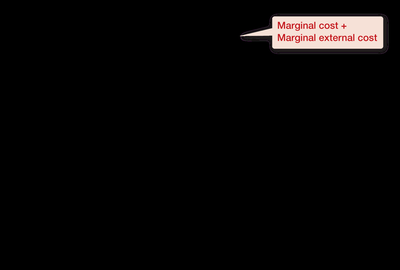
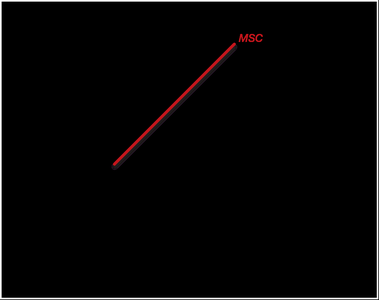
Social Marginal Cost (SMC): The true cost of production, including external costs.
Deadweight Loss from Negative Externalities
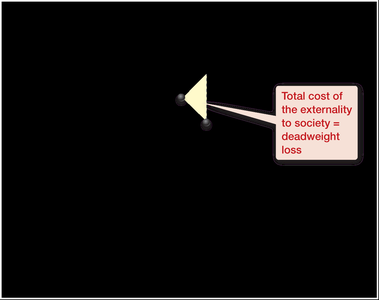
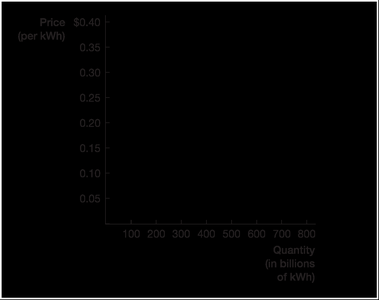
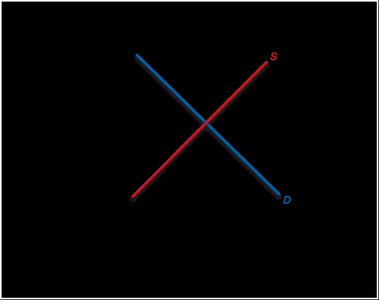
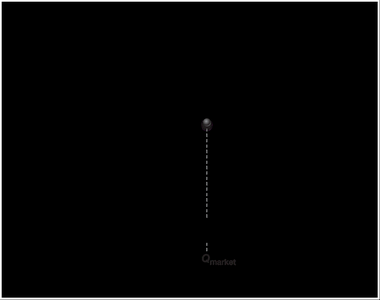
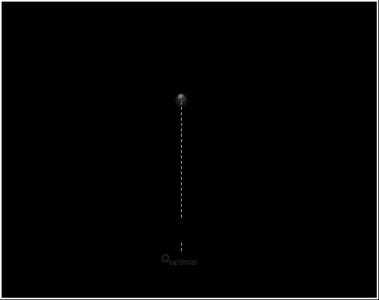
At market equilibrium, the quantity produced is higher and price lower than socially optimal.
The area where MSC > WTP (Marginal Social Cost exceeds Willingness to Pay) represents deadweight loss.
Positive Externalities
Positive externalities occur when the benefits to others are not considered by the decision maker, leading to underproduction or underconsumption of the good.
Example: Flu Shots - Individuals consider their own protection but ignore the benefit to others from reduced transmission.
Example: Education - Individuals consider private benefits but ignore societal benefits such as higher tax revenue, lower crime, and more informed citizens.

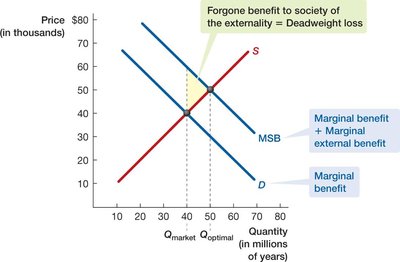
Market Failure from Positive Externalities
Market equilibrium quantity is lower than socially optimal.
Marginal Social Benefit (MSB): The true benefit, including external benefits.
Deadweight loss occurs when units with MPC < MSB are not produced.
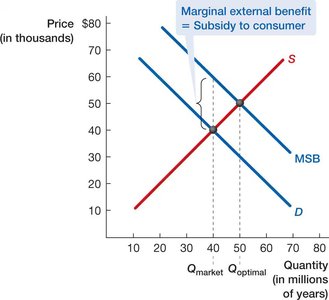
Solutions to Externalities
Private Solutions
Bargaining: Parties negotiate to internalize externalities. The Coase Theorem states that efficient outcomes can be achieved regardless of property rights, provided transaction costs are low and property rights are clear.
Social Norms: Individuals may internalize externalities due to social pressure or norms (e.g., recycling).
Case | Polluter Profit | Brewery Profit | Outcome |
|---|---|---|---|
No Filter | $130 | $90 | Lower social surplus |
With Filter | $100 | $140 | Higher social surplus |
Coase Theorem: Efficient allocation is possible through bargaining, but may fail with high transaction costs or unclear property rights.
Government Solutions
Direct Regulation: Government mandates optimal quantity and price, but requires extensive information.
Market-Based Policies:
Taxes: Per-unit tax on producers of negative externalities shifts supply curve up, internalizing external costs.
Subsidies: Per-unit subsidy for positive externalities shifts demand curve up, internalizing external benefits.
Cap and Trade: Government sets a cap on total externality (e.g., pollution) and allows trading of permits, reducing informational burden.
Summary Table: Types of Externalities and Solutions
Type | Examples | Market Failure | Solution |
|---|---|---|---|
Negative Externality | Pollution, Smoking | Overproduction | Tax, Regulation, Cap and Trade, Bargaining |
Positive Externality | Education, Vaccination | Underproduction | Subsidy, Regulation, Bargaining |
Key Equations
Social Marginal Cost:
Social Marginal Benefit:
Deadweight Loss: (negative externality) (positive externality)
Conclusion
Externalities are a fundamental cause of market failure in microeconomics. Understanding their nature and the available solutions is essential for designing policies that improve social welfare and achieve efficient outcomes. Internalizing externalities—whether through private bargaining, social norms, or government intervention—is key to maximizing total surplus in society.
