 Back
BackExternalities, Public Goods, and the Tragedy of the Commons: Microeconomics Study Guide
Study Guide - Smart Notes
 Tailored notes based on your materials, expanded with key definitions, examples, and context.
Externalities
Definition and Types of Externalities
Externalities are side effects or consequences of economic activities that affect other parties without being reflected in market prices. They can be either positive or negative, leading to inefficiencies in market outcomes.
Positive Externality: A beneficial effect on others, such as education or technological spillovers.
Negative Externality: A harmful effect, such as air pollution or traffic congestion.
When externalities exist, the market equilibrium does not maximize social surplus, resulting in deadweight loss.
Negative Externalities: Market Failure
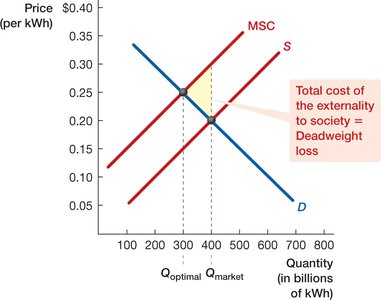
Negative externalities occur when the true cost of production is higher than what is considered by producers, leading to overproduction and inefficiency.
Marginal Private Cost (MPC): The cost incurred by the producer.
Marginal Externality Cost (MEC): The cost imposed on others.
Marginal Social Cost (MSC): The sum of MPC and MEC:
Social optimum is achieved at a lower quantity and higher price than the market equilibrium.
Positive Externalities: Market Failure
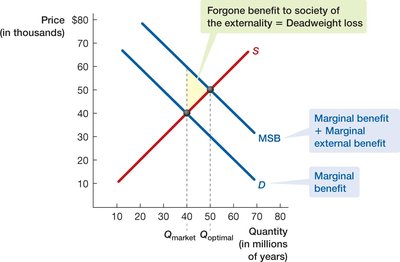
Positive externalities occur when the true benefit of consumption is higher than what is considered by consumers, leading to under-consumption and inefficiency.
Marginal Private Benefit (MPB): The benefit received by the consumer.
Marginal Externality Benefit (MEB): The benefit received by others.
Marginal Social Benefit (MSB): The sum of MPB and MEB:
Social optimum is achieved at a higher quantity and lower price than the market equilibrium.
Solutions to Externalities
Several approaches exist to address externalities and restore efficiency:
Bargaining and the Coase Theorem: If property rights are well-defined and transaction costs are low, private bargaining can lead to efficient outcomes regardless of who holds the rights.
Social Norms: Individuals may internalize externalities due to social pressure or moral incentives.
Government Intervention: Direct regulation, Pigouvian taxes/subsidies, and market-based policies.
Pigouvian Taxation
Pigouvian taxes and subsidies are corrective measures to internalize externalities:
Pigouvian Tax: Imposed on producers to reduce negative externalities.
Pigouvian Subsidy: Provided to consumers to encourage positive externalities.
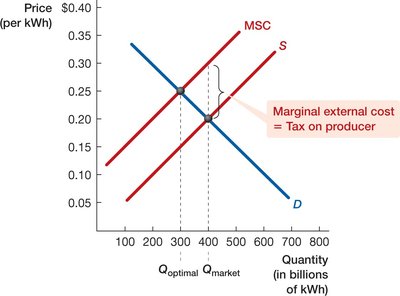
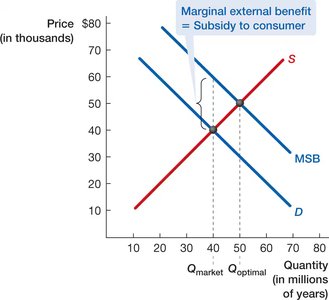
The optimal tax or subsidy equals the marginal external cost or benefit, moving the market to the socially optimal quantity.
Cap and Trade Mechanism
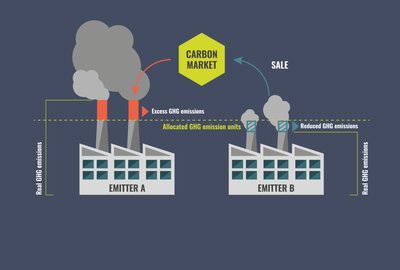
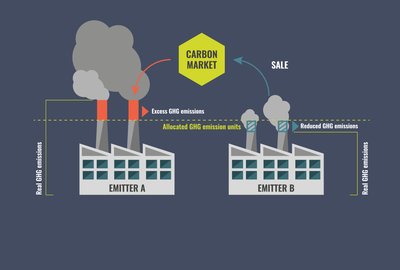
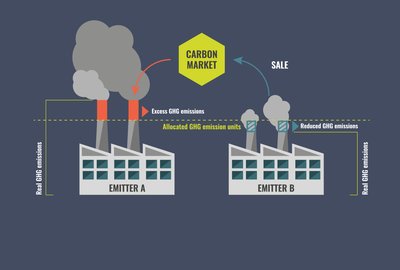
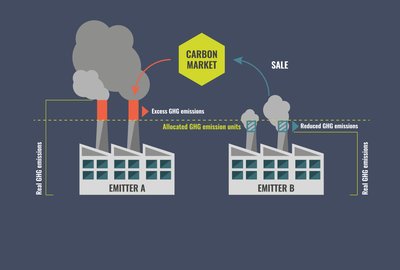
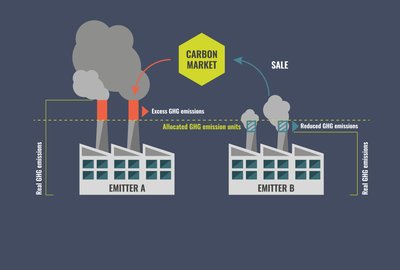
Cap and trade is a market-based approach to limit negative externalities, such as pollution:
The government sets a cap on total emissions and allocates permits to emitters.
Emitters who can reduce emissions at lower cost sell permits to those facing higher costs.
The market determines the price of permits, ensuring pollution is reduced efficiently.
Public Goods
Definition and Properties of Goods
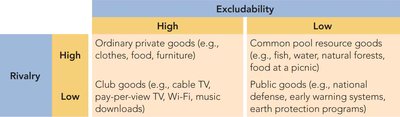
Goods are classified based on their excludability and rivalry:
Excludability: Whether non-payers can be prevented from consuming the good.
Rivalry: Whether one person's consumption reduces availability for others.
Excludability: High | Excludability: Low | |
|---|---|---|
Rivalry: High | Ordinary private goods (e.g., clothes, food, furniture) | Common pool resource goods (e.g., fish, water, forests, food at a picnic) |
Rivalry: Low | Club goods (e.g., cable TV, pay-per-view TV, Wi-Fi, music downloads) | Public goods (e.g., national defense, early warning systems, earth protection programs) |
Public Goods: Market Failure and Free-Rider Problem
Public goods are non-excludable and non-rivalrous, making it difficult for markets to provide them efficiently. Individuals may benefit without contributing, leading to the free-rider problem.
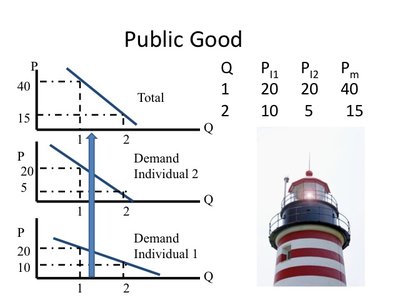
Examples: National defense, lighthouses, public broadcasting.
Solution: Government provision and mandatory funding through taxes.
Demand Aggregation: Horizontal vs. Vertical Summation
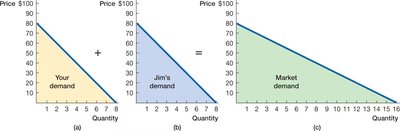
For private goods, market demand is obtained by horizontally summing individual demand curves (adding quantities at each price). For public goods, vertical summation is used (adding willingness to pay at each quantity).
The Tragedy of the Commons
Definition and Causes
The tragedy of the commons occurs when common pool resources are overused due to lack of ownership or regulation. Individuals act in their own interest, leading to depletion of the resource.
Examples: Overfishing in lakes, overgrazing on public land, depletion of wild buffalo.
Solution: Government regulation, such as fishing licenses, zoning, or taxes to limit usage.
Comparison: Private vs. Common Goods
Private goods are owned and managed, leading to conscientious usage.
Common goods lack ownership, resulting in over-consumption and inefficiency.
Key Takeaway: Efficient management of externalities, public goods, and common resources requires intervention—either through private bargaining, social norms, or government policies—to maximize social welfare and prevent market failures.
