 Back
Microeconomics: Foundations and Models – Chapter 1 Study Notes
Study Guide - Smart Notes
 Tailored notes based on your materials, expanded with key definitions, examples, and context.
Economics: Foundations and Models
Introduction to Economics
Economics is the study of how individuals, firms, and societies make choices to attain their goals, given their scarce resources. Scarcity means that our unlimited wants exceed the limited resources available to fulfill those wants, making choices necessary.
Scarcity: A situation in which unlimited wants exceed the limited resources available to fulfill those wants.
Economics: The study of the choices people make to attain their goals, given their scarce resources.
Typical Economic Questions
Economics addresses questions such as:
What determines the prices of goods and services?
Why does the government control some prices, and what are the effects?
How do firms decide how much to produce?
How do different market structures affect firm behavior?
Three Key Economic Ideas
1. People Are Rational
Economists assume that people are rational, meaning they use all available information to achieve their goals. Rationality does not imply perfection, but rather that individuals weigh the benefits and costs of each action to make the best possible decision.
Example: Apple sets iPhone prices to maximize profit, not randomly.
Example: Smokers weigh the costs and benefits of smoking before deciding.
2. People Respond to Economic Incentives
As incentives change, so do the actions that people take. Economic incentives can significantly alter behavior, sometimes leading to unintended consequences.
Example: DNA collection from felons reduced repeat violent offenses by 17%.
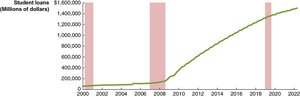
Example: Changes in student loan policies may affect borrowing behavior.
3. Optimal Decisions Are Made at the Margin
Most decisions are not all-or-nothing but involve doing a little more or a little less of something. Economists use marginal analysis, which compares the additional benefit (marginal benefit, MB) and the additional cost (marginal cost, MC) of an activity.
Marginal Analysis: Comparing MB and MC to make optimal decisions.
Example: Deciding whether to study for an extra hour or watch TV.
The Economic Problem That Every Society Must Solve
Trade-offs and Opportunity Cost
Because resources are scarce, societies face trade-offs. Producing more of one good or service means producing less of another. The opportunity cost is the highest-valued alternative given up to engage in an activity.
Trade-off: Choosing more of one thing means less of another.
Opportunity Cost: The value of the next best alternative forgone.
Example: Funding space exploration may mean less funding for cancer research.
Three Fundamental Economic Questions
What goods and services will be produced? Determined by choices of individuals, firms, and governments.
How will the goods and services be produced? Firms choose production methods based on costs and available technology.
Who will receive the goods and services produced? Distribution often depends on income, but government policies can alter this.
Types of Economic Systems
Centrally Planned vs. Market Economies
Centrally Planned Economy: The government decides how resources are allocated.
Market Economy: Households and firms interacting in markets allocate resources.
Mixed Economy: Most decisions are made in markets, but the government plays a significant role.
Example: The U.S. is best described as a mixed economy, with both market-driven and government-influenced resource allocation.
Efficiency and Equity
Productive Efficiency: Goods and services are produced at the lowest possible cost.
Allocative Efficiency: Production matches consumer preferences; the last unit provides a marginal benefit equal to its marginal cost.
Equity: The fair distribution of economic benefits.
There is often a trade-off between efficiency and equity. For example, taxes may reduce efficiency but increase equity by funding social programs.
Economic Models
Building Economic Models
Economists use models to analyze real-world issues. The process involves:
Deciding on assumptions
Formulating a testable hypothesis
Using data to test the hypothesis
Revising the model if necessary
Retaining the model if it explains data well
The Role of Assumptions
Models simplify reality to focus on key relationships.
Assumptions about consumer and firm behavior are necessary for analysis.
Forming and Testing Hypotheses
Hypothesis: A statement about an economic variable that can be tested.
Economic Variable: Something measurable that can have different values (e.g., employment levels).
Statistical methods are used to test hypotheses, but causality can be difficult to establish.
Positive vs. Normative Analysis
Positive Analysis: Concerned with what is (objective, fact-based).
Normative Analysis: Concerned with what ought to be (subjective, value-based).
Economists primarily use positive analysis, but policy decisions often require normative judgments.
Microeconomics and Macroeconomics
Scope of Microeconomics
Microeconomics studies how households and firms make choices, interact in markets, and how governments influence these choices. In contrast, macroeconomics examines the economy as a whole, including inflation, unemployment, and economic growth.
Table: Issues in Microeconomics and Macroeconomics
Microeconomics | Macroeconomics |
|---|---|
How households and firms make choices | Inflation rates |
How markets allocate resources | Unemployment rates |
Effects of government intervention on markets | Economic growth |
