 Back
BackPrinciples of Economics: Foundations and Models
Study Guide - Smart Notes
 Tailored notes based on your materials, expanded with key definitions, examples, and context.
Foundations of Economics
Introduction to Economics
Economics is the study of how individuals and societies allocate scarce resources to satisfy unlimited wants. The foundational principles of economics help us understand decision-making, resource allocation, and the functioning of markets.
Types of Markets
Markets are places or systems where buyers and sellers interact to exchange goods and services. Different types of markets exist, each with unique characteristics, but all facilitate voluntary exchange and resource allocation.
Key Point 1: Markets can be physical (like a farmer's market) or virtual (online platforms).
Key Point 2: Markets differ in structure, such as competitive markets, monopolies, and oligopolies.
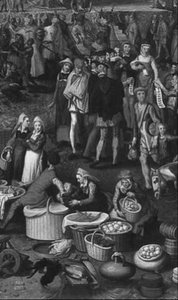
Example: A local farmer's market, a medieval marketplace, and a floating market all serve as venues for exchange, but differ in organization and cultural context.


Economic Freedom Around the World
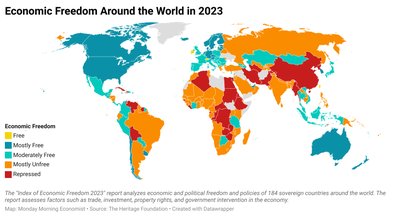
Economic freedom refers to the ability of individuals and businesses to make economic decisions with minimal government intervention. Countries vary in their degree of economic freedom, which impacts prosperity and growth.
Key Point 1: Economic freedom is measured by factors such as property rights, trade openness, and regulatory efficiency.
Key Point 2: Higher economic freedom is often associated with higher standards of living.
Example: The 2023 map of economic freedom shows significant variation across the globe.
Command Economies vs. Market Economies
Societies must answer three fundamental economic questions: What to produce? How to produce? For whom to produce? The answers depend on the economic system in place.
Key Point 1: Command economies are centrally planned, with government making all decisions (e.g., the former USSR).
Key Point 2: Market economies rely on decentralized decisions by individuals and firms interacting in markets.
Example: Long lines and limited variety in the USSR contrasted with the abundance and choice in U.S. supermarkets.


Three Key Economic Ideas
1. People Are Rational
Economists assume that individuals act rationally, using available information to achieve their goals. Rational decision-makers weigh the benefits and costs of each action.
Key Point 1: Rationality does not mean perfection, but purposeful behavior aimed at maximizing utility or profit.
Key Point 2: Rational people make decisions by comparing marginal benefits and marginal costs.
Example: Choosing whether to buy coffee based on its price and your desire for caffeine.

2. People Respond to Incentives
Incentives are rewards or penalties that influence behavior. Economic agents change their actions in response to changes in incentives, which can be monetary or non-monetary.
Key Point 1: Incentives can be positive (rewards) or negative (punishments).
Key Point 2: Policies often use incentives to encourage or discourage certain behaviors, but may also lead to unintended consequences.
Example: Taxes on plastic bags to reduce usage, or scholarships to encourage academic achievement.

3. Optimal Decisions Are Made at the Margin
Marginal analysis involves comparing the additional benefit of an action to its additional cost. The optimal choice is where marginal benefit equals or just exceeds marginal cost.
Key Point 1: Marginal benefit is the extra benefit from consuming or producing one more unit.
Key Point 2: Marginal cost is the extra cost from consuming or producing one more unit.
Formula: The optimal quantity is where .
Example: Deciding how many training sessions to attend based on the additional earnings versus the additional time and effort required.

Costs in Economics
Explicit and Implicit Costs
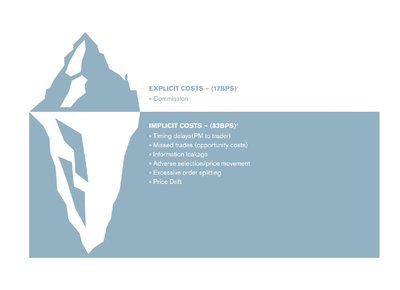
When making decisions, it is important to consider both explicit and implicit costs. Explicit costs are direct, out-of-pocket payments, while implicit costs represent the value of foregone alternatives.
Key Point 1: Explicit costs include things like tuition, rent, and wages paid.
Key Point 2: Implicit costs include the opportunity cost of time or resources used in one activity instead of another.
Example: The cost of attending college includes both tuition (explicit) and the income you could have earned working instead (implicit).
Opportunity Cost
Opportunity cost is the value of the next best alternative that is forgone when a choice is made. It is a fundamental concept in economics, underlying all decision-making.
Key Point 1: Every choice involves an opportunity cost because resources are scarce.
Key Point 2: Opportunity cost includes both explicit and implicit costs.
Example: If you spend time studying economics instead of working a part-time job, your opportunity cost is the wage you could have earned.
Marginal Analysis in Practice
Applying Marginal Analysis
Marginal analysis helps determine the optimal level of an activity by comparing marginal benefits and marginal costs for each additional unit.
Key Point 1: Continue an activity as long as marginal benefit is greater than or equal to marginal cost.
Key Point 2: Stop when marginal cost exceeds marginal benefit.
Example: Deciding how many training sessions to attend at a new job by comparing the extra earnings from each session to the extra time and effort required.
Marginal Benefit and Marginal Cost Table
Number of Trainings | Marginal Benefit | Marginal Cost |
|---|---|---|
1 | $300 | $30 |
2 | $150 | $40 |
3 | $90 | $60 |
4 | $60 | $90 |
5 | $50 | $130 |
Conclusion: The optimal number of training sessions is the largest number where marginal benefit is greater than or equal to marginal cost (in this case, 3 sessions).
Summary
Economics studies how people make choices under scarcity.
Markets, incentives, and marginal analysis are central to understanding economic behavior.
Explicit and implicit costs, as well as opportunity cost, are crucial for rational decision-making.
Marginal analysis provides a framework for optimizing choices in everyday life and business.
