 Back
Principles of Microeconomics: Core Concepts and Methods
Study Guide - Smart Notes
 Tailored notes based on your materials, expanded with key definitions, examples, and context.
Basic Principles of Economics
The Scope of Economics
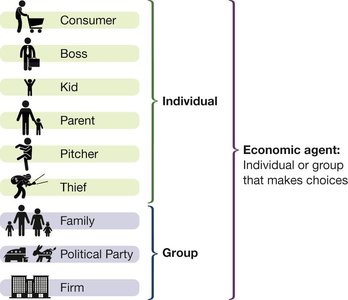
Economics is fundamentally the study of how people make choices regarding the allocation of scarce resources. These choices can range from everyday decisions, such as whether to buy coffee or make it at home, to broader societal decisions, such as government tax policies. Economists analyze both individual and group behavior, often simplifying groups as single decision-makers for analytical purposes.
Scarce resources: Items or services for which demand exceeds supply, making them limited and valuable.
Economic agents: Individuals or groups that make choices affecting resource allocation.
Positive analysis: Objective study of what economic agents actually do.
Normative analysis: Recommendations on what economic agents should do, based on their goals.
Example: Deciding whether to buy an iPhone or a Samsung, or how governments set tax rates.
Three Principles of Economics
Optimization
Optimization is the process by which economic agents weigh the pros and cons of available options and select the best one. Individuals typically aim to maximize their overall well-being (utility), while firms seek to maximize profits. Governments optimize a mix of policy goals.
Utility: The overall well-being or satisfaction an individual derives from choices.
Profit: The financial gain firms seek to maximize.
Opportunity cost: The value of the best alternative forgone when making a choice.
Trade-off: The necessity to give up some benefits to gain others.
Budget constraint: The set of options available without exceeding one's budget.
Formula:
Example: Choosing between working a part-time job or surfing the web, where the opportunity cost of web surfing is the wage that could have been earned.


Equilibrium
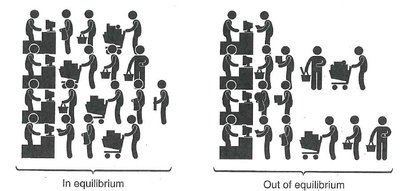
Equilibrium occurs when all economic agents are optimizing, and no one can benefit by changing their behavior. It is a central concept in economics, describing situations where supply and demand are balanced, and markets clear.
Market equilibrium: The point where supply equals demand, and prices stabilize.
Interactions: Firms and consumers, workers and employers, bidders in auctions, and governments and firms all interact to reach equilibrium.
Example: In a supermarket, equilibrium is achieved when all customers are served efficiently, and no one can improve their situation by changing their actions.
Empiricism and the Scientific Method
Empiricism involves testing economic ideas with data. The scientific method in economics consists of developing models, making predictions, and testing these predictions against real-world data. Models are simplified representations of reality, useful for understanding and forecasting economic phenomena.
Model: A simplified description of reality used to analyze economic situations.
Empirical analysis: The use of data to test hypotheses and evaluate models.
Causation vs. correlation: Causation implies one variable directly affects another, while correlation indicates variables move together but not necessarily due to a causal relationship.
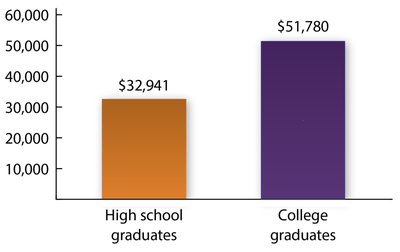
Example: Analyzing the effect of education on wages using survey data.
Formula for wage increase:


Additional Academic Context
Opportunity Cost and Trade-Offs
Opportunity cost is a foundational concept in microeconomics, emphasizing that every choice involves a trade-off. The opportunity cost of an action is the value of the next best alternative forgone. Budget constraints help quantify these trade-offs, especially in consumer choice and firm decision-making.
Optimization and Cost-Benefit Analysis
Cost-benefit analysis is a practical application of optimization, where agents compare the monetary values of costs and benefits to select the option with the highest net benefit. This approach is used in both positive and normative economic analyses.
Equilibrium Analysis
Equilibrium analysis is essential for understanding market dynamics, predicting outcomes, and evaluating the effects of policies. Economists use models to simulate interactions and determine equilibrium states.
Empirical Methods and Causality
Empirical methods in economics include experiments, natural experiments, and statistical analysis to distinguish causation from correlation. Randomization and control groups are the gold standard for establishing causal relationships, though practical limitations often require alternative approaches.
