 Back
BackThe Market Forces of Supply and Demand: Microeconomics Study Notes
Study Guide - Smart Notes
 Tailored notes based on your materials, expanded with key definitions, examples, and context.
The Market Forces of Supply and Demand
Introduction to Supply and Demand
The concept of supply and demand is fundamental to microeconomics, describing how prices and quantities of goods are determined in markets. A market is a group of buyers and sellers of a particular good or service. In a perfectly competitive market:
The goods for sale are identical (homogeneous).
There are many buyers and sellers, each with negligible influence on price.
Examples of products in perfectly competitive markets include wheat and other agricultural commodities. Products in less competitive markets include luxury cars and electronics.
Ceteris Paribus is a Latin phrase meaning "other things being equal," used to isolate the effect of one variable by holding others constant.
The Basics of Demand
Demand refers to the behavior of buyers in a market. The quantity demanded is the amount of a good buyers are willing to purchase at a given price. The demand schedule lists pairs of prices and quantities demanded. The Law of Demand states that when the price of a good rises, the quantity demanded falls, explained by:
Substitution Effect: Consumers switch to substitutes as the good becomes more expensive.
Income Effect: Higher prices reduce consumers' purchasing power.
The demand curve graphically shows the relationship between price and quantity demanded.

Shifting Demand
Events other than price can shift the demand curve. A change in price causes movement along the curve, not a shift. Shifts are caused by changes in determinants such as income, prices of related goods, preferences, expectations, and number of consumers.
Rightward shift: Demand increases ("good thing" for demand).
Leftward shift: Demand decreases ("bad thing" for demand).

Income
When consumer income changes, demand for goods changes:
Normal goods: Demand increases as income rises (e.g., organic food, new furniture).
Inferior goods: Demand decreases as income rises (e.g., canned soup, used furniture).

Substitute Goods
Two goods are substitutes if an increase in the price of one increases demand for the other (direct relationship). Examples: Coke and Pepsi, margarine and butter.

Complementary Goods
Two goods are complements if an increase in the price of one decreases demand for the other (inverse relationship). Examples: peanut butter and jelly, cars and gasoline.

Consumer Preferences
Changes in consumer tastes can shift demand. If preferences for a good increase, demand rises. For example, a fitness craze increases demand for protein shakes.

Expectations
If consumers expect prices to rise in the future, current demand increases. For example, fear of a coffee shortage increases current demand for coffee beans.

Number of Consumers
An increase in the number of consumers increases demand. For example, immigration or advertising can increase the market size.

Summary Table: Determinants of Demand
Determinant | Directly Proportional | Inversely Proportional |
|---|---|---|
Income | Normal goods | Inferior goods |
Price of Related Goods | Substitutes | Complements |
Preferences | Increased preference | Decreased preference |
Expectations | Expected future price ↑ | Expected future price ↓ |
Number of Consumers | More consumers | Fewer consumers |
The Basics of Supply
Supply refers to the behavior of sellers. The quantity supplied is the amount of a good sellers are willing to produce at a given price. The supply schedule lists pairs of prices and quantities supplied. The Law of Supply states that when the price of a good rises, the quantity supplied rises. The supply curve shows the relationship between price and quantity supplied.

Shifting Supply
Like demand, supply can shift due to factors other than price. A change in price causes movement along the curve, not a shift. Shifts are caused by changes in determinants such as input prices, technology, taxes and subsidies, substitutes in production, expectations, number of suppliers, and nature.

Input Prices
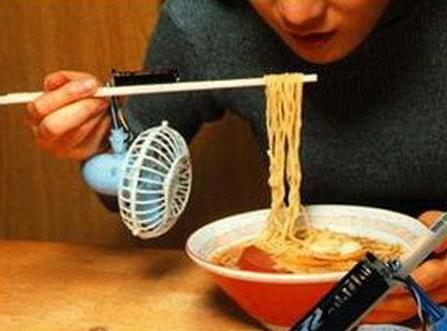
If input prices (e.g., labor, materials) increase, supply decreases (inverse relationship). For example, higher plastic costs reduce supply of noodle-cooling chopsticks.
Technology
Technological improvements increase supply (direct relationship). For example, a new pizza oven increases the supply of stuffed crust pizzas.

Taxes and Subsidies
Taxes are treated as costs by businesses; higher taxes decrease supply (inverse relationship). Subsidies increase supply (direct relationship).

Substitutes in Production
If the price of a substitute in production rises, supply of the original good decreases (inverse relationship). For example, if almond butter prices rise, peanut butter supply may decrease as resources shift to almond butter.

Expectations
If suppliers expect higher future prices, they may store goods, reducing current supply. Hiring more workers in anticipation of higher demand increases supply.

Number of Suppliers
More suppliers in the market increase supply (direct relationship). For example, more ice cream vendors increase the supply of ice cream.

Nature
Natural events can affect supply. Good weather increases supply; disasters decrease supply.

Summary Table: Determinants of Supply
Determinant | Directly Proportional | Inversely Proportional |
|---|---|---|
Nature | Good event | Bad event |
Producer Expectations | Hiring workers | Storing production |
Subsidies/Taxes | Subsidies ↑ | Taxes ↑ |
Technology | Improvement | Obsolescence |
Number of Suppliers | More suppliers | Fewer suppliers |
Input Prices | Input prices ↓ | Input prices ↑ |
Substitute in Production | Price of substitute ↓ | Price of substitute ↑ |
Supply and Demand Together: Equilibrium
Market equilibrium occurs where quantity supplied equals quantity demanded. The equilibrium price balances supply and demand, and the equilibrium quantity is the amount bought and sold at that price.

Surplus and Shortage
Surplus: Price is above equilibrium; quantity supplied exceeds quantity demanded.
Shortage: Price is below equilibrium; quantity demanded exceeds quantity supplied.


Quantitative Analysis of Supply and Demand
Equilibrium can be found algebraically using supply and demand equations. For example:
Demand: $P = 800 - 2Q$
Supply: $P = 200 + Q$
Steps:
Rearrange equations to isolate the same variable.
Set $Q_d = Q_s$ and solve for equilibrium quantity.
Substitute back to find equilibrium price.



Example: Given $P = 6 - \frac{1}{50}Q$ and $Q = 150P - 100$, set equations equal and solve for $P^*$ and $Q^*$.
Practice Questions
Which goods are sold in perfectly competitive markets? (e.g., wheat)
What happens to demand for an inferior good when income rises? (Demand decreases)
What happens to supply if input prices rise? (Supply decreases)
What happens to equilibrium if both supply and demand shift?
Additional info: This guide covers the core concepts of supply and demand, including determinants, shifts, equilibrium, and quantitative analysis, with relevant examples and practice questions for microeconomics students.
