Skip to main content
Nutrition
My Course
Learn
Exam Prep
AI Tutor
Study Guides
Flashcards
Try the app
My Course
Learn
Exam Prep
AI Tutor
Study Guides
Flashcards
Try the app
Back
Hunger, Satiety, and Hormones definitions
You can tap to flip the card.
Hunger
You can tap to flip the card.
👆
Hunger
Physiological drive for food intake, triggered by internal signals and distinct from the desire influenced by external cues.
Track progress
Control buttons has been changed to "navigation" mode.
1/15
Related flashcards
Related practice
Recommended videos
Hunger, Satiety, and Hormones quiz
Hunger, Satiety, and Hormones
15 Terms
Hunger, Satiety, and Hormones exam
Hunger, Satiety, and Hormones
28 Terms
Hunger, Satiety, and Hormones quiz #1
Hunger, Satiety, and Hormones
10 Terms
Hunger, Satiety, and Hormones
3. The Human Body & Digestion
10 problems
Topic
Overview of the Digestive System
3. The Human Body & Digestion
10 problems
Topic
3. The Human Body & Digestion
7 topics
15 problems
Chapter
05:40
Hunger and Satiety
686
views
16
rank
06:08
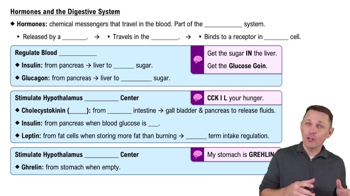
Hormones and the Digestive System
466
views
7
rank
02:04
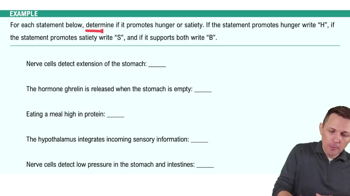
Hunger, Satiety, and Hormones Example 1
432
views
12
rank
Terms in this set (15)
Hide definitions
Hunger
Physiological drive for food intake, triggered by internal signals and distinct from the desire influenced by external cues.
Satiety
State of fullness signaling the body to stop eating, regulated by hormones and nutrient composition.
Appetite
Desire for food influenced by sensory experiences such as sight and smell, independent of physiological need.
Hypothalamus
Brain region integrating hormonal and neural signals to regulate hunger, satiety, and other basic functions.
Feeding Center
Area within the hypothalamus that, when activated, promotes the sensation of hunger.
Satiety Center
Area within the hypothalamus that, when activated, promotes the sensation of fullness.
Hormone
Chemical messenger released into the bloodstream, affecting target cells with specific receptors.
Ghrelin
Hormone released from the empty stomach, signaling the brain to stimulate hunger.
Leptin
Hormone produced by fat cells, signaling the brain to reduce hunger when energy stores are sufficient.
Insulin
Hormone from the pancreas that lowers blood glucose and signals satiety after eating.
Cholecystokinin
Hormone from the small intestine that promotes satiety and stimulates digestive fluid release.
Glucagon
Hormone from the pancreas that raises blood glucose by signaling the liver to release stored sugar.
Endocrine System
Body system composed of glands that secrete hormones into the bloodstream for widespread regulation.
Nerve Cell
Cell type detecting pressure in digestive organs and relaying fullness or emptiness signals to the brain.
Fiber
Indigestible plant material that increases fullness by adding bulk to the digestive tract.
 BackBack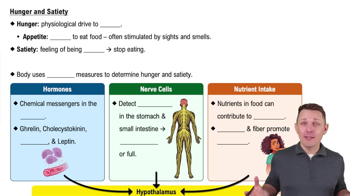
 05:40
05:40