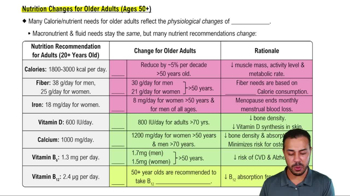
Which vitamin's absorption decreases in older adults, leading to a recommendation for supplementation?
Vitamin B12 absorption decreases in older adults, so supplementation is recommended.
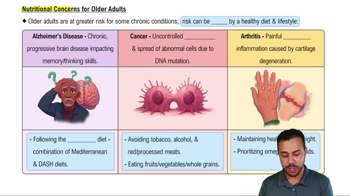
What dietary pattern is recommended to reduce the risk of Alzheimer's disease in older adults?
The MIND diet, which combines the Mediterranean and DASH diets, is recommended. It supports brain health and may lower Alzheimer's risk.
Which substances should older adults avoid to decrease their risk of cancer?
Older adults should avoid carcinogens such as tobacco, alcohol, and red and processed meats. These substances are linked to increased cancer risk.
How does maintaining a healthy body weight benefit older adults with arthritis?
Maintaining a healthy body weight reduces stress on joints. This can help decrease arthritis symptoms and improve joint health.
Why should older adults prioritize omega-3 fatty acids in their diet?
Omega-3 fatty acids have anti-inflammatory effects that can help with arthritis symptoms. They support joint health and reduce inflammation.
What happens to calorie needs as adults age past 50?
Calorie needs decrease by about 5% per decade after age 50. This is due to reduced muscle mass, activity level, and metabolic rate.
Why do fiber recommendations decrease for older adults?
Fiber needs are based on total calorie consumption, which decreases with age. Therefore, older adults require less fiber than younger adults.
What is the rationale for reducing iron intake in women over 50?
Menopause ends monthly menstrual blood loss, minimizing iron loss. As a result, older women need less iron in their diet.
Why should older adults increase their intake of vitamin D and calcium?
Aging leads to decreased bone density and reduced vitamin D synthesis and calcium absorption. Increasing these nutrients helps minimize osteoporosis risk.
How do congregate meal programs help older adults beyond nutrition?
Congregate meal programs provide opportunities for socializing at community sites. This helps older adults meet nutritional needs and reduces social isolation.
 Back
Back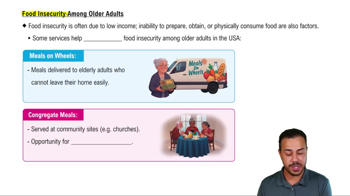
 01:05
01:05