Skip to main content
Nutrition
My Course
Learn
Exam Prep
AI Tutor
Study Guides
Flashcards
Try the app
My Course
Learn
Exam Prep
AI Tutor
Study Guides
Flashcards
Try the app
Back
Overview of the Digestive System definitions
You can tap to flip the card.
Gastrointestinal Tract
You can tap to flip the card.
👆
Gastrointestinal Tract
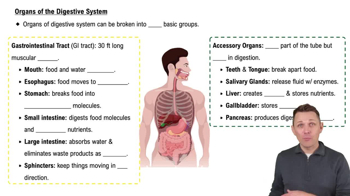
A 30-foot muscular tube running from mouth to anus, serving as the main passage for food and waste in the digestive system.
Track progress
Control buttons has been changed to "navigation" mode.
1/15
Related flashcards
Related practice
Recommended videos
Overview of the Digestive System quiz
Overview of the Digestive System
15 Terms
Overview of the Digestive System exam
Overview of the Digestive System
26 Terms
Overview of the Digestive System
3. The Human Body & Digestion
10 problems
Topic
Organs of the Gastrointestinal Tract
3. The Human Body & Digestion
10 problems
Topic
3. The Human Body & Digestion
7 topics
15 problems
Chapter
02:19
Overview of the Digestive System Example 2
372
views
8
rank
06:13
Functions of the Digestive System
487
views
10
rank
05:00
Organs of the Digestive System
642
views
11
rank
Terms in this set (15)
Hide definitions
Gastrointestinal Tract
A 30-foot muscular tube running from mouth to anus, serving as the main passage for food and waste in the digestive system.
Accessory Organs
Structures like liver, pancreas, and gallbladder that aid digestion but are not part of the main digestive tube.
Alimentary Canal
Another name for the gastrointestinal tract, emphasizing its role as a continuous passage for food.
Mouth
Entry point for food and water, initiating both mechanical and chemical digestion.
Esophagus
A muscular tube connecting the mouth to the stomach, moving food via peristalsis.
Stomach
A muscular, bag-like organ that stores food and breaks it into digestible molecules using acids and enzymes.
Small Intestine
A long, narrow organ where most digestion and nutrient absorption occur.
Large Intestine
A wider tube responsible for water reabsorption and formation of feces from undigested material.
Sphincter
Circular muscle that separates digestive organs and ensures one-way movement of food.
Salivary Glands
Structures that secrete saliva containing enzymes to lubricate and begin chemical digestion of food.
Liver
Largest internal organ, producing bile for fat digestion and processing absorbed nutrients.
Gallbladder
A small pouch storing bile before its release into the small intestine.
Pancreas
An organ producing digestive enzymes and fluids, released into the small intestine to aid digestion.
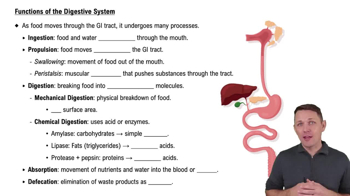
Peristalsis
A wave-like muscular contraction that propels food through the digestive tract.
Bile
A digestive fluid produced by the liver and stored in the gallbladder, essential for fat breakdown.
 BackBack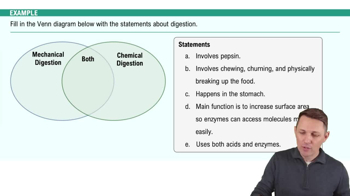
 02:19
02:19