Skip to main content
Nutrition
My Course
Learn
Exam Prep
AI Tutor
Study Guides
Flashcards
Try the app
My Course
Learn
Exam Prep
AI Tutor
Study Guides
Flashcards
Try the app
Back
The Gut Microbiome definitions
You can tap to flip the card.
Gut Microbiome
You can tap to flip the card.
👆
Gut Microbiome
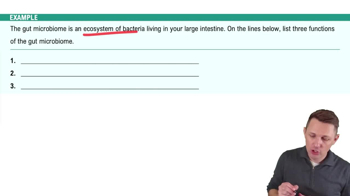
Ecosystem of trillions of mostly bacteria and other microorganisms residing primarily in the large intestine.
Track progress
Control buttons has been changed to "navigation" mode.
1/15
Related flashcards
Related practice
Recommended videos
The Gut Microbiome quiz
The Gut Microbiome
15 Terms
The Gut Microbiome exam
The Gut Microbiome
29 Terms
The Gut Microbiome
3. The Human Body & Digestion
10 problems
Topic
Disorders of the Digestive System
3. The Human Body & Digestion
10 problems
Topic
3. The Human Body & Digestion
7 topics
15 problems
Chapter
04:56
Gut Microbiome
381
views
5
rank
01:33
The Gut Microbiome Example 1
269
views
5
rank
Terms in this set (15)
Hide definitions
Gut Microbiome
Ecosystem of trillions of mostly bacteria and other microorganisms residing primarily in the large intestine.
Large Intestine
Main site in the digestive tract where most gut bacteria reside and ferment undigestible carbohydrates.
Gut Flora
Collective term for the living microorganisms, mainly bacteria, inhabiting the intestines.
Fiber
Indigestible carbohydrate that reaches the large intestine, serving as a primary food source for gut bacteria.
Fermentation
Process by which gut bacteria break down undigestible carbohydrates, producing gases and beneficial compounds.
Vitamin K
Nutrient produced in small amounts by gut bacteria, supplementing dietary sources.
B Vitamins
Group of nutrients partially synthesized by gut bacteria, providing additional health benefits.
Prebiotics
Non-digestible food components, such as certain fibers, that nourish beneficial gut bacteria.
Inulin
Type of prebiotic fiber found in root vegetables, especially favored by gut bacteria.
Resistant Starches
Starches that escape digestion in the small intestine and serve as food for gut bacteria.
Probiotics
Live beneficial bacteria introduced into the gut, often through fermented foods, to support microbiome health.
Fermented Foods
Foods altered by bacterial action, such as yogurt and kimchi, providing live probiotics.
Immune Function
Physiological process supported by a healthy gut microbiome, contributing to reduced inflammation.
Inflammation
Condition in the large intestine that is reduced by the presence of a healthy and diverse gut microbiome.
Ecosystem
Interconnected community of microorganisms in the gut, each playing a role in digestive and immune health.
 BackBack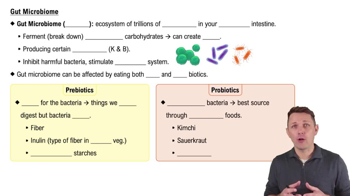
 04:56
04:56