Skip to main content
Nutrition
My Course
Learn
Exam Prep
AI Tutor
Study Guides
Flashcards
Try the app
My Course
Learn
Exam Prep
AI Tutor
Study Guides
Flashcards
Try the app
Back
NFS CH 2
You can tap to flip the card.
How does sight influence food selection?
You can tap to flip the card.
👆
How does sight influence food selection?
Sight is the primary criterion for food selection; factors like color, shape, size, and presentation influence perception and appeal.
Track progress
Control buttons has been changed to "navigation" mode.
1/26
Recommended videos
01:59
Dietary Guidelines for Americans Example 2
348
views
5
rank
04:27
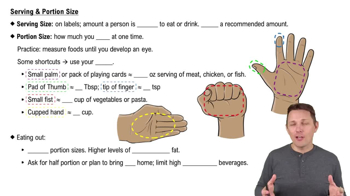
Serving & Portion Size
392
views
10
rank
04:50
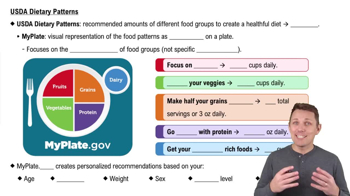
USDA Dietary Patterns
397
views
9
rank
Terms in this set (26)
Hide definitions
How does sight influence food selection?
Sight is the primary criterion for food selection; factors like color, shape, size, and presentation influence perception and appeal.
How can enriching the color of milk affect perception?
Enriching milk color can deceive senses, making it appear fresher or higher quality than it actually is.
What are volatile molecules in food?
Volatile molecules are compounds that evaporate easily and are detected by olfactory cells, contributing to food odors.
How many olfactory cells do humans have and what happens with repeated odor exposure?
Humans have about 10 million olfactory cells; repeated exposure to an odor can cause sensory adaptation, reducing perception.
What is the formula for flavor?
Flavor = taste + smell + chemesthesis; factors affecting taste include temperature, texture, and aroma.
Name the six taste stimuli.
The six tastes are sweet, sour, salty, bitter, umami, and fat, perceived through chemical stimuli on the tongue.
What is chemesthesis?
Chemesthesis is the chemical sensitivity of the skin and mucous membranes, causing sensations like spiciness or cooling.
How does hearing contribute to food selection?
Sounds like crunch, sizzle, snap, and fizz influence perception of freshness and quality, affecting food choice.
What does calorie balance mean in weight maintenance?
Calorie balance means energy intake equals energy expenditure, maintaining current body weight.
List the four basic guidelines from the 2020-2025 Dietary Guidelines for Americans.
Follow a healthy dietary pattern, focus on nutrient-dense foods, limit added sugars and saturated fats, and reduce sodium intake.
What are the estimated daily kcal goals for maintenance?
Women: ~1800-2400 kcal/day; Men: ~2200-3000 kcal/day; per meal guidelines suggest balanced portions throughout the day.
Give examples of functional foods for cancer risk reduction and heart health.
Examples include berries (cancer risk reduction) and oats (heart health); they provide health benefits beyond basic nutrition.
How have consumer dietary intakes shifted over time?
Milk and fat consumption decreased, poultry intake increased, and menu labeling has become more common.
What is nutrigenomics?
Nutrigenomics studies how diet interacts with genes to influence health and disease risk.
Difference between calories and kilocalories?
1 kilocalorie (kcal) equals 1000 calories; in nutrition, 'calorie' usually means kilocalorie.
Which religions adhere to vegetarianism?
Hinduism, Buddhism, and Jainism commonly practice forms of vegetarianism.
What beverage restrictions do Mormons have?
Mormons avoid alcohol, coffee, tea, and other caffeinated beverages.
Reasons for food bioengineering and examples of GMOs?
Reasons: improve yield, pest resistance, and nutrition; examples: Bt corn and Golden Rice.
Criteria for 100% organic certification vs. organic labeling?
100% organic means all ingredients are organic; organic labeling requires at least 95% organic ingredients.
Describe the NOVA Processed Food Classification System groups.
Groups: unprocessed/minimally processed, processed culinary ingredients, processed foods, and ultra-processed foods.
How do budget constraints influence food choices?
Limited budgets may reduce access to healthy foods; programs like SNAP, WIC, and food banks help address insecurity.
Define astringency in food consumption.
Astringency causes a dry, puckering mouthfeel due to tannins binding salivary proteins.
What is umami and its sources?
Umami is a savory taste from glutamates found in foods like mushrooms, soy sauce, and aged cheese.
Define functional food with an example.
Functional foods provide health benefits beyond basic nutrition, e.g., yogurt with probiotics improving gut health.
Difference between halal and kosher dietary laws?
Halal is Islamic dietary law; kosher is Jewish law; both specify permitted foods and preparation methods.
What is biotechnology in relation to GMOs?
Biotechnology involves genetic engineering to create GMOs with desired traits like pest resistance or enhanced nutrition.
 BackBack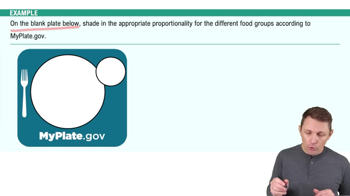
 01:59
01:59