 Back
BackNutrition: Digestion and Absorption
 02:10
02:10
Terms in this set (24)
- Salivary glands: amylase for starch digestion
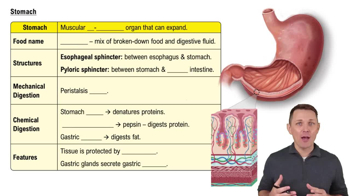
- Stomach: pepsin for protein digestion
- Pancreas: lipase, amylase, proteases (trypsin, chymotrypsin)
- Small intestine (brush border): maltase, lactase, sucrase, peptidases
- Upper esophageal sphincter: between pharynx and esophagus
- Lower esophageal sphincter: between esophagus and stomach
- Pyloric sphincter: between stomach and small intestine
- Ileocecal valve: between small and large intestine
- Anal sphincters: internal and external at the anus
What are the main digestive hormones and their roles?
- Gastrin: stimulates acid secretion in stomach
- Secretin: stimulates bicarbonate release from pancreas
- Cholecystokinin (CCK): stimulates bile and pancreatic enzyme release
- Ghrelin: stimulates hunger
How do bacteria, hormones, and nerves influence digestion and health?
- Bacteria: aid in fermentation and vitamin synthesis
- Hormones: regulate enzyme secretion and motility
- Nerves: control muscle contractions and secretions
Where does absorption of nutrients primarily occur?
Absorption primarily occurs in the small intestine
Which areas of the digestive tract have low pH (high acidity) and which have high pH (alkalinity)?
High pH (alkaline): small intestine (pH ~6-7.4)
Which enzymes are present in the microvilli (brush border) of the small intestine?
How are glucose, fructose, and galactose transported in the intestines?
Fructose: absorbed via facilitated diffusion (GLUT5)
What is celiac disease and which dietary component must be restricted?
Dietary restriction: avoid gluten-containing foods (wheat, barley, rye)
What is GERD and how should diet be modified for patients with GERD?
Diet modification: avoid spicy, fatty, acidic foods; eat smaller meals; avoid lying down after eating
Where does digestion primarily occur?
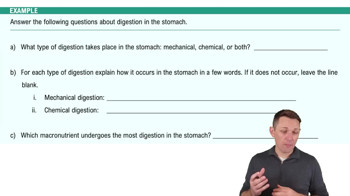
Digestion occurs mainly in the stomach and small intestine
Gastrin
Stimulates acid secretion in the stomach
Secretin
Stimulates bicarbonate release from pancreas
Cholecystokinin (CCK)
Stimulates bile and pancreatic enzyme release
Ghrelin
Stimulates hunger
Salivary glands
Produces amylase enzyme for starch digestion
Stomach
Produces pepsin enzyme for protein digestion
Pancreas
Produces lipase to break fatty acids (lipids), amylase for carbohydrates to be broken down into simple sugars, and proteases (trypsin, chymotrypsin) enzymes to break down protein into amino acids
Small intestine
Uses the enzymes: maltase to break down maltose into glucose molecules, lactase and sucrase to break down disaccharides into simple sugars, peptidases to break peptides into amino acids.
Upper esophageal sphincter
It's between pharynx and esophagus
Lower esophageal sphincter
It's between esophagus and stomach
Pyloric sphincter
It's between stomach and small intestine
Ileocecal valve
It's between small and large intestine
Anal sphincters:
It's internal and external at the anus