 Back
BackNutrition Metabolism Flashcards
 04:10
04:10
Terms in this set (16)
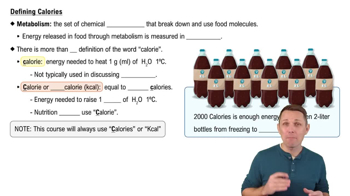
What is metabolism?
It's the sum of all chemical reactions in the body that maintain life, including energy production and synthesis of molecules.
What are anabolic metabolic pathways?
They are building complex molecules from simpler ones, requiring energy input.
What are catabolic metabolic pathways?
They break down complex molecules into simpler ones, releasing energy.
Which hormones promote anabolic metabolic pathways?
Hormones like insulin promote anabolic pathways by stimulating synthesis and storage of molecules.
Which hormones promote catabolic metabolic pathways?
Hormones such as glucagon and epinephrine promote catabolic pathways by stimulating breakdown of molecules for energy.
Define glycolysis.
Glycolysis is the anaerobic breakdown of glucose into pyruvate, producing ATP and NADH.
What is the TCA cycle?
The TCA cycle (Krebs cycle) is an aerobic process that oxidizes acetyl CoA to produce NADH, FADH2, and ATP.
What is the Cori cycle?
The Cori cycle recycles lactate produced by anaerobic glycolysis in muscles back to glucose in the liver.
What is the electron transport chain (ETC)?
The ETC is a series of protein complexes in mitochondria that generate ATP using electrons from NADH and FADH2.
What is the key central substrate in aerobic metabolic reactions?
Acetyl CoA is the central substrate entering the TCA cycle in aerobic metabolism.
What form of energy is used directly by body cells?
ATP (adenosine triphosphate) is the direct energy source used by cells.
Which metabolic reaction generates the most ATP in the body?
The electron transport chain coupled with oxidative phosphorylation generates the most ATP.
How many carbons does pyruvate have?
Pyruvate has 3 carbon atoms.
How many carbons does acetyl CoA have?
Acetyl CoA contains 2 carbon atoms.
Which organ is the most metabolically active in the body?
The liver is the most metabolically active organ.
Which pathway is upregulated during anaerobic conditions?
Glycolysis followed by lactate production is upregulated during anaerobic conditions.