HIV and AIDS quiz Flashcards
BackYou can tap to flip the card.
Control buttons has been changed to "navigation" mode.
1/20
What type of cells does HIV primarily attack in the immune system?
HIV primarily attacks helper T cells, which are crucial for immune function.What is the main difference between HIV and AIDS?
HIV is the virus that infects the body, while AIDS is the syndrome that develops when the immune system is severely weakened by HIV.How does HIV replicate within the body?
HIV hijacks helper T cells to replicate itself, eventually destroying these cells in the process.What are opportunistic infections, and why are they dangerous for people with AIDS?
Opportunistic infections are illnesses that occur more frequently and are more severe in people with weakened immune systems, such as those with AIDS.Name two cancers associated with AIDS.
Kaposi's sarcoma and cervical cancer are two cancers commonly associated with AIDS.Which region of the world has the highest number of new HIV cases?
Sub-Saharan Africa has the highest number of new HIV cases globally.Which populations in the United States are disproportionately affected by HIV?
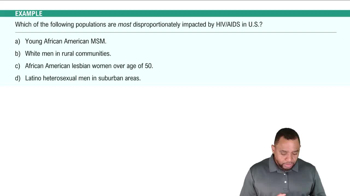
African Americans, Latinos, and men who have sex with men (MSM) are disproportionately affected by HIV in the U.S.What are the initial symptoms of HIV infection?
The initial symptoms of HIV infection are flu-like, including fever, fatigue, sore throat, and muscle aches.How is HIV transmitted from one person to another?
HIV is transmitted through sexual contact, exchange of body fluids (except saliva), mother-to-child during birth, and through breast milk.Why is saliva not considered a significant route for HIV transmission?
The viral load in saliva is very low, making the chances of HIV transmission through saliva extremely low.What is the typical timeline for HIV to progress to AIDS if untreated?
HIV can progress to AIDS over an 8 to 10 year period if left untreated.What are some prevention methods for HIV transmission?
Prevention methods include safe sex practices, pre-exposure prophylaxis (PrEP), and needle exchange programs.What is the purpose of early HIV diagnosis?
Early diagnosis allows for early treatment, reducing the risk of transmission and preventing progression to AIDS.What are the three main types of HIV diagnostic tests?
The three main types are antibody tests, combination antigen/antibody tests, and nucleic acid tests (NATs).How soon after exposure can a nucleic acid test (NAT) detect HIV?
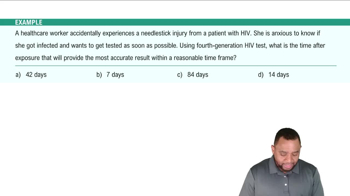
A nucleic acid test can detect HIV within 1 to 4 weeks after exposure.Why is it recommended to wait before taking an HIV test after possible exposure?
Waiting ensures more accurate results, as testing too early can lead to false negatives.Is there a cure for HIV?
No, there is currently no cure for HIV.What is the role of antiretroviral therapy (ART) in HIV treatment?
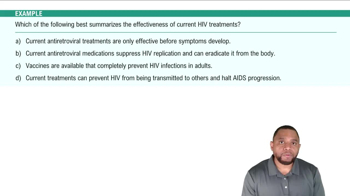
ART suppresses HIV replication, prolongs life, and reduces the risk of transmission.What challenges exist in accessing HIV treatment?
Challenges include the high cost of medications and limited access, especially in low-resource settings.How can people with HIV live long, healthy lives?
With consistent access to antiretroviral therapy, people with HIV can maintain undetectable viral loads and live long, healthy lives.