Pearson+ LogoPearson+ Logo

Infection Risk Factors definitions Flashcards

Back
Infection Risk Factors definitions
Control buttons has been changed to "navigation" mode.
1/15
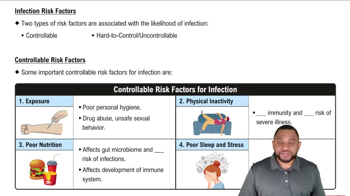
  • Personal Hygiene

    Practices that reduce exposure to pathogens and lower the likelihood of contracting infections.
  • Drug Abuse

    Behavior that impairs immune function and increases vulnerability to infectious diseases.
  • Physical Inactivity

    State linked to weakened immunity and heightened risk of severe illness and infections.
  • Nutrition

    Dietary quality influencing gut microbiome health and immune system development, affecting infection risk.
  • Gut Microbiome

    Community of microorganisms in the digestive tract that supports immune defense against infections.
  • Stress

    Mental or emotional strain that diminishes immune system effectiveness and increases susceptibility.
  • Sleep

    Restorative process essential for maintaining immune system strength and infection resistance.
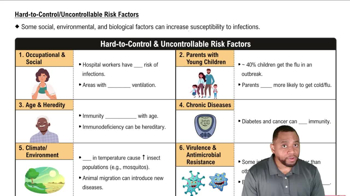
  • Occupation Exposure

    Work-related contact with infectious agents, especially in healthcare or poorly ventilated environments.
  • Age

    Biological factor associated with declining immune function and increased infection risk over time.
  • Chronic Disease

    Long-term health condition, such as diabetes or cancer, that impairs immunity and raises infection risk.
  • Climate Change

    Environmental shifts that boost vector populations and facilitate the spread of infectious diseases.
  • Vector

    Organism, like a mosquito, that transmits pathogens and facilitates the spread of infections.
  • Antibiotic Resistance

    Phenomenon where bacteria evolve to withstand drugs, making infections harder to treat.
  • Immunocompetence

    Capacity of the immune system to mount effective responses against infectious agents.
  • Virulence

    Degree to which a pathogen can cause severe disease and spread rapidly within populations.