Infection Risk Factors quiz Flashcards
BackInfection Risk Factors quiz
You can tap to flip the card.
Control buttons has been changed to "navigation" mode.
1/20
What are the two main types of infection risk factors?
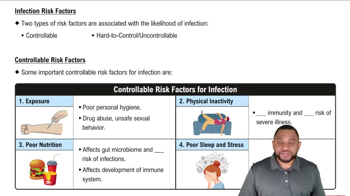
The two main types are controllable risk factors and uncontrollable (or hard to control) risk factors.Name two examples of controllable infection risk factors.
Examples include poor personal hygiene and drug abuse.How does physical inactivity affect infection risk?
Physical inactivity can increase the likelihood of infection and severe illness by weakening the immune system.Why is poor nutrition a risk factor for infection?
Poor nutrition affects the gut microbiome and immune system development, increasing infection risk.How do poor sleep and stress impact the immune system?
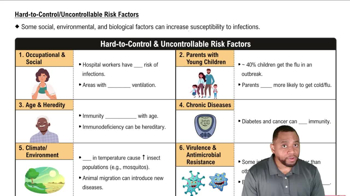
Poor sleep and stress decrease the effectiveness of the immune system, making infections more likely.What is an example of an uncontrollable infection risk factor related to occupation?
Hospital workers are at increased risk due to frequent exposure to infectious patients.How does age influence infection risk?
Immunity weakens with age, making older adults more susceptible to infections.What role does heredity play in infection risk?
Some immunodeficiencies can be hereditary, increasing susceptibility to infections.How do chronic diseases like diabetes affect infection risk?
Chronic diseases can decrease immunity, raising the risk of infections.How can climate change increase infection risk?
Climate change can increase temperatures, leading to more insect vectors like mosquitoes that spread diseases.What is the effect of poor ventilation on infection risk?
Poor ventilation increases susceptibility to respiratory infections.Why are parents of young children at higher risk for infections like the flu?
Parents are more exposed because children frequently contract infections and can transmit them to their parents.What is antimicrobial resistance?
Antimicrobial resistance is when bacteria become resistant to antibiotics, making infections harder to treat.How does animal migration contribute to infection risk?
Animal migration can introduce new diseases to populations that have not been exposed before.What is meant by the virulence of an infection?
Virulence refers to how quickly and easily an infection can spread.Why is understanding infection risk factors important?
It helps in making lifestyle choices and being aware of biological and environmental risks to prevent infections.How can improving personal hygiene reduce infection risk?
Good personal hygiene reduces exposure to pathogens, lowering the chance of infection.What is the connection between the gut microbiome and infection risk?
A healthy gut microbiome supports immune function, while poor nutrition can disrupt it and increase infection risk.Why are some infection risk factors considered uncontrollable?
They are related to factors like age, heredity, occupation, and environment, which individuals cannot easily change.How does drug abuse increase infection risk?
Drug abuse can compromise the immune system and increase risky behaviors, raising the likelihood of infection.