Pearson+ LogoPearson+ Logo

Pathogens & Diseases: Viruses quiz Flashcards

Back
Pathogens & Diseases: Viruses quiz
Control buttons has been changed to "navigation" mode.
1/20
  • What is the basic structure of a virus?

    A virus consists of a protein structure containing either RNA or DNA.
  • How do viruses reproduce?

    Viruses must invade a host cell and hijack its machinery to make copies of themselves.
  • Why are viruses challenging to treat?

    Viruses are challenging to treat due to their long incubation periods and their ability to hide within host cells.
  • What are common symptoms of the common cold?

    Symptoms include a stuffy nose, sneezing, sore throat, and cough.
  • How is the common cold transmitted?

    It is transmitted through skin-to-skin contact or respiratory droplets from an infected person.
  • What are possible complications of the common cold?

    Complications can include sinus and ear infections.
  • What is the main treatment for the common cold?

    Over-the-counter medicines are used to relieve symptoms until they resolve.
  • What are typical symptoms of influenza and COVID-19?

    Symptoms include fever, muscle aches, fatigue, shortness of breath, and cold-like symptoms.
  • How are influenza and COVID-19 transmitted?

    Both are transmitted through respiratory droplets.
  • What are severe complications of influenza and COVID-19?

    Both can lead to pneumonia, and COVID-19 can also cause organ failure in extreme cases.
  • What treatments are available for influenza and COVID-19?

    Antiviral medications can be used, and vaccines are available for both diseases.
  • What is hepatitis and what organ does it affect?

    Hepatitis is inflammation of the liver, which can lead to chronic liver disease and other complications.
  • What are common symptoms of hepatitis A, B, and C?

    Symptoms include fever, headache, fatigue, nausea, skin rashes, dark yellow urine, and jaundice.
  • How is hepatitis A transmitted?

    Hepatitis A is transmitted through fecal contamination of food or water, and through close or sexual contact.
  • How are hepatitis B and C transmitted?

    Both are transmitted through sexual contact or exposure to bodily fluids.
  • What are the main complications of hepatitis B and C?

    Complications include cirrhosis of the liver, liver failure, and liver cancer.
  • Which hepatitis viruses have vaccines available?

    Vaccines are available for hepatitis A and B, but not for hepatitis C.
  • What is the leading cause of death from liver disease among the hepatitis viruses?

    Hepatitis C is the leading cause of death from liver disease.
  • What are the main symptoms of West Nile virus?

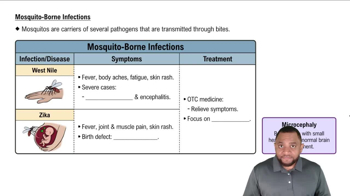
    Symptoms include fever, body aches, fatigue, and sometimes a skin rash; severe cases can cause meningitis or encephalitis.
  • What birth defect is associated with Zika virus, and what does it involve?

    Zika virus can cause microcephaly, a condition where babies are born with smaller than average heads due to abnormal brain development.