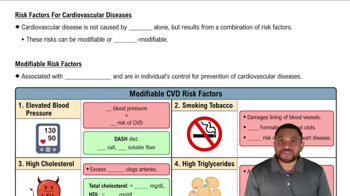
What are the two main categories of risk factors for cardiovascular disease?
The two main categories are modifiable risk factors, which can be changed, and non-modifiable risk factors, which cannot be changed.
How does elevated blood pressure affect cardiovascular disease risk?
Higher blood pressure increases the risk of developing cardiovascular disease.
What lifestyle change can help reduce blood pressure and lower cardiovascular risk?
Following the DASH diet, which reduces salt intake and increases soluble fiber, can help lower blood pressure.
How does smoking contribute to cardiovascular disease?
Smoking damages blood vessel linings, increases blood clot formation, and raises the risk of coronary heart disease.
What is considered a healthy total cholesterol level to reduce cardiovascular risk?
A healthy total cholesterol level is less than 200 milligrams per deciliter.
What is the recommended level for HDL (good cholesterol) to lower cardiovascular risk?
HDL should be equal to or greater than 60 milligrams per deciliter.
What is the recommended level for LDL (bad cholesterol) to lower cardiovascular risk?
LDL should be less than 100 milligrams per deciliter.
How are high triglycerides related to cardiovascular disease?
High triglycerides are associated with diabetes and obesity and can be worsened by smoking and physical inactivity.
How does diabetes affect the risk of cardiovascular disease in men and women?
Diabetes doubles the risk for men and triples the risk for women for developing cardiovascular disease.
Why does obesity increase the risk of cardiovascular disease?
Obesity, indicated by a high BMI, increases the likelihood of developing cardiovascular disease.
What is the impact of physical inactivity on cardiovascular health?
Physical inactivity is linked to high blood pressure, lower HDL cholesterol, and increased risk of overweight and obesity.
What is metabolic syndrome and how is it related to cardiovascular disease?
Metabolic syndrome is having three or more out of five risk factors, including abdominal obesity, low HDL, high triglycerides, high blood pressure, and high fasting glucose, which increases cardiovascular risk.
What fasting glucose level is considered a risk factor for metabolic syndrome?
A fasting glucose greater than 100 mg/dL is considered a risk factor for metabolic syndrome.
Which risk factors for cardiovascular disease cannot be changed?
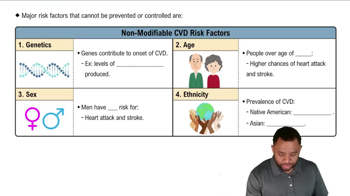
Non-modifiable risk factors include genetics, age, sex, and ethnicity.
How does genetics influence cardiovascular disease risk?
Certain genes can affect cholesterol production and increase the likelihood of developing cardiovascular disease.
At what age does the risk for cardiovascular disease significantly increase?
People over the age of 55 have a higher chance of heart disease, heart attacks, and strokes.
How does sex affect the risk of cardiovascular disease?
Men have a higher risk for certain types of cardiovascular diseases, such as heart attack and stroke.
Which ethnic group has the highest rate of cardiovascular disease?
Native Americans have the highest rate of certain types of cardiovascular diseases compared to other groups.
Which ethnic group has the lowest risk of major cardiovascular diseases?
Asians typically have the lowest risk of developing major types of cardiovascular diseases.
Why is understanding risk factors important for cardiovascular disease prevention?
Understanding risk factors helps individuals make lifestyle choices to reduce their risk and manage cardiovascular disease.
 Back
Back


 1:50
1:50