Essential hypertension is high blood pressure with no identifiable cause; it is often linked to genetic, lifestyle, and environmental factors rather than a specific underlying disease.
How does atherosclerosis contribute to hypertension?
Atherosclerosis contributes to hypertension by causing plaque buildup in the arteries, which narrows and hardens them, increasing resistance to blood flow and raising blood pressure.
What is Raynaud's disease and how does it relate to cardiovascular health?
Raynaud's disease is a condition characterized by episodes of reduced blood flow to the extremities, often triggered by cold or stress, and is related to cardiovascular health because it involves abnormal blood vessel responses.
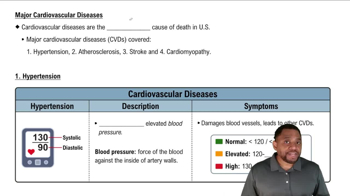
What are the systolic and diastolic values that define normal, elevated, and high blood pressure?
Normal blood pressure is less than 120/80 mmHg, elevated is 120-129/<80 mmHg, and high blood pressure (hypertension) is 130-180/80-120 mmHg. These values help classify blood pressure status.
What substances make up the plaque that causes arteriosclerosis?
Plaque consists of fatty substances such as cholesterol, calcium, and cellular waste. These deposits narrow and harden arteries.
What are common symptoms of peripheral artery disease?
Symptoms include cramping, aching in legs, feet, arms, or hips, slow wound healing, and tissue death that may lead to amputation. These result from reduced blood flow in the limbs.
How does angina pectoris differ from myocardial infarction in coronary heart disease?
Angina pectoris is severe chest pain due to partial artery blockage, causing temporary discomfort. Myocardial infarction is a heart attack caused by complete blockage, resulting in permanent heart tissue death.
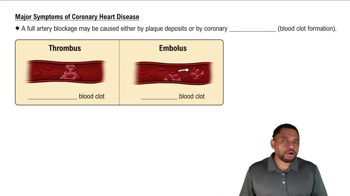
What is the difference between a thrombus and an embolus in the context of cardiovascular disease?
A thrombus is a stationary blood clot that blocks an artery, while an embolus is a mobile blood clot that travels through the bloodstream. Both can cause arterial blockages but differ in mobility.
What are the two major types of stroke and their causes?
Ischemic stroke is caused by blockage of blood vessels by a thrombus or embolus, while hemorrhagic stroke results from rupture of a blood vessel due to an aneurysm. Both interrupt blood flow to the brain.
What are the main symptoms and consequences of cardiomyopathy?
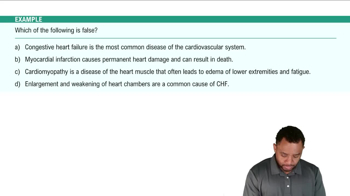
Cardiomyopathy causes heart muscle tissue death and enlargement, leading to ineffective blood pumping. Symptoms include swelling in legs, ankles, and feet, shortness of breath, fatigue, and potentially congestive heart failure.
 Back
Back



 1:41
1:41