Pearson+ LogoPearson+ Logo

Types of Diabetes quiz Flashcards

Back
Types of Diabetes quiz
Control buttons has been changed to "navigation" mode.
1/20
  • What is the main difference in insulin production between type 1 and type 2 diabetes?

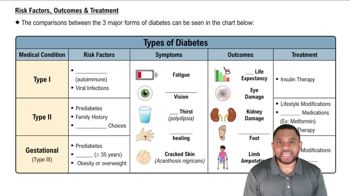
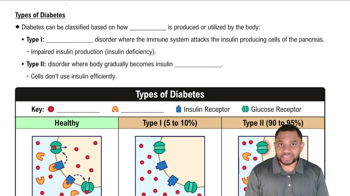
    Type 1 diabetes involves little to no insulin production due to autoimmune destruction of pancreatic cells, while type 2 diabetes involves insulin resistance where the body produces insulin but cells do not respond to it efficiently.
  • What is gestational diabetes and when does it typically occur?

    Gestational diabetes is a form of diabetes that occurs during pregnancy and usually resolves after the mother gives birth.
  • What percentage of diabetes cases are classified as type 2?

    Type 2 diabetes accounts for about 90 to 95 percent of all diabetes cases.
  • What is the primary treatment for type 1 diabetes?

    The primary treatment for type 1 diabetes is insulin therapy, which involves administering insulin to regulate blood glucose levels.
  • Which type of diabetes is considered an autoimmune disorder?

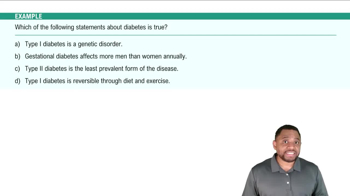
    Type 1 diabetes is considered an autoimmune disorder because the immune system attacks insulin-producing cells in the pancreas.
  • What are common symptoms shared by all types of diabetes?

    Common symptoms include hyperglycemia, fatigue, blurry vision, increased thirst, slow healing, and sometimes darkening or cracking of the skin.
  • How does insulin normally help regulate blood glucose in a healthy person?

    Insulin binds to its receptors on cells, signaling glucose receptors to allow glucose to enter the cell for energy use.
  • What is a major risk factor for developing type 2 diabetes?

    Major risk factors include family history, prediabetes, and lifestyle choices such as poor diet and lack of exercise.
  • Why does glucose build up in the blood in type 1 diabetes?

    Glucose builds up because there is little to no insulin to signal cells to absorb glucose from the bloodstream.
  • What is the main cause of insulin resistance in gestational diabetes?

    Placental hormones during pregnancy cause cells to develop insulin resistance, leading to gestational diabetes.
  • What is a possible outcome if diabetes is left untreated?

    Untreated diabetes can lead to serious complications such as kidney damage, eye damage, diabetic foot, and even limb amputation.
  • How can type 2 diabetes sometimes be managed without medication?

    Type 2 diabetes can sometimes be managed through lifestyle modifications such as improved diet and increased physical activity.
  • What is prediabetes and why is it important?

    Prediabetes is a condition where blood glucose levels are higher than normal but not yet high enough for a diabetes diagnosis; it is important because it increases the risk of developing type 2 or gestational diabetes.
  • Which type of diabetes is most likely to resolve after pregnancy?

    Gestational diabetes typically resolves after the mother gives birth.
  • What is the typical fasting blood glucose range for a healthy person?

    The typical fasting blood glucose range for a healthy person is 70 to 100 milligrams per deciliter.
  • What is the only current treatment for type 1 diabetes?

    The only current treatment for type 1 diabetes is daily insulin therapy.
  • What is a common oral medication used to treat type 2 diabetes?

    A common oral medication for type 2 diabetes is metformin.
  • How does obesity affect the risk of gestational diabetes?

    Obesity increases the risk of developing gestational diabetes, especially when combined with pregnancy-related weight gain.
  • What is the effect of insulin resistance on glucose uptake in type 2 diabetes?

    Insulin resistance prevents cells from responding properly to insulin, so glucose cannot efficiently enter the cells and builds up in the blood.
  • What is a diabetic foot and why is it dangerous?

    A diabetic foot refers to wounds on the feet that heal slowly or not at all, which can lead to severe infections and possible limb amputation.