Addiction is a treatable disease marked by compulsive use of a substance or behavior despite negative consequences.
What are the two main components of addiction?
Addiction has both physiological (body) and psychological (mind) components.
What is physiological dependence?
Physiological dependence refers to the body's reliance on a substance, often shown by tolerance and withdrawal symptoms.
What is psychological dependence?
Psychological dependence involves mental or emotional reliance on a substance or behavior, often due to poor coping skills or trauma.
What is tolerance in the context of addiction?
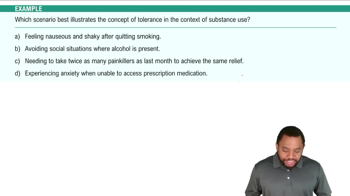
Tolerance is when larger amounts of a drug are needed to achieve the same desired effects.
What is withdrawal?
Withdrawal is the unpleasant physical and psychological symptoms that occur when a drug is absent from the body.
How do psychoactive drugs affect the brain?
Psychoactive drugs change brain chemistry, altering perceptions, consciousness, and mood.
What are some examples of addictive behaviors not involving substances?
Examples include gambling, shopping, and playing video games.
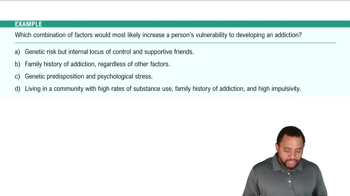
What are the three main risk factors for addiction?
The three main risk factors are biological, psychological, and environmental.
How can genetics influence addiction risk?
Some people may have genes that make them more likely to develop addiction to certain substances.
How can mental disorders affect addiction risk?
Having a mental disorder can make a person more susceptible to addiction.
What psychological factors can increase addiction risk?
Poor coping skills, trauma, and an external locus of control can increase addiction risk.
What is an external locus of control?
It is the belief that one does not have control over events in their life, which can increase susceptibility to addiction.
How can trauma contribute to addiction?
Experiencing trauma, such as a car accident, can lead someone to use substances for relief and potentially develop addiction.
What environmental factors can increase addiction risk?
Negative family dynamics, easy availability of substances, and peer pressure can increase addiction risk.
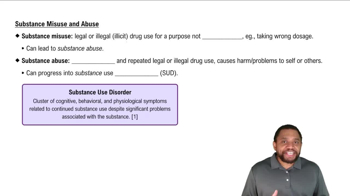
What is substance misuse?
Substance misuse is using a legal or illegal drug for a purpose not intended, such as taking the wrong dosage of medication.
What can substance misuse lead to if continued?
Continued substance misuse can lead to substance abuse.
What is substance abuse?
Substance abuse is the excessive and repeated use of drugs that causes harm to oneself or others.
What can substance abuse progress into?
Substance abuse can progress into substance use disorder.
What is substance use disorder (SUD)?
Substance use disorder is a cluster of cognitive, behavioral, and psychological symptoms related to continued substance use despite significant problems.
 Back
Back

 1:23
1:23