 Back
BackAlternative, Traditional, and Integrative Health Approaches: Concepts and Applications
Study Guide - Smart Notes
 Tailored notes based on your materials, expanded with key definitions, examples, and context.
Alternative, Traditional, and Integrative Health Approaches
Definitions and Overview
Understanding the distinctions between alternative, traditional, and integrative health approaches is essential for personal health. These approaches differ in their relationship to conventional medicine and their underlying philosophies.
Conventional Medicine: The mainstream, science-based system of healthcare practiced by medical doctors and allied health professionals.
Alternative Medicine: Non-mainstream practices used instead of conventional medicine. Examples include homeopathy and naturopathy.
Complementary Medicine: Non-mainstream practices used together with conventional medicine, such as yoga or herbal supplements alongside prescribed drugs.
Integrative Medicine: A coordinated approach that combines conventional and complementary methods, focusing on the whole person and evidence-based care.
Key Point: Integrative health emphasizes multimodal interventions and a whole-person approach, addressing biological, behavioral, social, and environmental domains.
Classification of Complementary Health Approaches
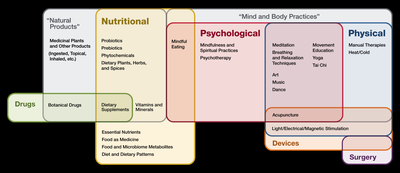
Complementary health approaches are classified by their primary therapeutic input and can be grouped into nutritional, psychological, and physical domains. Many therapies combine elements from more than one domain.
Nutritional Approaches: Special diets, supplements, herbs, and probiotics.
Psychological Approaches: Mind-body practices such as mindfulness, meditation, and psychotherapy.
Physical Approaches: Massage, spinal manipulation, yoga, tai chi, and acupuncture.
Combinations: Practices like yoga (psychological + physical) and mindful eating (psychological + nutritional).
Nutritional Approaches
Herbs and Botanicals
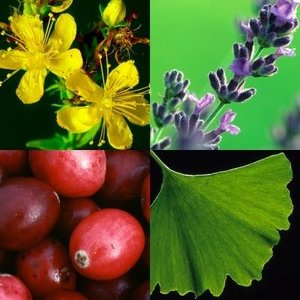
Herbs and botanicals are plant-derived substances used for their medicinal properties. They are a major component of both traditional and complementary medicine systems.
Examples: St. John’s Wort, lavender, cranberry, and ginkgo biloba.
Applications: Used for a variety of health conditions, such as mood regulation, urinary tract health, and cognitive support.
Safety and Interactions
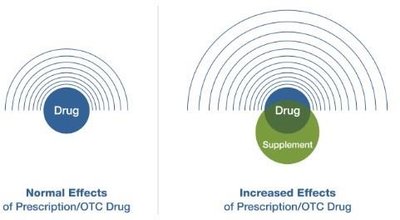
Two main safety concerns with nutritional supplements and botanicals are drug interactions and product contamination. Supplements can interact with prescription or over-the-counter drugs, potentially increasing or altering their effects.
Drug Interactions: Supplements may enhance or diminish the effects of medications, leading to adverse outcomes.
Product Contamination: Some products may contain harmful substances not listed on the label.
Psychological and Physical Approaches
Mind-Body Practices
Mind-body practices integrate psychological and physical techniques to promote health and well-being. These include:
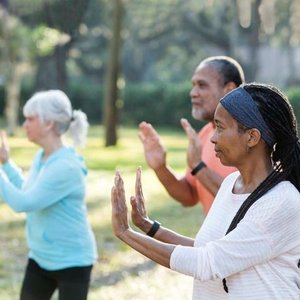
Tai Chi: A Chinese martial art involving slow movements and controlled breathing, shown to improve balance and reduce pain.
Yoga: Combines physical postures, breathing exercises, and meditation to enhance mental and physical health.
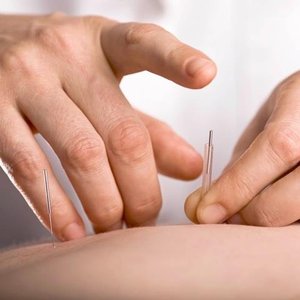
Acupuncture: Involves inserting thin needles into specific points on the body to balance energy flow and alleviate pain.
Massage Therapy: Manipulation of soft tissues to relieve pain and promote relaxation.
Other Practices: Art therapy, music therapy, dance, mindfulness-based stress reduction, relaxation techniques, and more.
Other Complementary Health Approaches
Whole Medicine Systems
Whole medicine systems are comprehensive approaches developed outside of conventional Western medicine. They include:
Traditional Chinese Medicine (TCM): Based on balancing yin and yang, using herbal remedies, acupuncture, and mind-body practices.
Ayurvedic Medicine: Originating in India, focuses on balancing the five elements (air, fire, water, earth, ether) through diet, herbs, and lifestyle.
Homeopathy: Based on the principle of "like cures like" and using highly diluted substances.
Naturopathy: Emphasizes natural and noninvasive treatments, including herbs, exercise, and dietary changes.
Biological, Biofield, and Body-Based Therapies
Biological Therapies
Dietary Supplements: Vitamins, minerals, and other compounds taken to support health.
Special Foods or Diets: Eating specific foods or avoiding certain foods to treat or prevent conditions.
Botanicals: Plant-based substances such as cannabis, evening primrose oil, curcumin, allicin, and valerian root.
Biofield Therapies
Therapeutic Touch: Gentle touch to manipulate energy fields and promote healing.
Reiki: Japanese practice using hands to channel energy and support the body’s natural healing abilities.
Body-Based Therapies
Massage: Manipulation of soft tissues for relaxation and pain relief.
Reflexology: Applying pressure to specific points on the hands and feet believed to correspond to other body parts.
Chiropractic Therapy: Manipulation of the musculoskeletal system to treat pain and dysfunction.
Complementary and Alternative Medicine (CAM) in Canada
Usage and Trends
Complementary and alternative medicine is widely used in Canada, with significant regional and demographic variation.
Spending: Canadians spent $8.8 billion on CAM in 2015-2016, with $6.5 billion on providers and $2.3 billion on natural health products and related items.
Prevalence: Approximately 56% of Canadians used at least one CAM therapy during 2015-2016.
Popular Therapies: Massage (24%), relaxation techniques (19%), chiropractic care and yoga (16%), and spiritual healing (15%).
Regional Variation: Higher usage in Western Canada (65% in British Columbia and Alberta) compared to Eastern Canada (46% in Quebec).
Demographic and Psychometric Predictors
Research has identified demographic and psychological factors associated with engagement in risk-associated alternative healthcare behaviours (RAAH) in Canada.

Table: Types of RAAH Behaviours by Language Group
Type of RAAH Behaviours | English (N = 553) | French (N = 69) | Total (N = 622) |
|---|---|---|---|
Physical Manipulative RAAH | 361 (65.3%) | 39 (56.5%) | 400 (62.1%) |
Ingested/Nutritional RAAH | 317 (57.3%) | 26 (37.7%) | 343 (55.1%) |
General RAAH | 275 (49.7%) | 24 (34.8%) | 309 (49.7%) |
Alternative Belief Systems RAAH | 236 (42.7%) | 27 (39.1%) | 263 (42.3%) |

Trends in Integrative Medicine
Interest in integrative medicine is growing, with increasing research and proposals for formal recognition in the medical profession.

Integrative Health and Whole Person Health
Principles of Integrative Health
Integrative health combines conventional and complementary approaches in a coordinated manner, focusing on the whole person. It emphasizes:
Multimodal interventions (using two or more approaches)
Addressing underlying causes of symptoms or conditions
Evidence-based practice
Strong patient-provider relationships
Whole Person Health: Involves improving and restoring health across biological, behavioral, social, and environmental domains, not just treating disease.
Practitioners of Integrative Health
Physicians
Chiropractic doctors
Holistic mind-body psychotherapists
Acupuncturists
Chinese herbal therapists
Tai chi and yoga practitioners
Massage therapists
Nutritionists and chefs (culinary medicine)
Benefits and Disadvantages
Benefits: Supports the body’s natural healing, reduces stress, promotes relaxation, supports optimal health, and gives individuals more control over their well-being.
Disadvantages: Not substitutes for medical care, may be poorly regulated, some interventions lack evidence, and there is potential for financial harm if therapies are ineffective.
Key Takeaways for Personal Health
Natural does not always mean safe—evaluate risks and benefits.
Personal decision-making is crucial; informed choices are best.
Belief in a therapy can influence its effectiveness (placebo effect).
Consult healthcare professionals before starting new therapies, especially if you have chronic conditions or take prescription medications.
