 Back
BackSafety in Medication Administration: Essential Concepts for Personal Health
Study Guide - Smart Notes
 Tailored notes based on your materials, expanded with key definitions, examples, and context.
Safety in Medication Administration
Introduction to Medication Safety
Medication safety is a critical aspect of healthcare, involving the accurate prescribing, dispensing, and administration of drugs to prevent harm to patients. Every healthcare professional involved in the medication chain shares responsibility for ensuring patient safety. The final person to handle the medication has the last opportunity to detect and prevent errors.
Medication Chains in Healthcare
In-hospital medication chain: Involves multiple professionals (physicians, pharmacists, nurses) each responsible for order accuracy and understanding drug actions.
Outpatient medication chain: Similar responsibilities extend to community settings, including pharmacists and patients themselves.
Patient Safety Efforts
High Alert Medications
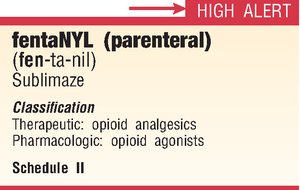
High alert medications are drugs that have an increased risk of causing significant patient harm if used incorrectly. These medications are specially designated in drug references to alert healthcare providers to their risks.
Examples: Opioid analgesics (e.g., fentanyl), anticoagulants, insulin.
Special handling and double-checks are often required for these drugs.
Boxed Warnings
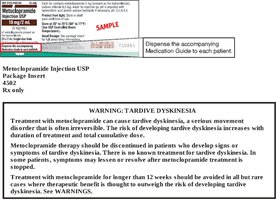
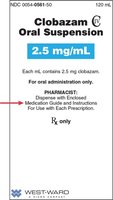
A boxed warning (also known as a "black box warning") is the strongest warning issued by the FDA, indicating that a drug carries significant risk of serious or life-threatening adverse effects. These warnings are prominently displayed on drug labels to alert prescribers and patients.
Error-Prone Abbreviations, Symbols, and Dose Designations
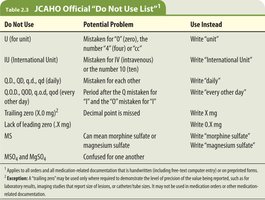
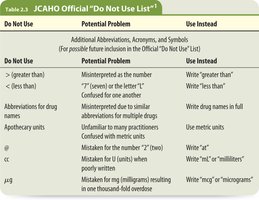
Certain abbreviations and symbols are known to cause confusion and medication errors. The Joint Commission and other safety organizations maintain official "Do Not Use" lists to standardize safe communication.
Examples of error-prone abbreviations: U (unit), IU (International Unit), Q.D. (daily), MS (morphine sulfate or magnesium sulfate).
Always write out full terms to avoid misinterpretation.
Confused Drug Names
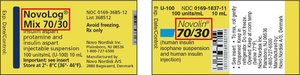
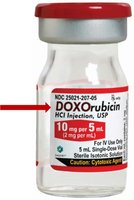
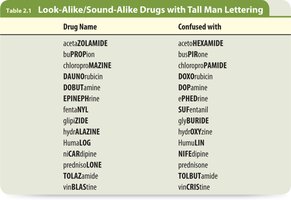
Some drug names look or sound alike, increasing the risk of medication errors. Strategies such as Tall Man lettering are used to highlight differences in similar drug names.
Tall Man lettering: Uses mixed upper and lower case letters and bold type to emphasize distinguishing parts of drug names (e.g., "DOBUTamine" vs. "DOPamine").
Nursing Efforts: The Six Rights of Medication Administration
Overview of the Six Rights
The Six Rights are a foundational safety framework for medication administration, ensuring that each step is verified to prevent errors.
Right drug
Right dose
Right route
Right patient
Right time
Right documentation
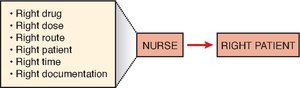
Right Patient
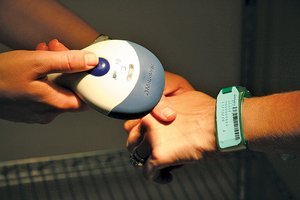
Verifying the patient's identity is essential before administering any medication. At least two identifiers are required, such as the patient’s identification bracelet and verbal confirmation of their name. Never use room or bed numbers as identifiers.
Many facilities use barcode scanning for additional safety.
Right Time
Medications should be administered within a specific time window (typically 30 minutes before or after the scheduled time) to maintain therapeutic drug levels and avoid interactions.
Right Documentation
Document the name, dosage, route, and time of administration immediately after giving the medication. Include relevant clinical information, such as allergies or vital signs, when appropriate.
Never document before administration.
Anticipate and monitor for side effects.
Medication Order and Medication Administration Record (MAR)
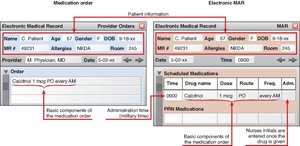
Understanding and accurately transcribing medication orders is critical. The MAR is used to track all medications administered to a patient and must be checked carefully for accuracy.
Medication Administration Process
The process includes receiving the medication order, interpreting and validating it, transcribing it onto the MAR, and applying the Six Rights during preparation and administration.
Example of a Complete Medication Order
A complete medication order includes the date and time, drug name, dose, form, route, frequency, special instructions, and documentation of administration.
Example: 8/19/21 0800 Acetaminophen 325mg tabs p.o. q4h prn headache
Three Checks
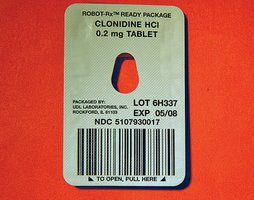
To avoid medication errors, check the drug label at three critical points:
When reaching for the container
Immediately before preparing the dose
When replacing or discarding the container
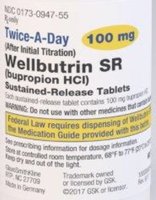
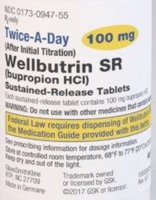
Practice Problems
Practice Problem 1
Boxed warning on the drug label? Yes
Tall Man lettering on the drug label? No
The unit of measurement “mg” is written correctly? Yes
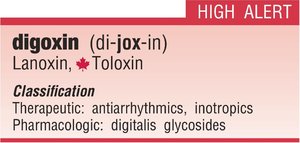
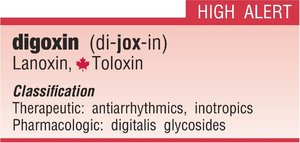
Practice Problem 2
Boxed warning on the drug label? No
Tall Man lettering on the drug label? No
High Alert drug found on the drug reference? Yes
The abbreviation “mcg” for microgram is correct? Yes
Appendix: Tables
JCAHO Official "Do Not Use List"
The following table summarizes abbreviations, symbols, and dose designations that should not be used due to their potential to cause errors, along with recommended alternatives.
Do Not Use | Potential Problem | Use Instead |
|---|---|---|
U (for unit) | Mistaken for "0" (zero), the number "4" (four), or "cc" | Write "unit" |
IU (International Unit) | Mistaken for IV (intravenous) or the number 10 | Write "International Unit" |
Q.D., Q.O.D., q.d., q.o.d. (daily, every other day) | Mistaken for each other; period after the Q mistaken for "I" and the "O" mistaken for "I" | Write "daily" or "every other day" |
Trailing zero (X.0 mg), Lack of leading zero (.X mg) | Decimal point is missed | Write X mg, 0.X mg |
MS, MSO4, MgSO4 | Can mean morphine sulfate or magnesium sulfate; confused for one another | Write "morphine sulfate" or "magnesium sulfate" |
Do Not Use | Potential Problem | Use Instead |
|---|---|---|
> (greater than) | Misinterpreted as the number "7" (seven) or the letter "L" | Write "greater than" |
< (less than) | Misinterpreted as the number "7" (seven) or the letter "L" | Write "less than" |
Abbreviations for drug names | Misinterpreted for similar abbreviations or drugs | Write drug names in full |
Apothecary units | Unfamiliar to many practitioners; confused with metric units | Use metric units |
μg | Mistaken for mg (milligrams), resulting in one thousand-fold overdose | Write "mcg" or "micrograms" |
