 Back
BackN1015 Health Promotion Models - Class 6
Study Guide - Smart Notes
 Tailored notes based on your materials, expanded with key definitions, examples, and context.
Teaching & Learning Models in Personal Health
Introduction to Health Behaviour Change
Understanding why individuals adopt or avoid health-related behaviours is essential for effective health education and promotion. Various theories and models help explain the processes behind behaviour change, providing frameworks for nurses and health professionals to guide patients toward optimal health.
Patient Education: The process of assisting individuals to incorporate health-related behaviours into daily life to achieve optimal health.
Teaching in Nursing: Involves using structured models to facilitate learning and behaviour change in patients.
Nursing Process: Can be used as a framework for teaching, including assessment, planning, implementation, and evaluation.
Theories & Models of Health Behaviour Change
Social Cognition Theories and Models
Social cognition theories focus on how individuals process information about health risks and benefits, and how their beliefs, attitudes, and self-efficacy influence behaviour change.
Social Cognitive Theory (SCT): Emphasizes the interaction between environmental events, personal factors, and behaviour.
Self-Efficacy: The belief in one's ability to successfully perform a behaviour.
Outcome Expectations: Beliefs about the positive or negative outcomes of changing behaviour.
Personal Health Goals: Strategies and goals set by individuals to improve health.
Facilitators & Impediments: Factors that help or hinder behaviour change.
Example: A person may decide to quit smoking if they believe it is harmful, value the health benefits, and feel confident in their ability to quit.
Self-Efficacy in Health Behaviour Change
Self-efficacy is a core determinant in health behaviour change, influencing motivation and action. Individuals must believe they have the knowledge and control to change their behaviour.
Influences on Self-Efficacy:
Past experiences
Vicarious experiences (observing others)
Verbal persuasion
Physiological cues
Facilitators/Impediments: Must be considered when planning interventions.
Example: Coaching a patient to build new skills for mastery increases self-efficacy.
The Health Belief Model (HBM)
Core Concepts of the Health Belief Model
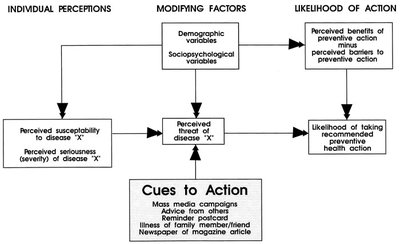
The Health Belief Model explains why some individuals take actions to avoid illness while others do not. It considers individual perceptions, modifying factors, and cues to action.
Individual Perceptions: Susceptibility and seriousness of disease.
Modifying Factors: Demographic and sociopsychological variables.
Cues to Action: Events or information that prompt action.
Likelihood of Action: Weighing perceived benefits against perceived barriers.
Example: A reminder from a healthcare provider may prompt a patient to get vaccinated.
Additional info: Research suggests adding self-efficacy to the HBM for complex behaviours like smoking cessation.
Theory of Reasoned Action (TRA) & Theory of Planned Behaviour (TPB)
Theory of Reasoned Action (TRA)
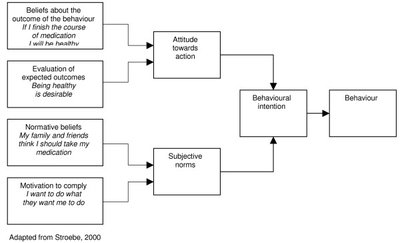
The TRA posits that a person's intention to perform a behaviour is the best predictor of that behaviour, influenced by attitudes and subjective norms.
Attitude: Positive if the outcome is desirable, negative if undesirable.
Subjective Norms: Beliefs about whether significant others approve or disapprove, and motivation to comply.
Example: A person may intend to exercise if they believe it is healthy and their friends support it.
Theory of Planned Behaviour (TPB)
The TPB extends the TRA by adding perceived behavioural control, which reflects the person's belief that the behaviour is within their control.
Perceived Behavioural Control: Beliefs about opportunities and power to engage in the behaviour.
Widely Applied: Used in research on physical activity and other health behaviours.
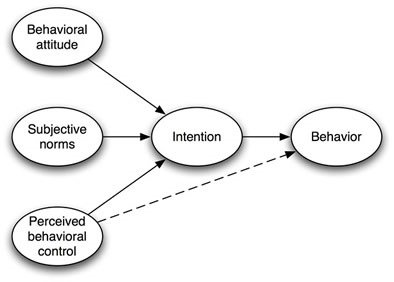
Example: Someone may intend to eat healthier if they feel they have access to healthy foods and support.
Additional info: Critique: Not all behaviours are completely under individual control.
Pender’s Health Promotion Model
Determinants of Health Behaviours
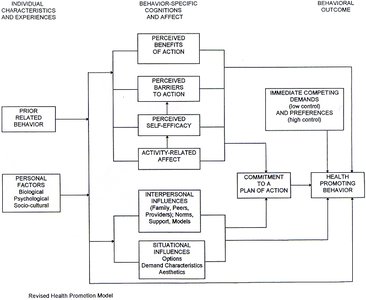
Pender’s Health Promotion Model focuses on cognitive-perceptual factors, modifying factors, and factors affecting the likelihood of action. It is specifically designed for health promotion in nursing.
Individual Characteristics & Experiences: Prior related behaviour and personal factors.
Behaviour-Specific Cognitions & Affect: Perceived benefits/barriers, self-efficacy, activity-related affect.
Interpersonal/Situational Influences: Support, norms, and environmental factors.
Commitment to a Plan of Action: Essential for behaviour change.
Competing Demands/Preferences: May interfere with health-promoting behaviour.
Example: A nurse helps a patient set a plan for regular exercise, considering barriers and support systems.
Stage Models of Behaviour Change: Transtheoretical Model
Stages of Change
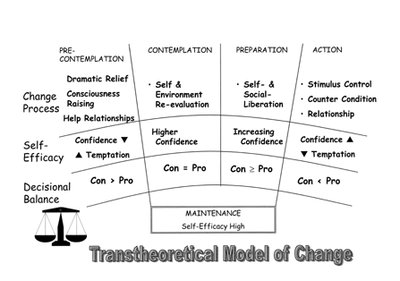
The Transtheoretical Model describes behaviour change as a process involving five stages: precontemplation, contemplation, preparation, action, and maintenance. Each stage requires different strategies and considerations.
Precontemplation: No intention to change.
Contemplation: Thinking about change.
Preparation: Making small changes.
Action: Actively changing behaviour.
Maintenance: Sustaining change over time.
Core Concepts:
Decision-making involves weighing gains and losses.
Self-efficacy and temptation are key factors.
Different processes of change are appropriate at different stages.
Example: A person moves from thinking about quitting smoking to preparing, taking action, and maintaining abstinence.
Implications for Health Teaching
Effective Health Education Strategies
Health teaching must consider factors influencing decision-making. Success is increased by involving clients in planning, providing reliable information, and coaching for skill mastery.
Client Involvement: Engage clients in goal setting and planning.
Information: Provide clear, understandable, and reliable information.
Skill Building: Coach clients to develop new skills for behaviour change.
Example: A nurse works with a patient to set realistic goals for weight management and provides ongoing support.
Summary Table: Comparison of Health Behaviour Change Models
Model | Key Concepts | Application |
|---|---|---|
Social Cognitive Theory | Self-efficacy, outcome expectations, personal/environmental factors | Behaviour change through belief in ability and value of outcome |
Health Belief Model | Perceived susceptibility, seriousness, benefits, barriers, cues to action | Predicts likelihood of taking preventive health actions |
Theory of Reasoned Action | Attitude, subjective norms, behavioural intention | Behaviour predicted by intention, influenced by attitudes and norms |
Theory of Planned Behaviour | TRA + perceived behavioural control | Includes control over behaviour, applied to physical activity, diet |
Pender’s Health Promotion Model | Cognitive-perceptual, modifying factors, likelihood of action | Health promotion in nursing, planning interventions |
Transtheoretical Model | Stages of change, self-efficacy, decisional balance, temptation | Guides interventions based on stage of readiness |
