 Back
BackChapter 18: Management of Patients with Upper Respiratory Tract Disorders
Study Guide - Smart Notes
 Tailored notes based on your materials, expanded with key definitions, examples, and context.
Chapter 18: Management of Patients with Upper Respiratory Tract Disorders
Overview of Upper Respiratory Infections (URIs)
Upper respiratory infections (URIs) are among the most common illnesses, affecting the mucous membranes of the nose, sinuses, pharynx, upper trachea, or larynx. The common cold is the most frequent URI, primarily caused by viruses, which lead to inflammation of the mucous membranes.
Acute URIs: Last several days.
Chronic URIs: Last weeks or months.
Common sites: Nasal cavity, sinuses, pharynx, larynx, upper trachea.
Causes: Inhalation of microorganisms (viruses, bacteria).
Impact: Major reason for healthcare visits and absences from work/school.
Rhinitis
Definition and Types
Rhinitis is inflammation and irritation of the nasal mucous membranes, significantly impacting quality of life and often coexisting with other respiratory disorders such as asthma.
Types: Acute or chronic; allergic (seasonal/perennial) or nonallergic.
Allergic rhinitis: Triggered by airborne particles (dust, dander, pollen).
Nonallergic rhinitis: Often caused by the common cold.
Pathophysiology of Rhinitis
Rhinitis can be caused by environmental changes, infections, age, systemic diseases, medications, or foreign bodies. Allergic rhinitis is triggered by allergens such as foods, medications, or environmental particles.
Common cold: Most frequent cause of nonallergic rhinitis.
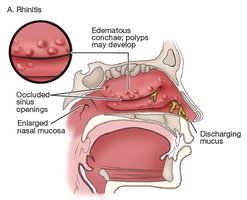
Clinical Manifestations
Rhinorrhea: Excessive nasal drainage.
Nasal congestion and discharge: Purulent in bacterial rhinitis.
Sneezing and pruritus: Itching of nose, mouth, throat, eyes, ears.
Headache: Especially if rhinosinusitis is present.
Medical and Pharmacologic Management
Diagnosis: History and physical examination.
Medications: Antihistamines, decongestants, cromolyn, saline sprays, corticosteroids, leukotriene modifiers.
Allergic rhinitis: Allergy tests, immunizations.
Bacterial rhinitis: Antimicrobial agents.
Patient Education for Rhinitis
Avoid allergens and irritants (dust, molds, animals, fumes, tobacco smoke).
Adhere to medication regimen and read drug labels.
Use saline sprays to soothe mucous membranes.
Practice correct nasal medication administration and hand hygiene.
Annual influenza and COVID-19 vaccinations recommended.
Rhinosinusitis
Definition and Classification
Rhinosinusitis is inflammation of the paranasal sinuses and nasal cavity, formerly called sinusitis. It is classified by duration:
Acute: Less than 4 weeks.
Subacute: 4 to 12 weeks.
Chronic: More than 12 weeks.
Pathophysiology of Rhinosinusitis
Acute rhinosinusitis often follows a viral URI, leading to obstruction of sinus drainage and bacterial growth. Chronic rhinosinusitis involves mechanical obstruction, infection, allergy, or structural abnormalities. 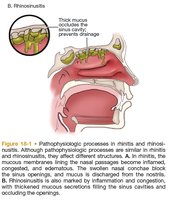
Clinical Manifestations
Acute: Purulent nasal drainage, nasal obstruction, facial pain/pressure, headache, high fever (ABRS).
Chronic: Mucopurulent drainage, nasal obstruction, facial pain, hyposmia, cough, chronic headaches, fatigue.
Assessment and Diagnostic Findings
History and physical examination (head, neck, nose, sinuses, chest).
Tenderness over infected sinus area.
Imaging (x-ray, CT, MRI) for chronic or complicated cases.
Nasal endoscopy for visualization.
Complications
Acute: Osteomyelitis, mucocele, cavernous sinus thrombosis, meningitis, brain abscess, orbital cellulitis.
Chronic: Orbital cellulitis, abscesses, intracranial infection, osteomyelitis, personality changes, seizures, coma.
Medical and Surgical Management
Acute: Antibiotics (amoxicillin, amoxicillin–clavulanic acid), saline lavage, pain relief.
Chronic: Extended antibiotics, corticosteroid sprays, mast cell stabilizers, leukotriene inhibitors.
Surgical: Functional endoscopic sinus surgery (FESS), correction of structural deformities.
Nursing Management and Patient Education
Self-care: Gentle nose blowing, increased fluids, local heat, medication adherence.
Recognize early signs of infection and complications.
Proper nasal spray use and pain relief.
Follow up with provider if symptoms persist.
Acute Pharyngitis
Definition and Pathophysiology
Acute pharyngitis is a sudden, painful inflammation of the pharynx, commonly referred to as a sore throat. Most cases are viral, but bacterial infection (especially Group A beta-hemolytic streptococcus) can cause strep throat.
Viral causes: Adenovirus, influenza, Epstein-Barr, herpes simplex.
Bacterial causes: Group A beta-hemolytic streptococcus.
Inflammatory response: Pain, fever, vasodilation, edema, tissue damage.
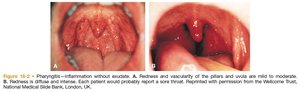
Clinical Manifestations
Fiery-red pharyngeal membrane and tonsils.
Swollen lymphoid follicles with exudate.
Enlarged, tender cervical lymph nodes.
Fever, malaise, vomiting, anorexia, scarlatina-form rash.
Streptococcal pharyngitis: Painful sore throat, headache, myalgia, adenopathy, erythematous tonsils, petechiae, bad breath.
Assessment and Diagnostic Findings
Rapid antigen detection testing (RADT) for streptococcal pharyngitis.
Swabs from posterior pharynx and tonsil.
Obstructive Sleep Apnea (OSA)
Definition and Pathophysiology
OSA is characterized by recurrent episodes of upper airway obstruction and reduced ventilation during sleep, leading to apnea (cessation of breathing).
Prevalence: 26% of adults aged 30–70 years.
Risk factors: Obesity, male gender, postmenopausal status, advanced age, structural airway changes, hypertension.
Pathophysiology: Collapse of pharynx during sleep, hypoxia, hypercapnia, sympathetic response, increased risk of cardiovascular events.
Clinical Manifestations
Frequent and loud snoring.
Breathing cessation for ≥10 seconds, ≥5 episodes/hour.
Abrupt awakening with loud snort.
Insomnia, chronic fatigue, hypersomnolence.
Assessment and Diagnostic Findings
Diagnosis based on clinical features and polysomnographic sleep study.
Monitoring: EEG, ECG, airflow, oxygen saturation.
Medical and Surgical Management
Initial treatments: Weight loss, avoidance of alcohol, positional therapy, oral appliances (MADs).
Severe cases: CPAP or BiPAP therapy, supplemental oxygen.
Surgical options: Tonsillectomy, uvulopalatopharyngoplasty, nasal septoplasty, maxillomandibular surgery, tracheostomy.
Pharmacologic Therapy
Modafinil, armodafinil for daytime sleepiness.
Protriptyline, medroxyprogesterone acetate, acetazolamide for specific cases.
Nursing Management and Patient Education
Educate patients and families about OSA, treatments, and risks of untreated OSA.
Epistaxis
Definition and Causes
Epistaxis is hemorrhage from the nose due to rupture of tiny vessels, commonly originating from the anterior septum.
Risk factors: Local/systemic infections, drying, trauma, drugs, hypertension, tumors, thrombocytopenia, liver disease.
Medical and Nursing Management
Direct pressure, upright position, nasal decongestants, cauterization, packing, balloon catheter.
Monitor vital signs, assist in controlling bleeding, reduce anxiety.
Severe cases: IV fluids, cardiac monitoring.
Patient Education for Epistaxis
Avoid exercise, hot/spicy foods, tobacco, forceful nose blowing, high altitudes, nasal trauma.
Humidify nasal passages, apply direct pressure for recurrent bleeding.
Laryngeal Cancer
Definition, Clinical Manifestations, and Diagnosis
Laryngeal cancer is characterized by persistent hoarseness, cough, sore throat, lump in neck, unilateral nasal obstruction, and unintentional weight loss. Diagnosis is made by laryngoscopy and biopsy.
Treatment: Surgery, radiation, chemotherapy.
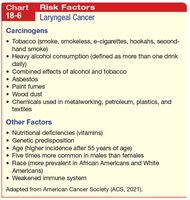
Risk Factors for Laryngeal Cancer
Tobacco use (smoke, smokeless, e-cigarettes, hookahs, second-hand smoke).
Heavy alcohol consumption.
Combined effects of alcohol and tobacco.
Asbestos, paint fumes, wood dust, chemicals, nutritional deficiencies, genetic predisposition, age, race, weakened immune system.
Laryngectomy
Surgical Procedure and Airflow Changes
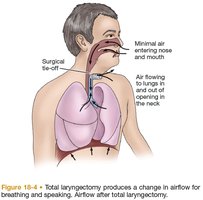
Laryngectomy is a surgical procedure for patients with laryngeal cancer, resulting in permanent changes in airflow for breathing and speaking.
Air flows to lungs in and out of an opening in the neck.
Minimal air enters nose and mouth.
Patient Education After Laryngectomy
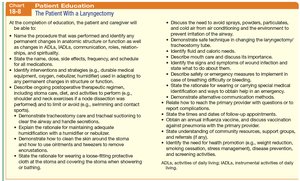
Identify permanent changes in anatomy and function.
Understand procedure, risks, effects, and medication regimen.
Recognize signs of infection, complications, and when to seek medical attention.
Instructions for self-care, stoma protection, humidification, and avoiding irritants.
Importance of follow-up, support groups, and healthy practices.
Review Questions
Question 1
Which of the following is the most common cause of upper respiratory infections (URIs)?
A. Bacteria
B. Viruses
C. Fungi
D. Allergens
E. Parasites
Answer: B. Viruses Rationale: Viruses are the most common cause of URIs, leading to inflammation of the mucous membranes.
Question 2
Is the following statement true or false? Diagnostic imaging is recommended for all cases of acute rhinosinusitis. Answer: False Rationale: Diagnostic imaging is not recommended for acute rhinosinusitis unless complications are suspected.
Question 3
Which of the following is NOT a common symptom of streptococcal pharyngitis?
A. Painful sore throat
B. Cough
C. Fever
D. Headache
E. Myalgia
Answer: B. Cough Rationale: Streptococcal pharyngitis typically presents with a painful sore throat, fever, headache, and myalgia. Cough is not a common symptom and its absence helps differentiate from viral pharyngitis.
Additional info: This study guide covers upper respiratory tract disorders relevant to Personal Health, including definitions, pathophysiology, clinical manifestations, management, patient education, and review questions. Images included are directly relevant to the explanation of rhinitis, rhinosinusitis, pharyngitis, laryngeal cancer, laryngectomy, and patient education after laryngectomy.
