Calculating Change in Velocity from Acceleration-Time Graphs definitions Flashcards
Calculating Change in Velocity from Acceleration-Time Graphs definitions
You can tap to flip the card.
Control buttons has been changed to "navigation" mode.
1/15
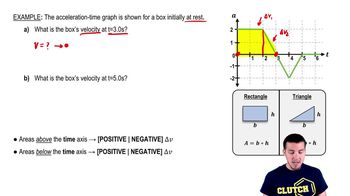
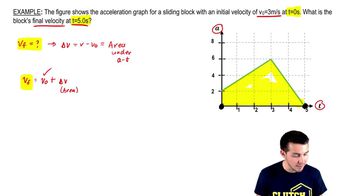
Acceleration-Time GraphA graph that plots acceleration on the y-axis and time on the x-axis, used to determine changes in velocity.Area Under the CurveThe region between the graph line and the time axis, representing the change in velocity in acceleration-time graphs.Change in VelocityThe difference between final and initial velocity, calculated as the area under the acceleration-time graph.VelocityThe speed of an object in a specific direction, calculated from the change in velocity when initial velocity is zero.RectangleA four-sided shape with opposite sides equal, used to calculate areas under the graph for velocity changes.TriangleA three-sided shape used to calculate areas under the graph, contributing to changes in velocity.BaseThe length of the bottom side of a shape, used in area calculations for rectangles and triangles.HeightThe vertical length from the base to the top of a shape, used in area calculations for rectangles and triangles.Positive AccelerationAcceleration that increases velocity, represented by areas above the time axis on the graph.Negative AccelerationAcceleration that decreases velocity, represented by areas below the time axis on the graph.Meters per SecondThe unit of measurement for velocity and change in velocity in the context of the graph.SymmetricalHaving balanced proportions, used to describe identical shapes on the graph for simplifying calculations.Initial VelocityThe starting speed of an object, often zero in problems involving acceleration-time graphs.Final VelocityThe speed of an object at a specific time, calculated by adding the change in velocity to the initial velocity.Time AxisThe horizontal axis on a graph representing time, used to determine intervals for area calculations.