Conceptual Problems with Velocity-Time Graphs definitions Flashcards
Conceptual Problems with Velocity-Time Graphs definitions
You can tap to flip the card.
Control buttons has been changed to "navigation" mode.
1/15
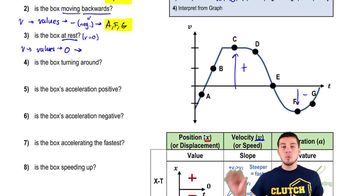
Velocity-Time GraphA graph that represents an object's velocity over time, with velocity values on the y-axis and time on the x-axis.Positive VelocityIndicates forward movement on a velocity-time graph, represented by values above the time axis.Negative VelocityIndicates backward movement on a velocity-time graph, represented by values below the time axis.Zero VelocityOccurs when the velocity-time graph crosses the time axis, indicating the object is at rest.AccelerationThe rate of change of velocity, represented by the slope of a velocity-time graph.Positive AccelerationIndicated by an upward slope on a velocity-time graph, showing an increase in velocity.Negative AccelerationIndicated by a downward slope on a velocity-time graph, showing a decrease in velocity.Steepest SlopeRepresents the point of fastest acceleration on a velocity-time graph.Turning AroundOccurs when the velocity-time graph crosses the time axis, indicating a change in direction.Speeding UpOccurs when the velocity-time graph moves away from the time axis, indicating an increase in speed.Slowing DownOccurs when the velocity-time graph moves towards the time axis, indicating a decrease in speed.Graph FeatureElements of a graph such as values, slope, or curvature used to interpret motion.SlopeThe steepness of a line on a graph, indicating acceleration on a velocity-time graph.Time AxisThe horizontal axis on a velocity-time graph, representing time.Y-AxisThe vertical axis on a velocity-time graph, representing velocity values.