Conceptual Problems with Position-Time Graphs definitions Flashcards
Conceptual Problems with Position-Time Graphs definitions
You can tap to flip the card.
Control buttons has been changed to "navigation" mode.
1/15
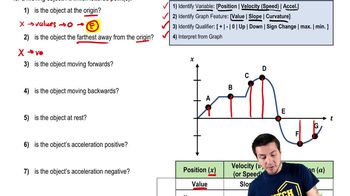
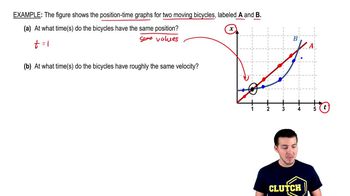
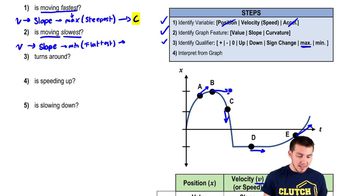
PositionA location on a graph, typically represented on the y-axis, indicating where an object is relative to the origin.VelocityThe rate of change of position, represented by the slope of a position-time graph.AccelerationThe rate of change of velocity, indicated by the curvature of a position-time graph.OriginA reference point on a graph where the position is zero.SlopeA measure of steepness on a graph, indicating velocity when analyzing position-time graphs.CurvatureThe shape of a graph's line, indicating acceleration in position-time graphs.Positive VelocityIndicated by an upward slope on a position-time graph, showing forward motion.Negative VelocityIndicated by a downward slope on a position-time graph, showing backward motion.Zero VelocityIndicated by a flat slope on a position-time graph, showing the object is at rest.Positive AccelerationIndicated by a smiley face curvature on a position-time graph.Negative AccelerationIndicated by a frowny face curvature on a position-time graph.Maximum ValueThe highest point on a graph, indicating the farthest position from the origin.Minimum ValueThe lowest point on a graph, indicating the closest position to the origin.Tangent LineA line that touches a curve at a single point, used to determine instantaneous velocity.Instantaneous VelocityThe velocity of an object at a specific point in time, determined by the slope of the tangent line.