Graphing Position, Velocity, and Acceleration Graphs definitions Flashcards
Graphing Position, Velocity, and Acceleration Graphs definitions
You can tap to flip the card.
Control buttons has been changed to "navigation" mode.
1/15
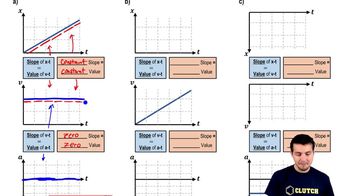
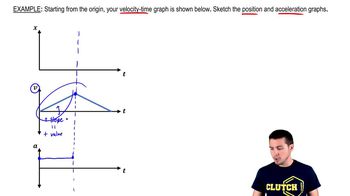
Position-Time GraphA graph that shows how position changes over time, with the slope representing velocity.Velocity-Time GraphA graph depicting how velocity changes over time, where the slope indicates acceleration.AccelerationThe rate of change of velocity over time, often represented as the slope of a velocity-time graph.Constant SlopeA straight line on a graph indicating a uniform rate of change, such as constant velocity or acceleration.Flat LineA horizontal line on a graph indicating no change in the variable, such as zero acceleration.Curved LineA line on a graph that indicates a changing rate of change, such as increasing or decreasing velocity.Negative AccelerationA decrease in velocity over time, often shown as a downward slope on a velocity-time graph.OriginThe starting point on a graph, typically where position and velocity are zero.Constant VelocityA steady speed in a straight line, represented by a flat line on a velocity-time graph.Decreasing SlopeA slope that becomes less steep over time, indicating a reduction in velocity.Increasing SlopeA slope that becomes steeper over time, indicating an increase in velocity.Motion VariablesThe three key components of motion: position, velocity, and acceleration.SketchA rough drawing representing the main features of a graph without precise measurements.Frowny Face CurveA downward curving line on a position graph, indicating negative acceleration.Smiley Face CurveAn upward curving line on a position graph, indicating positive acceleration.