Heat Engines and the Second Law of Thermodynamics definitions Flashcards
Heat Engines and the Second Law of Thermodynamics definitions
You can tap to flip the card.
Control buttons has been changed to "navigation" mode.
1/15
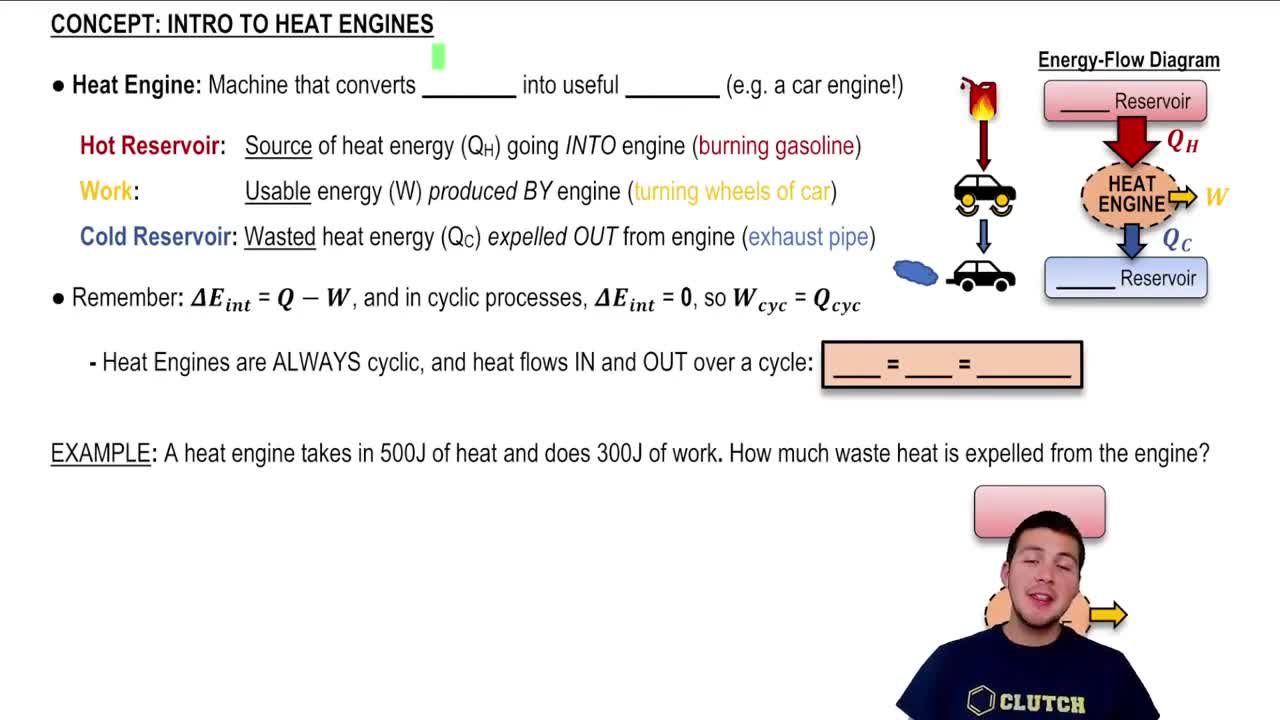
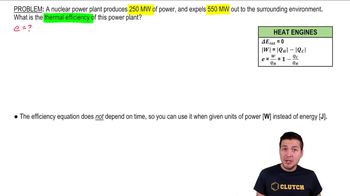
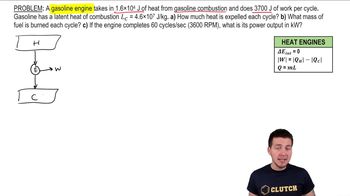
Heat EngineA device that converts heat energy into useful work through a cyclic process.Hot ReservoirThe source of heat energy entering a heat engine, such as burning gasoline.Cold ReservoirThe destination for waste heat expelled from a heat engine.Energy Flow DiagramA representation of heat transfers in a heat engine, showing hot and cold reservoirs.Cyclic ProcessA repeating sequence in a heat engine where heat is converted to work and waste heat is expelled.Thermal EfficiencyA measure of how effectively a heat engine converts heat into work, expressed as a ratio.First Law of ThermodynamicsStates that the change in internal energy equals heat added minus work done.Second Law of ThermodynamicsStates that no heat engine can convert all input heat into work without waste heat.Perpetual Motion MachineA hypothetical machine that can operate indefinitely without an energy source, deemed impossible.WorkThe usable energy produced by a heat engine, such as turning car wheels.Waste HeatThe portion of heat energy not converted to work and expelled to the cold reservoir.Efficiency EquationThe formula for efficiency, expressed as work output divided by heat input.Kelvin StatementA principle of the second law of thermodynamics stating 100% efficiency is impossible.QHSymbol representing the heat input into a heat engine from the hot reservoir.QCSymbol representing the waste heat expelled to the cold reservoir.