Meters per second (m/s) is a common unit for speed.
What is the difference between speed and velocity?
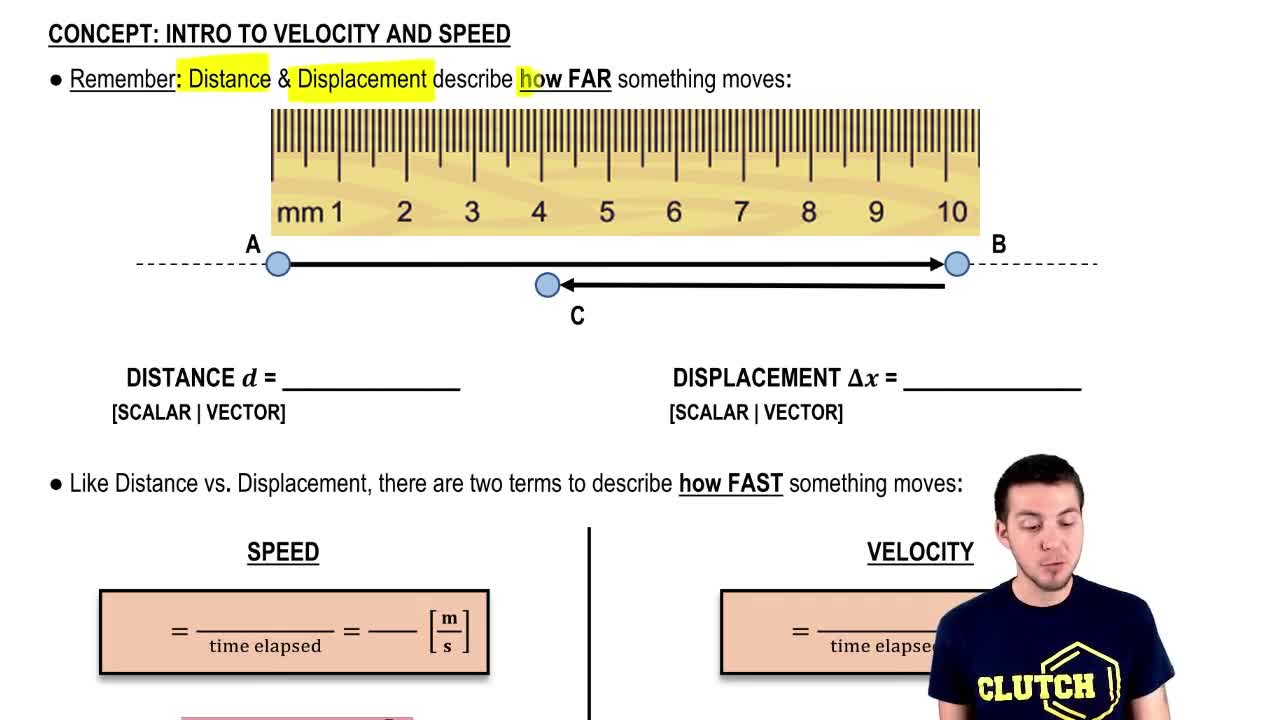
Speed is a scalar quantity measuring total distance over time, while velocity is a vector quantity measuring displacement over time and includes direction.
How do average speed and instantaneous speed differ?
Average speed is the total distance traveled divided by total time, while instantaneous speed is the speed at a specific moment.
How is velocity different from speed?
Velocity includes both magnitude and direction (displacement over time), while speed only includes magnitude (distance over time).
What distinguishes instantaneous speed from average speed?
Instantaneous speed is the speed at a specific instant, while average speed is calculated over a time interval.
How is the velocity of an object best described?
Velocity is described as the rate of change of displacement with respect to time and includes direction.
How can the speed of a car be determined?
Speed can be determined by dividing the total distance traveled by the total time taken.
What does speed measure?
Speed measures how fast an object moves, calculated as distance divided by time.
What is the rate of change in an object's position called?
The rate of change in an object's position is called velocity.
When is the average velocity of an object equal to its instantaneous velocity?
Average velocity equals instantaneous velocity when the object moves at a constant velocity.
How does instantaneous speed differ from average speed?
Instantaneous speed is measured at a specific moment, while average speed is measured over a time interval.
How would you measure the speed of an animal?
Measure the total distance the animal travels and divide by the total time taken.
Which factors apply to velocity but not speed?
Direction applies to velocity but not speed.
How do you calculate the velocity of an object during a time interval?
Velocity is calculated as displacement divided by time.
What is the main difference between speed and velocity?
Speed is scalar and does not include direction; velocity is vector and includes direction.
What can be used to measure an object's speed?
Speed can be measured using a distance and a time measurement.
What is an example of speed?
An example of speed is 10 meters per second (10 m/s).
What is instantaneous velocity?
Instantaneous velocity is the velocity of an object at a specific moment in time.
How do instantaneous and average speed differ?
Instantaneous speed is at a specific instant; average speed is over a time interval.
What is the difference between speed and average speed?
Speed can refer to instantaneous or average; average speed is specifically total distance divided by total time.
How do you calculate the average speed needed to travel a certain distance in a given time?
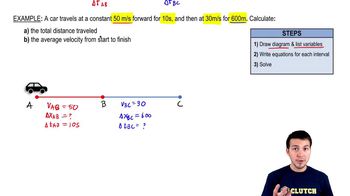
Average speed = total distance / total time.
How is instantaneous speed different from average speed?
Instantaneous speed is measured at a specific instant; average speed is measured over a time interval.
What two components make up velocity?
Velocity consists of magnitude (speed) and direction.
How do average and instantaneous speed differ?
Average speed is over a time interval; instantaneous speed is at a specific moment.
How do you end up with units of speed?
Units of speed result from dividing distance units by time units, such as meters per second (m/s).
How do you calculate the distance an object moves in a given time at constant speed?
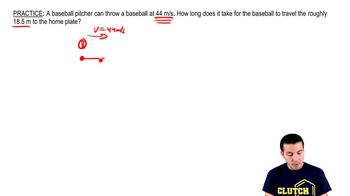
Distance = speed × time.
How do you calculate average speed if a basketball travels a certain distance in a given time?
Average speed = total distance / total time.
How do you calculate the velocity of a car that travels a certain distance east in a given time?
Velocity = displacement (east) / time.
How is instantaneous velocity different from average velocity?
Instantaneous velocity is at a specific instant; average velocity is over a time interval.
What is the difference between instantaneous velocity and average velocity?
Instantaneous velocity is at a specific moment; average velocity is over a time interval.
How do average velocity, speed, and displacement differ?
Average velocity is displacement over time; speed is distance over time; displacement is the shortest path between start and end points.
How do you calculate the average speed of a ball that rolls a certain distance in a given time?
Average speed = total distance / total time.
What is a true statement about speed and velocity?
Speed is scalar and always non-negative; velocity is vector and can be positive, negative, or zero.
What are the similarities and differences between speed and velocity?
Both measure how fast something moves; speed is scalar and based on distance, velocity is vector and based on displacement.
How do you calculate the average speed of an object over a time interval?
Average speed = total distance / total time.
How do you calculate average acceleration over a time interval?
Average acceleration = change in velocity / change in time.
How do you calculate the average velocity of a car over a trip?
Average velocity = total displacement / total time.
Which terms does velocity describe?
Velocity describes both magnitude (speed) and direction.
How do you calculate the average velocity of a baseball that moves a certain distance in a given time?
Average velocity = displacement / time.
How do you calculate average speed if an object travels a certain distance in a given time?